Table of Contents
- Gigawatt Coffee Roasters vs Small Batch: A Quick Comparison
- How Roasting Batch Size Changes What’s in Your Cup
- The Benefits of Small Batch Roasted Coffee for Daily Drinkers
- Roast Profiles, Equipment, and What Commercial Roasters Do Differently
- Sourcing, Cost, and the ROI of Choosing Small Batch
- What Small Batch Coffee Tastes Like: A Sensory Comparison
- Frequently Asked Questions
Last Updated: September 12, 2026
Gigawatt Coffee Roasters vs Small Batch: A Quick Comparison
Gigawatt should not be treated as a synonym for mass-produced coffee. Its published FAQ says orders are typically roasted and shipped within 1–3 business days. Compare each roaster using its actual roast dates, product details, and shipping policies rather than assuming batch size or storage time. Source: Gigawatt FAQ.
Here’s the tension most comparisons miss: the machine matters far less than the batch size and the time between roast and brew. Below, we break down how batch size changes flavor, freshness, cost, and what lands in your cup.
For an accurate comparison, check each roaster’s published processing times, roast information, package size, and current delivered price. Gigawatt reports roasting and shipping orders within 1–3 business days; no claim about months of storage is supported here. Read Gigawatt’s current FAQ.
How Roasting Batch Size Changes What’s in Your Cup
Batch size determines how much control a roaster has over the roast profile. A large batch holds heat differently than a small one, and that changes how sugars caramelize, how acids develop, and how much of the bean’s origin character survives the drum.
Heat Transfer and Bean Development
In a large drum, thermal mass is enormous. The roaster relies on convection and conduction to push heat through hundreds of pounds of green coffee at once. That works, but it’s blunt: you can’t easily adjust airflow or drum speed mid-roast to chase a specific flavor note.
Small batches behave differently. With less mass, the roaster can nudge airflow control, drum speed, and the temperature curve in real time. That’s how a roaster coaxes out a specific roast profile rather than settling for “close enough.”
The Freshness Window After Roasting
Coffee is a perishable product. Once roasted, beans begin releasing carbon dioxide and staling compounds immediately (PubMed). High-volume roasting solves a logistics problem, not a freshness one: it produces a shelf-stable product that can sit in distribution for weeks.
Small batch roasting flips the priority. Roasting to order means the gap between first crack and your grinder is measured in days, not months. That window is where the flavor lives.
The Benefits of Small Batch Roasted Coffee for Daily Drinkers
The benefits of small batch roasted coffee come down to three things: fresher flavor, tighter quality control, and a roast profile built for the bean rather than the schedule. For a daily drinker, that translates to a cup that tastes noticeably brighter and sweeter.
A common mistake is assuming “fresh” just means recently purchased. It doesn’t. Freshness starts at the roast date, and a bag roasted three months ago is stale no matter when it arrived.
Small batch roasters also cup every lot. Cupping is the practice of tasting brewed samples side by side to score flavor, body, and defects. When a batch is small, a single off lot is easy to catch and pull before it ships.
Roast Profiles, Equipment, and What Commercial Roasters Do Differently
Commercial roasting optimizes for repeatability across huge volumes. That means automated roasting, fixed profiles, and equipment built for throughput rather than nuance. Nothing is wrong with that approach. It just produces a different product, and the equipment list tells you why before you ever taste the coffee.
The Hardware Split: Sample Roaster vs. Production Drum
A small batch operation typically runs two machines: a sample roaster (often 100 grams to 1 pound) for cupping and profile development, and a production drum in the 1-kilo to 15-kilo range for actual output. A high-volume commercial roaster runs a single drum in the 30-kilo to 120-kilo range and rarely re-profiles between lots.
The practical consequences stack up fast:
- Batch-to-batch turnaround: A 5-kilo drum can complete a roast and cool in roughly 12-15 minutes, so a roaster can run several distinct profiles in an afternoon. A 60-kilo drum ties up the machine and the operator for a full cycle per lot.
- Probe placement and reading lag: On a large drum, the bean-mass probe sits inside a deep bed of coffee, so the temperature it reports lags the actual bean environment. Small drums report closer to true bean temperature, which makes rate-of-rise (RoR) decisions more responsive.
- Gas and airflow authority: A small burner can change the drum’s thermal trajectory within seconds. A large burner has to overcome the drum’s stored heat first, which is why big-roaster profiles tend to be set early and left alone.
- Charge weight flexibility: Dropping 4 kilos into a 5-kilo drum is a normal adjustment. Dropping 40 kilos into a 60-kilo drum is a compromise that changes airflow dynamics and usually isn’t worth it.
Drum Speed, Airflow, and Thermal Mass
Three variables separate a small batch roaster from a high-volume one:
- Drum speed: Faster rotation moves beans through the heat more evenly; slower speed lets them sit against the metal longer. Small drums often run variable-frequency drives so the roaster can slow the drum during drying and speed it up through first crack.
- Airflow control: More airflow pulls moisture and chaff out and speeds development; less airflow builds body. On a small roaster, airflow is a live lever. On a production drum, it’s usually a fixed damper setting chosen at install.
- Thermal mass: A heavy drum holds heat and resists sudden changes; a smaller drum responds instantly. That responsiveness is the entire reason a small batch roaster can chase a specific flavor note instead of settling for “close enough.”
Bridging Manual Hardware with Digital Logging Software
This is the part most comparisons skip, and it’s where the real skill lives. Data logging and roasting software have narrowed the gap between small and large operations, but only for roasters who wire them together correctly.
A common pattern looks like this: a manual or semi-automatic drum roaster with a bean probe and an environmental (drum) probe, both feeding a thermocouple interface, which feeds logging software running on a laptop. The software plots bean temperature, environmental temperature, and rate of rise in real time. The roaster watches the curve, not the clock.
What actually goes wrong when people try this:
- Probe type mismatch. Type K and Type J thermocouples read differently and need the correct interface. Mixing them produces a curve that looks plausible and is wrong.
- Sample rate too slow. A logger polling every 30 seconds can’t show a RoR crash during first crack. One reading per second is the working baseline most practitioners use.
- No smoothing on RoR. Raw rate-of-rise data is noisy. Software that applies a rolling average makes the curve readable; software that doesn’t will have you chasing phantom crashes.
- Artisan and similar platforms. Open-source logging tools like Artisan are widely used because they accept a range of thermocouple interfaces and let you overlay a reference profile against the live roast. The software doesn’t roast the coffee, it tells you how far off you are.
Artisan roasting software documentation
The takeaway: software is a measurement tool, not a replacement for a roaster’s judgment. The small batch advantage isn’t that the machine is smarter, it’s that the human running it can act on what the software shows.
Sourcing, Cost, and the ROI of Choosing Small Batch
Small batch coffee costs more per bag, and that’s the honest trade-off. Higher cost per pound reflects smaller green coffee purchases, more labor per roast, and less buying power on single-origin and direct trade lots. What most comparisons never do is carry the math past the first bag.
The Per-Cup Math, Done Properly
Start with the daily-drinker baseline. A standard 12-ounce bag of roasted coffee yields roughly 24 to 30 cups at a 1:16 brew ratio, depending on dose (peer-reviewed research). At two cups a day, that's about two weeks per bag, not one. Check the product page for current pricing, package size, and available options. To compare cost per serving, divide the current package price by the number of servings you actually brew. Explore: peer-reviewed research.
Compare that to a specialty cafe at $4 to $6 per drink and the premium for small batch coffee disappears. The relevant comparison isn’t small batch versus supermarket coffee. It’s small batch versus the cafe habit it replaces.
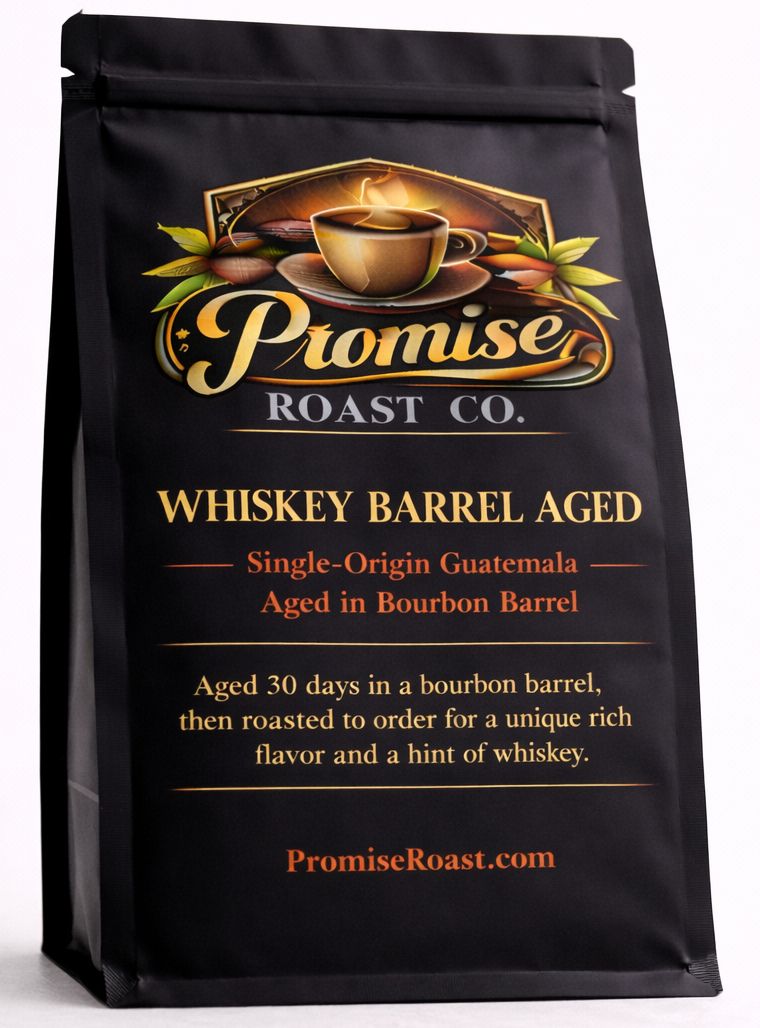
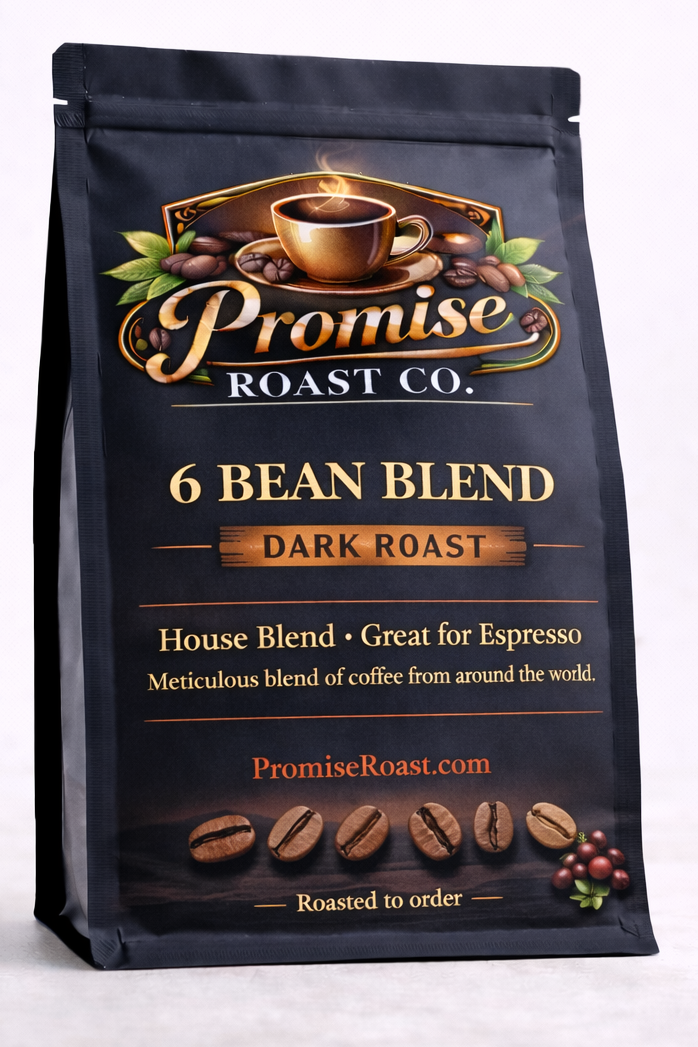
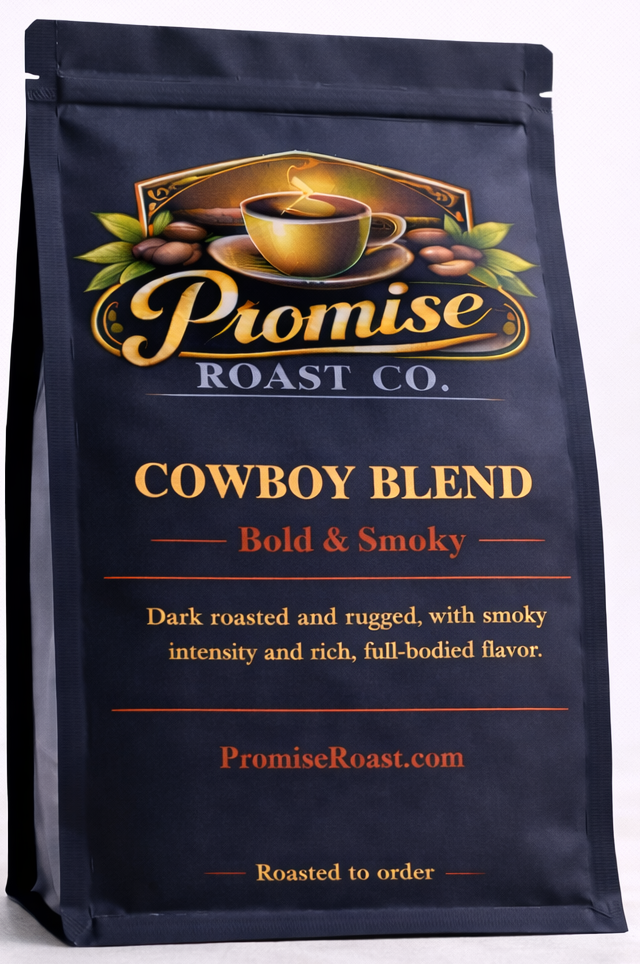
| Promise Roast Co. Blend | Roast Level | Tasting Notes | Price |
|---|---|---|---|
| Whiskey Barrel Aged | Aged, medium-dark | Warm oak, subtle sweetness, whiskey-kissed finish | See current product pricing |
| 6 Bean Blend | Dark | Bold, rich, full-bodied | See current product pricing |
| Cowboy Blend | Dark and medium | Cocoa, caramel, vanilla | See current product pricing |
| House Blend | Medium | Nutty, sweet chocolate, mild citrus | See current product pricing |
| Kopi Safari | Post-roast blend | Bright, balanced, deeply satisfying | See current product pricing |
The Long-Term ROI Nobody Calculates
If you’re comparing small batch coffee to roasting at home, the per-bag price is the wrong starting point. The right one is total cost of ownership over three to five years, because that’s the window where home roasting equipment either pays for itself or doesn’t.
A realistic home-roasting cost stack looks like this:
- Green coffee: Typically $5 to $9 per pound for specialty-grade green beans, versus $12 to $20 per pound for roasted small batch coffee. That’s the only line item that reliably favors home roasting.
- Equipment: A basic air popper or stovetop setup runs under $50 but produces inconsistent results. A purpose-built 1-pound drum roaster runs several hundred to well over $1,000. A 1-kilo drum roaster climbs into the low four figures.
- Consumables: Chaff trays, cooling trays, replacement thermocouples, and cleaning supplies add up quietly. Thermocouples and probes are the most common failure point on home roasters.
- Depreciation: A $1,500 drum roaster used twice a week for three years works out to roughly $10 per roast session in equipment cost alone, before green coffee. That number only falls if you roast more often.
- Time: A roast session, setup, roast, cool, clean, runs 45 to 90 minutes. At two sessions a week, that’s 80 to 150 hours a year.
Run the full stack and the honest conclusion is that home roasting rarely beats small batch coffee on cost unless you’re roasting at volume. Where it wins is control: you pick the green, you pick the profile, you drink it three days off the roast.
Sourcing and Traceability
Ethical sourcing and direct trade matter here too. Small roasters typically buy smaller green coffee lots from specific farms, which supports traceability. You can often trace a bag back to a region, a farm, or a single harvest. High-volume operations buy on contract and blend across origins to hit a flavor target, which is efficient but erases that line of sight.
That traceability is part of what you’re paying for. It’s also the part that’s hardest to replicate at home, where green coffee sourcing usually means buying from a handful of importers and hoping the lot matches the description.
What Small Batch Coffee Tastes Like: A Sensory Comparison
Small batch coffee tastes brighter, sweeter, and more layered than high-volume coffee of the same origin. The difference shows up immediately in a side-by-side cupping: more acidity, clearer fruit or floral notes, and a finish that lingers instead of dropping off flat.
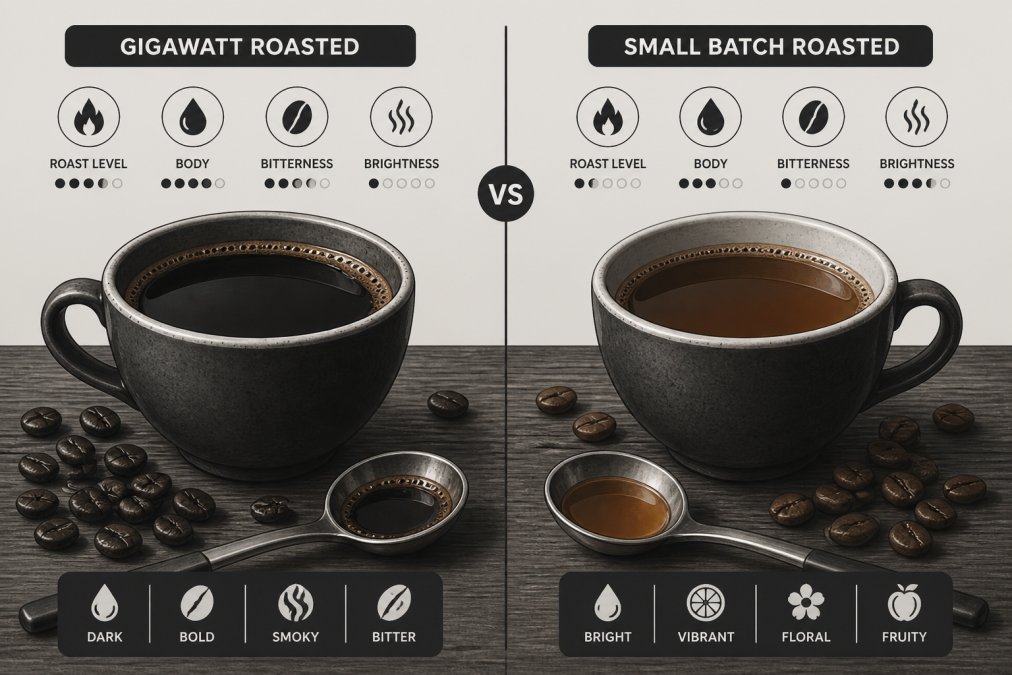
A direct sensory comparison makes the point better than any description. Brew a small batch roast and a mass-produced roast of the same origin, taste them blind, and the fresh one usually wins on aroma alone.
What most guides miss is that roast consistency and flavor development aren’t opposites. A skilled small batch roaster hits the sweet spot on every lot: consistent enough to trust, flexible enough to let the bean speak.
Frequently Asked Questions
What are the primary benefits of small batch roasted coffee?
Small batch roasting gives the roaster tighter control over temperature and timing, which means each bean develops more evenly. Because batches are roasted to order, the coffee reaches you within days of roasting rather than weeks. That freshness preserves the aromatic compounds responsible for flavor, so you get a cup with more clarity, sweetness, and distinct origin character. For daily drinkers, the difference shows up in the first sip, not just on the label.
How does roasting volume affect the flavor profile of coffee beans?
Larger batches create more thermal mass inside the roaster, which makes temperature changes slower and less precise. Roasters compensate by extending roast times or pushing higher temperatures, and that can flatten acidity and mute delicate notes. Smaller batches respond faster to adjustments, so the roaster can hit first crack and development milestones within a narrow window. The result is a roast profile that highlights the bean’s natural sweetness and origin rather than masking it with darker roast character.
Is artisan-roasted coffee always superior to mass-produced coffee?
Not automatically. A poorly executed small batch can taste worse than a well-run commercial roast. What small batch roasting offers is the potential for greater precision and freshness, but it depends on the roaster’s skill, bean selection, and how quickly the coffee reaches you. Mass-produced coffee can be consistent and affordable, but it often sits in distribution for weeks. The real advantage of small batch is the combination of careful roasting and a short path from roaster to cup.
What should consumers look for when buying fresh-roasted coffee?
Check the roast date, not just the best-by date. Coffee peaks in flavor roughly 4 to 14 days after roasting, so a bag roasted last week will outperform one roasted two months ago. Look for whole beans if you can grind at home, since pre-ground coffee loses aromatics faster. If you buy online, choose a roaster that roasts to order and ships within a few days. Small batch roasters like Promise Roast Co. typically roast after you place your order, which keeps that window tight.
Choosing between high-volume and small batch roasting comes down to what you value in a cup. If freshness, traceability, and flavor development top your list, Promise Roast Co. roasts every order individually in small batches, ships free, and processes orders in 1-5 days for peak freshness. Start with the Whiskey Barrel Aged for a bold, oaky pour, or the House Blend for a smooth daily medium roast. Shop Coffee and taste the difference a roast date makes.