Table of Contents
- Why Storage Matters for Peak Freshness
- The Four Enemies of Coffee Freshness
- How Long Do Coffee Beans Stay Fresh
- Best Coffee Storage Canisters and Containers
- Can You Freeze Coffee Beans
- Storage in the Original Bag vs. Transfer to Containers
- Signs Your Coffee Beans Have Gone Stale
- Common Myths About Coffee Storage
- Frequently Asked Questions
Last Updated: September 19, 2026
Why Storage Matters for Peak Freshness
After roasting, coffee beans release carbon dioxide through degassing (peaking within days) while oxidation begins attacking volatile compounds responsible for flavor and aroma. A bag roasted last week tastes dramatically different from one roasted three months ago, even with identical storage.
Promise Roast Co. roasts beans fresh after your order with 1-5 day processing for peak freshness. Once they arrive, how you store coffee beans at home will either preserve that freshness or accelerate its decline.
Beans stored correctly stay vibrant for three to four weeks; those exposed to air, light, and heat degrade noticeably within a week. This guide covers how to store coffee beans at home to maintain their intended flavor profile.
The Four Enemies of Coffee Freshness
Four factors attack coffee quality relentlessly: oxygen, light, heat, and moisture. Understanding each one helps you build a storage strategy that actually works.
Oxygen and Oxidation
Oxidation is the primary enemy. When oxygen contacts coffee oils and aromatic compounds, flavor and aroma flatten. An open bag deteriorates noticeably within 48 hours; the same beans in an airtight container last weeks.
The solution is an airtight seal. Vacuum-sealed containers remove oxygen entirely; one-way degassing valves allow CO2 to escape while preventing oxygen entry. Fresh beans need a one-way valve to prevent pressure buildup. Beans more than a week old benefit from vacuum sealing.
Light and UV Damage
Light, especially UV light, degrades coffee compounds rapidly. Transparent containers expose beans to cumulative damage; brightness fades and is replaced by a dull, woody character.
Glass and clear plastic containers require dark storage (cupboard or drawer only). Opaque stainless steel or ceramic containers block light regardless of location.
Heat and Temperature Fluctuations
Heat accelerates degradation; avoid storage near heat sources, stoves, or sunny windows. Temperature swings create condensation, introducing moisture and accelerating flavor loss.
The ideal storage temperature is 50-70°F. A pantry or cool cupboard works well; avoid warm kitchens and damp basements. The goal is stable, consistent conditions.
Moisture and Humidity
Moisture works slowly but triggers mold growth and degrades bean structure, creating a papery cup. Humid air penetrates seals over time, especially in steamy kitchens.
Light roasts absorb moisture faster than dark roasts. In humid climates, airtight containers are essential; silica gel packets help, but the real solution is an airtight seal in a cool, dry location.
How Long Do Coffee Beans Stay Fresh
Coffee beans gradually lose flavor and aroma rather than spoiling. Peak freshness lasts 2-4 weeks after roasting; light roasts peak earlier (1-2 weeks), dark roasts maintain character longer (4-5 weeks).
After four weeks, beans taste flatter and less complex. For flavor enthusiasts, this is the cutoff; casual drinkers may find beans acceptable for six to eight weeks with proper storage.
The roast date matters more than the “best by” date. Promise Roast Co. roasts beans fresh after your order is placed, designed for peak freshness. Check the date when your order arrives and plan consumption accordingly.
Best Coffee Storage Canisters and Containers
The right container makes storage effortless. The wrong one defeats the purpose of buying fresh beans in the first place.
Vacuum-Sealed and One-Way Valve Options
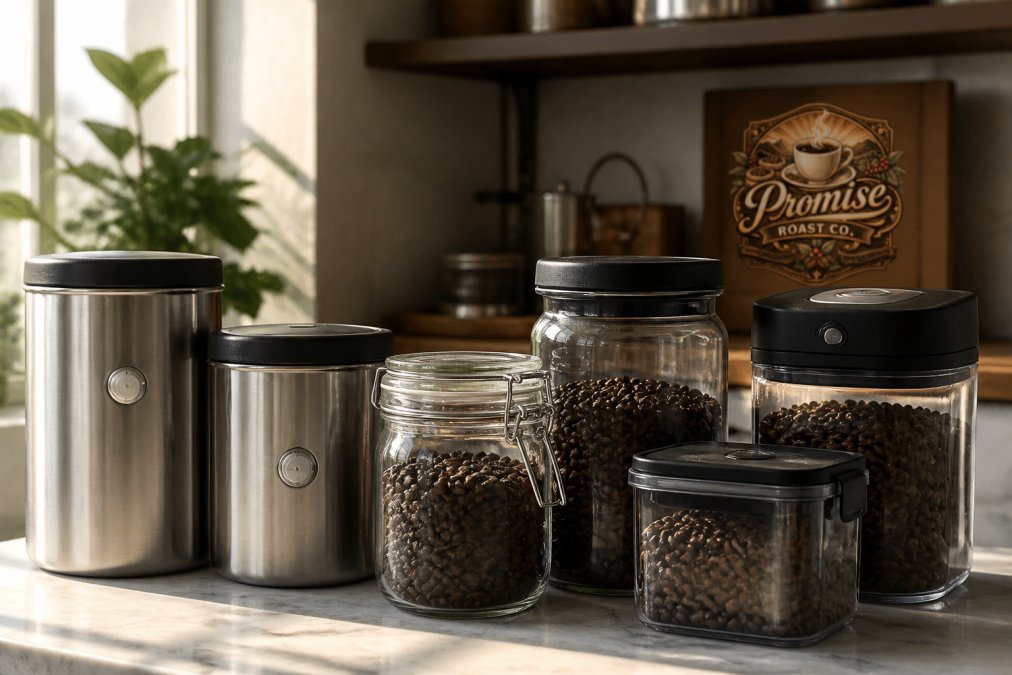
The Friis Coffee Vault uses a one-way valve specifically designed for freshly roasted beans. Since beans continue releasing CO2 for several days after roasting, a one-way valve prevents pressure buildup that could damage the seal. This container is ideal if you’re storing beans immediately after opening a freshly roasted bag from Promise Roast Co. The stainless steel construction blocks light completely, and the valve prevents oxygen from entering while allowing CO2 to escape.
Glass, Ceramic, and Stainless Steel Comparison
Material choice affects both function and lifestyle. Each has distinct trade-offs.
Stainless steel containers block light completely and maintain cool temperatures better than other materials. They’re durable, dishwasher-safe, and look professional. The downside is that you cannot see bean levels without opening the container. If you use beans frequently and need to know when to reorder, this becomes annoying. Stainless steel also conducts temperature changes, so it’s not ideal if your storage location experiences temperature swings.
Glass containers allow you to see beans at a glance, which appeals to many home users. The problem is that glass is transparent to light, so it only works in dark storage. Glass is also fragile and heavy. It doesn’t insulate against temperature changes. However, glass is non-reactive and doesn’t absorb odors, so beans taste purely like themselves without any container influence.
Ceramic containers offer a middle ground. They’re opaque (blocking light), durable, and aesthetically pleasing. Ceramic is porous, so it can absorb odors over time, potentially affecting flavor slightly. It’s also heavier than plastic and less durable than stainless steel if dropped.
For most home users, stainless steel with a one-way valve is the best compromise. It protects beans completely, requires minimal maintenance, and lasts years. If you prefer seeing your beans, choose glass with a commitment to dark storage (cupboard or drawer only). Ceramic works if you value appearance, but accept that it requires dark storage and may absorb subtle odors.
Can You Freeze Coffee Beans
Freezing is controversial in coffee circles. Some experts swear by it for long-term storage. Others argue it damages beans. The reality is more nuanced.
Freezing Pros and Cons
Freezing slows oxidation and volatile compound loss dramatically. Beans stored in a freezer can maintain acceptable flavor for four to six months, compared to four to six weeks at room temperature. For people who buy in bulk or who want to stock up on limited releases, this is valuable.
The downside is condensation. When frozen beans warm to room temperature, moisture condenses on the surface. This moisture damages beans, creating a papery texture and introducing mold risk. Thawing and refreezing repeatedly is worse than never freezing at all.
The practical rule: freeze only if you’re committed to proper technique. If you’ll freeze, thaw, and refreeze multiple times, don’t bother. The damage outweighs the benefit. If you’ll freeze a portion once and use it slowly over months, freezing works.
Proper Freezing Technique
Freezing requires airtight containers to prevent moisture from entering. Ziploc freezer bags work if you remove excess air before sealing. Vacuum-sealed bags are better because they eliminate air entirely. Glass jars with tight seals work, but glass conducts cold, making condensation more likely.
The process: portion your beans into smaller bags or containers so you don’t thaw an entire batch. Freeze immediately after opening the original bag, before beans have absorbed ambient moisture. When you want to use frozen beans, remove only what you need and return the rest to the freezer immediately. Allow frozen beans to reach room temperature before opening the container to minimize condensation.
Many coffee experts recommend grinding frozen beans directly without thawing, which eliminates condensation risk entirely. If your grinder can handle cold beans, this is the ideal approach. The grounds will warm quickly as you brew.
Storage in the Original Bag vs. Transfer to Containers
Many people wonder whether to transfer beans to a nicer container or keep them in the original bag. This depends on the original bag’s design.
Promise Roast Co. specializes in small-batch, artisan-roasted coffee and tea, ensuring peak freshness by roasting every order individually. If you’re satisfied with the bag, there’s no reason to transfer. The seal maintains freshness.
The problem with many commercial coffee bags is that they lack proper seals or valves. Bags from grocery stores, for example, often use simple folds or clips that don’t create airtight seals. If your original bag has a poor seal, transfer to a proper container immediately.
A practical approach: use the original bag for the first week while beans are off-gassing (the one-way valve works best during this phase).
Signs Your Coffee Beans Have Gone Stale
Stale beans show predictable signs. Learning to recognize them helps you adjust your storage or consumption habits.
Common Myths About Coffee Storage
Several persistent myths mislead people into poor storage practices.
The first myth is that refrigeration preserves beans. It doesn’t. Refrigerators introduce moisture through condensation every time you open the door. Moisture is one of the four enemies of coffee freshness. Beans in a refrigerator deteriorate faster than beans in a cool pantry.
Frequently Asked Questions
Is it okay to store coffee beans in a Ziploc bag?
Ziploc bags can work as a temporary storage solution, especially for freezer storage, but they’re not ideal for long-term pantry storage. While they provide an airtight seal, they’re transparent, allowing light to degrade your beans. If you use them, store the sealed bag in a dark cupboard or freezer. For regular rotation, dedicated opaque containers with airtight seals preserve flavor better and prevent oxidation more effectively than plastic bags.
How long do coffee beans stay fresh after roasting?
Whole coffee beans typically stay at peak freshness for 2-4 weeks after the roast date, though they remain drinkable for up to 2-3 months if stored properly in an airtight container away from light and heat. Freshness declines as volatile compounds escape through oxidation and carbon dioxide degassing. Small-batch roasted beans like those from Promise Roast Co. are at their best within the first month, so timing your consumption helps you enjoy maximum flavor and aroma.
Can you freeze coffee beans without losing flavor?
Yes, you can freeze coffee beans and preserve their flavor, but only if done correctly. Freeze whole beans in an airtight, vacuum-sealed bag or container to prevent freezer burn and moisture absorption. Keep them in the freezer long-term and avoid repeated thawing. The cold slows oxidation and volatile compound loss significantly. However, once thawed, use the beans within a few days. Freezing is ideal for storing large quantities or beans you won’t use for several months, but room-temperature storage in an airtight container is better for beans you’ll use within a month.
What’s the best container material for storing coffee beans?
Opaque stainless steel canisters with airtight seals are ideal because they block light, resist odors, and create an oxygen barrier. Glass jars work well only if stored in a completely dark cupboard, as clear glass allows light penetration. Ceramic containers offer similar benefits to stainless steel. Avoid clear plastic containers unless kept in darkness. For freezer storage, vacuum-sealed bags or airtight plastic containers work fine. The key is opacity and an airtight seal; the material matters less than how well it blocks light and oxygen.