Table of Contents
- What Defines Espresso (And Why It Matters Without a Machine)
- How to Make Espresso with a Moka Pot
- AeroPress: Manual Brewing for Concentrated Coffee
- French Press Method for Espresso-Style Strength
- How to Froth Milk Without a Steamer
- Best Coffee Beans for Espresso-Style Brewing
- Quick Alternatives: Instant Espresso Powder and Pour-Over Concentration
- Common Mistakes When Brewing Without a Machine
- Frequently Asked Questions
Last Updated: September 20, 2026
What Defines Espresso (And Why It Matters Without a Machine)
Espresso is a concentrated coffee beverage made by forcing hot water through finely ground coffee under pressure, and learning how to make espresso without machine opens up several brewing methods. Without understanding this definition, you might end up with strong coffee instead of true espresso-style results. The difference matters because espresso has specific characteristics: a rich body, intense flavor, and that signature crema layer on top.
Pressure is the key ingredient. Traditional espresso machines use 9 bars of pressure to extract coffee quickly and create that concentrated shot. When you make espresso without a machine, you’re working around this pressure limitation. The goal becomes mimicking espresso’s intensity and mouthfeel through alternative extraction methods.
Pressure, extraction, and the role of crema
Crema is that golden-brown foam that sits on top of espresso. Many people think crema is essential to “real” espresso, but here’s what most guides get wrong: crema is a byproduct of pressure, not a measure of quality. You can make excellent espresso-style coffee without visible crema.
What actually matters is extraction. This is the process of dissolving coffee solids into water. Espresso achieves full extraction in 25-30 seconds because of pressure. Without a machine, you’ll need more time or different brewing methods to reach similar extraction levels.
The solubility of coffee compounds changes with temperature and contact time. Hotter water extracts faster. Finer grinds increase surface area. These factors let you approach espresso-style intensity without 9 bars of pressure.
The difference between espresso and strong coffee
Strong coffee and espresso are not the same thing. Strong coffee is just more coffee grounds in the same amount of water. Espresso is a specific brewing method that creates a concentrate with body, acidity, and intensity you can’t get from regular drip coffee.
When you brew espresso without a machine, you’re aiming for that concentrate quality. The coffee-to-water ratio matters more than the brewing method. A typical espresso shot uses about 1 part coffee to 2-3 parts water by weight. Strong drip coffee uses 1 part to 15-18 parts water.
This concentration difference is why espresso feels different on your tongue. The mouthfeel is fuller. The flavor is more intense. These qualities come from extraction, not from pressure alone.
How to Make Espresso with a Moka Pot
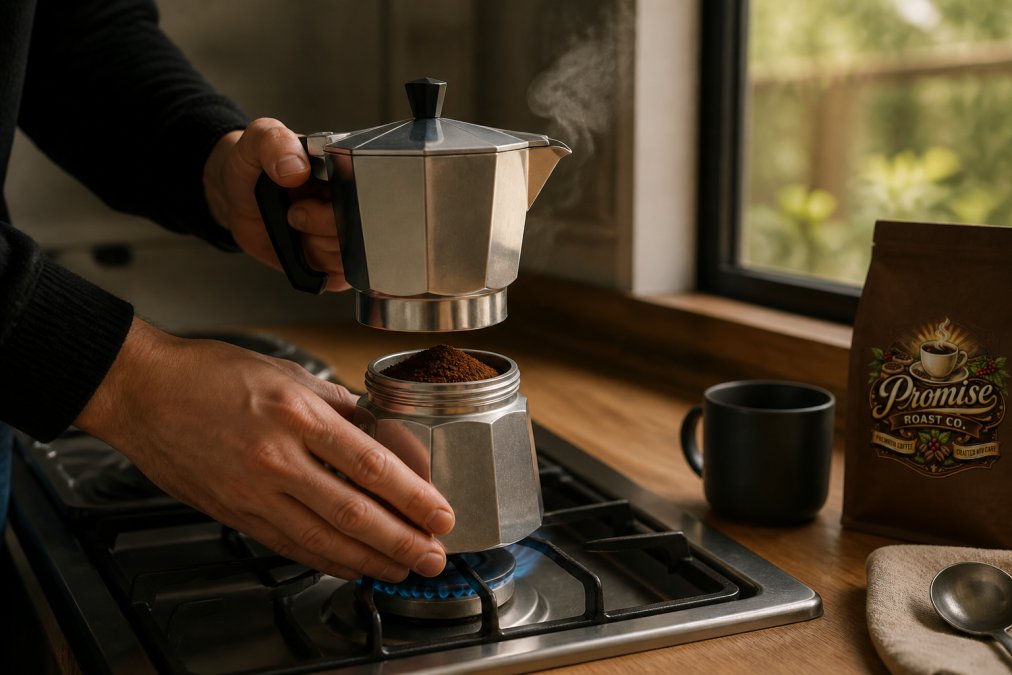
A Moka pot is the closest thing to a home espresso machine without actually owning one. It brews coffee by passing boiling water pressurized by steam through ground coffee. The result is a strong, concentrated coffee that mimics espresso’s intensity and body.
Step-by-step brewing process
Step 1: Fill the bottom chamber with water. Use cold water just below the safety valve. This is your pressure source.
Step 2: Add finely ground coffee to the filter basket. Use a medium-fine grind, similar to what you’d use in an espresso machine. Tamp the grounds lightly with your finger. Don’t pack it hard, just level it off.
Step 3: Screw the top chamber onto the base. Make sure it’s tight so steam doesn’t escape around the threads.
Step 4: Place the Moka pot on medium heat. You want steady heat, not high heat. High heat can scorch the coffee and create a bitter taste.
Step 5: Listen for the gurgling sound. When you hear a steady gurgle, the coffee is flowing into the top chamber. This takes about 5-10 minutes depending on your stove.
Step 6: Remove from heat when you hear a hissing sound. This means the water has mostly passed through. Remove it immediately to stop extraction.
Step 7: Pour into your cup. The result is a small amount of concentrated, strong coffee.
Why Moka pots produce café-style results
Moka pots work because they create pressure through steam. While they don’t reach the 9 bars of a true espresso machine, they get close enough to extract coffee intensely. The brew time is longer than espresso (5-10 minutes vs. 25-30 seconds), but the end result is similar: a concentrate with body and richness.
AeroPress: Manual Brewing for Concentrated Coffee
An AeroPress is a manual brewing device that uses air pressure and immersion brewing to extract coffee. It’s smaller and more portable than a Moka pot, and it gives you precise control over every variable.
Basic AeroPress technique:
- Insert a paper or metal filter into the basket and rinse with hot water.
- Add medium-fine ground coffee (about 1.5 to 2 times the coffee you’d use for a regular cup).
- Pour hot water (around 195-205°F) to saturate the grounds. Wait 10 seconds for the bloom phase.
- Fill the chamber with more water.
- Gently press down over 20-30 seconds. You should feel resistance.
- Stop pressing when you hear a hissing sound.
French Press Method for Espresso-Style Strength
A French press brews coffee through immersion. You steep grounds in hot water for several minutes, then press down a metal mesh filter to separate the grounds from the liquid. This method produces a full-bodied, intense cup that can mimic espresso’s mouthfeel.
French press espresso-style brewing:
- Heat water to 195-205°F.
- Add medium-fine ground coffee at a ratio of 1 part coffee to 4 parts water.
- Pour hot water over the grounds and stir.
- Let it steep for 2-3 minutes (shorter than normal brewing).
- Press down slowly over 30 seconds.
- Pour immediately to stop extraction.
How to Froth Milk Without a Steamer
Espresso-style coffee pairs well with frothed milk. You don’t need a steam wand to create micro-foam. Several simple methods work at home.
Jar shaking method
This is the fastest and easiest method.
- Pour cold milk into a jar (fill it halfway).
- Screw the lid on tight.
- Shake vigorously for 30-60 seconds.
- Pour the frothed milk into your coffee.
The shaking creates air bubbles that form foam. The longer you shake, the more foam you get. This method works best with cold milk because it froths more easily.
Whisk method
A simple kitchen whisk can create foam.
- Heat milk in a small pot to about 150°F.
- Use a whisk to stir the milk in a circular motion for 30-60 seconds.
- Tilt the pot slightly and continue whisking to incorporate air.
- Pour the frothed milk into your coffee.
The whisking motion incorporates air into the milk, creating bubbles. The heat helps stabilize the foam. This method takes more effort than shaking but gives you more control.
Immersion blender method
An immersion blender creates the smoothest micro-foam.
- Heat milk to about 150°F in a tall glass or container.
- Place the blender tip just below the surface of the milk.
- Turn it on and move it up and down for 30-45 seconds.
- Pour into your coffee.
The blender creates fine air bubbles that produce silky micro-foam. This is the closest result to a professional steam wand.
Creating micro-foam for milk-based drinks
The temperature matters. Milk froths best between 140-160°F. Too hot, and the proteins break down. Too cold, and the foam is chunky.
Best Coffee Beans for Espresso-Style Brewing
The beans you choose affect the final result. Not all coffee works equally well for espresso-style brewing. Here’s what to look for.
Grind size, roast profile, and coffee-to-water ratio
Grind size is critical. For espresso-style brewing without a machine, use a medium-fine grind. This is finer than drip coffee but not as fine as true espresso powder. The finer grind slows water flow and increases extraction time, which compensates for lower pressure.
Why freshness and bean quality matter
Fresh beans taste better. Coffee starts losing flavor the moment it’s roasted. Beans roasted 1-5 days before brewing are ideal. Beans older than 4 weeks taste flat and dull.
Quick Alternatives: Instant Espresso Powder and Pour-Over Concentration
Sometimes you need espresso-style coffee fast. Two quick methods work in a pinch.
Common Mistakes When Brewing Without a Machine
Most people make the same mistakes when trying to make espresso without machine, so understanding these errors helps you brew better coffee.
Frequently Asked Questions
Can you actually make espresso without an espresso machine?
Yes, you can create espresso-style coffee using methods like Moka pots, AeroPress, or French press. These alternatives won’t produce the exact 9+ bars of pressure a true espresso machine creates, but they deliver the concentrated strength, intensity, and rich mouthfeel that define espresso. The key is using fine grind coffee, precise water temperature, and proper extraction technique. Many coffee enthusiasts find these methods produce results comparable to café-style espresso.
What’s the best way to make espresso with a Moka pot?
Fill the bottom chamber with water just below the safety valve, add finely ground coffee to the filter basket (tamped lightly), and screw on the top chamber. Heat on medium until you hear a gurgling sound, then remove from heat. The Moka pot uses steam pressure to force hot water through the grounds, creating a concentrated brew. For best results, use a medium-fine grind and a coffee-to-water ratio of about 1:2. This method produces café-style intensity and body.
How do I froth milk without a steamer for espresso drinks?
The jar-shaking method works well: heat milk to about 150°F, pour into a jar with a tight lid, and shake vigorously for 30-60 seconds to create micro-foam. Alternatively, use an immersion blender or whisk to aerate the milk while heating. The goal is incorporating air into the milk to create a smooth, velvety texture that complements concentrated espresso. Practice improves your ability to control foam thickness and aeration for milk-based drinks like cappuccinos and lattes.
What coffee beans work best for making espresso at home?
Medium to dark roast beans with good body and lower acidity work best for espresso-style brewing. Look for beans specifically labeled for espresso or those with notes of chocolate, caramel, or nuts rather than bright, fruity profiles. Freshness is critical: use beans roasted within the past 2-3 weeks for optimal extraction and crema development. A conical burr grinder ensures consistent fine grind size, which is essential for proper solubility and strength. Promise Roast Co.’s small-batch roasts are roasted fresh after your order, delivering peak flavor for any brewing method.