Table of Contents
- Why Long-Term Tea Storage Matters
- Best Tea Storage Containers for Freshness
- The Four Core Storage Conditions
- How Long Does Loose Leaf Tea Last
- Advanced Storage Techniques for Maximum Preservation
- Signs of Expired Tea and When to Discard
- Travel and Short-Term Storage Solutions
- Frequently Asked Questions
Last Updated: September 21, 2026
Why Long-Term Tea Storage Matters
Loose leaf tea is delicate. Once you open a bag, the clock starts ticking on freshness. The leaves begin to lose their flavor, aroma, and color the moment they’re exposed to air, light, and moisture.
This is where proper storage becomes essential. At Promise Roast Co., we understand that the difference between a vibrant cup of tea and a stale one often comes down to how you store it. The right storage conditions can extend your tea’s shelf life by months or even years, preserving the subtle flavor profiles and aromatic qualities that make loose leaf tea worth buying in the first place when you store loose leaf tea properly.
Most people store tea carelessly. They leave bags open on counters, toss them in kitchen cabinets next to spices, or worse, stick them in the refrigerator. Each of these mistakes degrades your tea faster than you’d expect.
The good news: how to store loose leaf tea long term isn’t complicated. It requires understanding four core conditions and choosing the right containers. This guide walks you through exactly what you need to know to keep your tea fresh.
Best Tea Storage Containers for Freshness
The container you choose matters more than you might think. It’s the first line of defense against air, light, moisture, and odors. Not all containers are created equal.
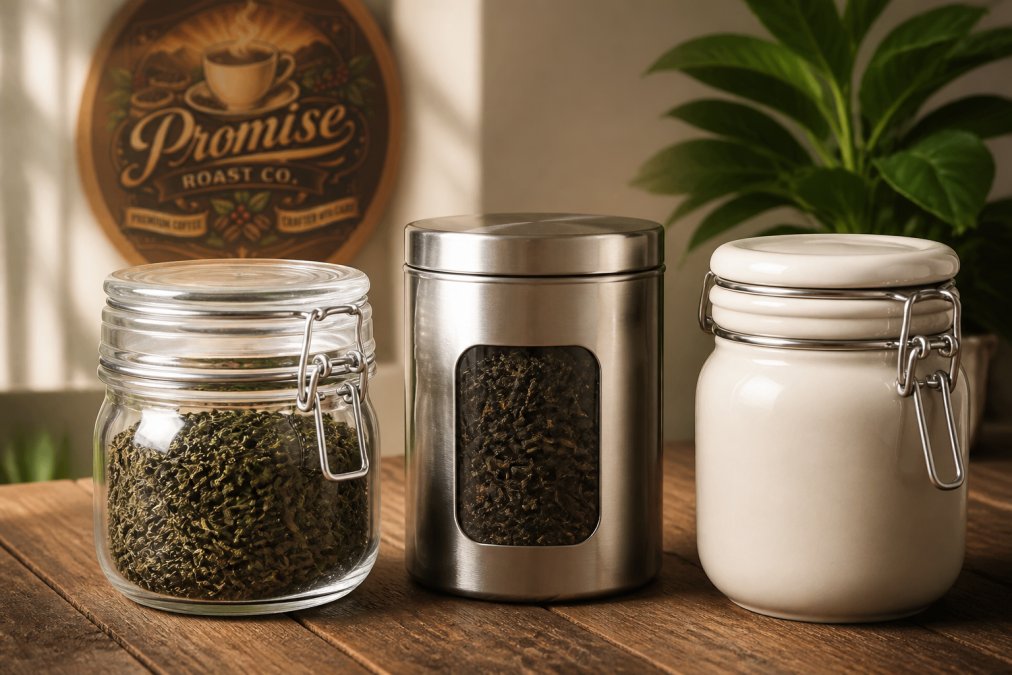
Glass Containers with Airtight Seals
Glass is one of the best options for storing loose leaf tea. It’s inert, meaning it won’t interact with your tea or absorb flavors. You can see what’s inside without opening it, which helps you track inventory and freshness.
The key requirement is an airtight seal. Look for glass jars with rubber gaskets or locking mechanisms that create a tight seal. Mason jars work well if the seal is truly airtight. Avoid glass containers with loose-fitting lids that allow air exchange.
One drawback: glass allows light through. You need to store glass containers in a dark place, away from direct sunlight. Opaque glass or amber-colored glass offers better UV protection than clear glass.
Glass containers are durable and reusable. They don’t retain odors like plastic can. If you invest in quality glass vessels, they’ll last for years.
Stainless Steel Tins and Caddies
Stainless steel is excellent for long-term tea storage. It blocks light completely, protects against UV damage, and provides a reliable airtight barrier when the lid seals properly.
Tea caddies and tins made from food-grade stainless steel are specifically designed for this purpose. They’re durable, won’t rust, and don’t absorb odors or flavors. Many come with double lids or gaskets that create an excellent seal.
The advantage over glass is superior light protection. Stainless steel containers keep your tea completely shielded from light degradation. They’re also portable, making them ideal if you travel or want to move tea between storage locations.
Check that the lid fits snugly and that any gasket or seal is in good condition. A loose-fitting lid defeats the purpose of using metal storage.
Ceramic Vessels with Tight Lids
Ceramic containers offer a middle ground between glass and metal. They block light, are food-safe, and won’t interact with your tea. High-quality ceramic caddies often come with airtight lids.
Ceramic is attractive and fits well in kitchen décor. Some people prefer the aesthetic of a ceramic caddy on the shelf over a plain metal tin.
The limitation is durability. Ceramic can chip or crack if dropped. Also, some ceramic glazes may not be truly food-safe, so verify that any container you buy is specifically designed for food storage.
The Four Core Storage Conditions
Proper storage requires managing four critical factors. Get all four right, and your tea will stay fresh far longer than you expect.
Temperature Control and Cool Storage
Tea degrades faster in warm environments. Heat accelerates oxidation and causes volatile oils to evaporate more quickly. The ideal storage temperature is between 50-70°F, though anywhere below 75°F is acceptable.
Avoid storing tea near heat sources. Keep containers away from stoves, ovens, and direct sunlight coming through windows. Don’t store tea in warm kitchens where heat from cooking appliances builds up.
A cool pantry or cabinet away from the kitchen is ideal. If you live in a warm climate, consider storing tea in the coolest room of your house. Basements often provide excellent storage conditions if they’re dry.
Consistency matters as much as the absolute temperature. Fluctuating temperatures cause condensation inside sealed containers, introducing unwanted moisture. Find a location with stable, cool conditions and keep your tea there.
Protecting Tea from Light Exposure
Light breaks down tea compounds and fades color. UV light is particularly damaging. Even ambient indoor light can degrade tea over time if exposure is prolonged.
This is why opaque containers are crucial. Clear containers sitting on open shelves will degrade faster than the same tea in a dark tin in a closed cabinet. Light degradation is cumulative and irreversible.
Store containers in a dark place. A closed cabinet, pantry, or drawer works well. If you must keep tea visible, use opaque containers rather than clear glass.
Avoid displaying tea in window-facing cabinets or on shelves with direct sunlight. The aesthetic appeal isn’t worth accelerating the degradation of your tea.
Avoiding Moisture and Humidity
Moisture is tea’s enemy. Damp conditions promote mold growth, cause clumping, and accelerate flavor loss. Tea leaves absorb moisture from the air, especially in humid environments.
Keep your storage location dry. Kitchens and bathrooms tend to be humid. Basements can be damp. Choose a location with low humidity, ideally below 50%.
Ensure your containers seal tightly. Even small gaps allow moisture to seep in. Check seals regularly and replace gaskets if they become brittle or worn.
Never store tea in the refrigerator or freezer. Cold surfaces cause condensation when containers are removed. Temperature swings introduce moisture inside sealed jars, degrading your tea.
Keeping Tea Away from Strong Odors
Tea leaves are porous and absorb odors from their surroundings. Strong smells from spices, coffee, cleaning products, or perfumes can transfer to your tea and alter its flavor.
Store tea away from aromatic foods and substances. Don’t keep tea near spice racks, coffee, vanilla extract, or cleaning supplies. Designate a dedicated storage space for tea only.
Airtight containers help, but they’re not foolproof if the surrounding environment is heavily scented. The best approach is to store tea in a neutral-smelling location.
How Long Does Loose Leaf Tea Last
The shelf life of loose leaf tea depends on storage conditions and tea type. Properly stored tea can remain fresh for one to three years. Some high-quality teas improve with age if stored correctly.
Tea doesn’t spoil like food does. It won’t make you sick if it’s old. But it will lose flavor, aroma, and color over time. After a certain point, it becomes unpleasant to drink.
Oxidized teas like black and oolong teas tend to last longer than delicate green or white teas. This is because oxidation already altered the leaf structure, making it more stable. Green teas are more delicate and degrade faster.
Herbal teas vary widely depending on the botanicals used. Some herbal blends stay fresh for years. Others lose potency within months.
The best approach is to use tea within a year of purchase for optimal flavor. If stored properly, most tea remains acceptable for two years. Beyond that, quality declines noticeably.
Advanced Storage Techniques for Maximum Preservation
For serious tea enthusiasts, advanced techniques can extend shelf life even further.
Vacuum Sealing vs. Oxygen Absorbers
Vacuum sealing removes air from storage containers, dramatically slowing oxidation. This technique works well for long-term storage of six months or longer.
Vacuum-sealed tea can last three to five years in cool, dark conditions.
Tea-Specific Humidity Control Packs
Boveda and Integra packs are humidity control packets designed specifically for tea storage. They maintain a precise humidity level inside sealed containers, preventing both excess moisture and excessive dryness.
Storage Differences by Tea Oxidation Level
Different tea types require slightly different storage approaches based on their oxidation level.
Signs of Expired Tea and When to Discard
Tea doesn’t expire in the traditional sense, but it does degrade. Knowing when to discard old tea prevents you from wasting time brewing stale leaves.
Travel and Short-Term Storage Solutions
Proper storage isn’t just for home. If you travel or need short-term storage solutions, a few strategies help maintain quality.
Frequently Asked Questions
Does loose leaf tea ever go bad?
Yes, loose leaf tea degrades over time. While it won’t spoil like food, tea loses its flavor profile and aroma retention through oxidation and exposure to light, moisture, and heat. Properly stored tea remains drinkable for 6-12 months, but quality declines noticeably after that. Oolong and aged pu-erh teas can last longer, sometimes improving with age when stored correctly.
What is the best container to store loose leaf tea?
The best tea storage containers are airtight vessels made from opaque materials. Glass jars with airtight seals work well if kept in a dark cabinet. Stainless steel tins provide superior UV protection and durability. Ceramic caddies with tight lids are also effective. Avoid clear containers, plastic, or anything that allows light penetration, as UV exposure accelerates flavor degradation and volatile oil loss.
Should I store loose leaf tea in the refrigerator?
No. Refrigerators introduce moisture and odor absorption issues that damage tea quality. The repeated temperature fluctuations when you open and close the door cause condensation inside the container, promoting mold and flavor loss. A cool, dry pantry or cabinet at room temperature (around 60-70°F) is ideal. Only consider freezing if you’re storing tea for several years in a completely sealed, moisture-proof container.
How long does loose leaf tea last when stored properly?
When stored in an airtight container in a cool, dark, dry place, most loose leaf teas maintain peak freshness for 6-12 months. Green and white teas are most delicate and should be consumed within 6-8 months. Oolong, black, and herbal teas can last 12-18 months. Aged pu-erh and some oolongs may improve for years. Proper storage conditions, including humidity control with packs like Boveda or Integra, extend shelf life significantly.