Table of Contents
- What Makes the Best Flavored Coffee for Iced Coffee
- How to Make Flavored Iced Coffee at Home
- Natural vs. Artificial Coffee Flavoring: What Actually Works
- Iced Coffee Flavor Combinations That Balance Bold and Smooth
- Top Flavored Coffee Options for Cold Brewing
- How Roast Level and Bean Origin Shape Flavor Profile
- Storage and Shelf-Life of Homemade Flavored Cold Brew
- Frequently Asked Questions
Last Updated: September 30, 2026
What Makes the Best Flavored Coffee for Iced Coffee
The best flavored coffee for iced coffee balances bold extraction with smooth flavor notes that don’t fade when diluted by ice. Cold water pulls flavor differently than hot water, more slowly, more selectively. This means the beans themselves matter more than the flavoring method.
Cold brew extracts gradually over hours, pulling different compounds than hot-brewed-then-chilled coffee (Checking your browser). A flavored coffee designed for iced applications needs enough intensity to survive ice dilution without tasting watered down or artificial.
Medium to dark roasts work best for iced coffee because they have deeper, more stable flavor compounds. Light roasts taste thin and sour when chilled; the brightness that works hot becomes sharpness when cold.
Caramel, vanilla, hazelnut, and cinnamon work because they’re stable compounds that don’t break down in cold water. Fruity and floral notes require higher concentration and careful bean selection to avoid tasting artificial.
How to Make Flavored Iced Coffee at Home
Making flavored iced coffee at home gives you complete control over strength, sweetness, and flavor balance. The process differs depending on whether you start with hot-brewed coffee or cold brew concentrate.
Brewing Method and Extraction
Cold brew delivers superior smoothness. Use a 1:4 coffee-to-water ratio with coarse grounds. Pour cold water over grounds, stir gently, then steep 12-24 hours at room temperature or refrigerated.
Strain through fine mesh or cheesecloth. The result is a concentrate you can dilute with water, milk, or cream to taste.
Hot-brewed iced coffee works faster. Brew double-strength (twice the grounds), then pour over ice immediately or after cooling. This prevents flavor fade as ice melts.
Cold brew pulls flavoring gradually, creating smoother integration. Hot-brewed coffee with syrups creates distinct flavor layers that some prefer, though they can separate.
Preventing Dilution and Flavor Loss
Dilution is the biggest challenge with iced coffee. Start stronger than you think you need.
Freeze cold brew concentrate in ice cube trays. The ice melts into more coffee, not water, preventing dilution.
Add flavored simple syrup to the cup before pouring cold coffee. Homemade syrup is equal parts sugar and water, heated until dissolved, then cooled with vanilla, cinnamon, or other flavorings added while warm.
Creamers and milk mask dilution through fat content, creating a richer mouthfeel. Oat milk adds subtle sweetness; almond milk adds light nuttiness.
Natural vs. Artificial Coffee Flavoring: What Actually Works
Natural flavorings come from plant sources; artificial flavorings are synthesized compounds that mimic them chemically.
In cold brew, natural flavorings taste rounder and more integrated. Artificial flavorings often taste sharper and can leave a chemical aftertaste because cold extraction pulls subtle nuances from natural sources that synthetics don’t replicate.
The best approach is to start with high-quality beans and add minimal flavoring. A medium or dark roast already contains caramel and toasted notes. A light flavoring addition, a touch of vanilla syrup or a sprinkle of cinnamon, enhances what’s already there rather than masking weak coffee.
Some prefer artificial flavoring’s consistency, but for iced coffee, where you taste the coffee more directly, flavor quality becomes obvious.
Sugar-free options like stevia, monk fruit, and erythritol work better in cold drinks because cold temperatures mask aftertaste.
Iced Coffee Flavor Combinations That Balance Bold and Smooth
Caramel and vanilla is the classic pairing; both complement rather than compete and survive dilution well in cold water.
Cinnamon and hazelnut create a warmer profile, with cinnamon balancing hazelnut’s sweetness. This works well with medium roasts that have existing nuttiness.
For fruity profiles, cherry or berry works better than citrus. A light cherry note tastes authentic in cold brew; heavy berry flavoring can taste artificial.
Pistachio and toasted marshmallow are niche but effective. Pistachio adds a subtle earthiness that complements dark roasts. Toasted marshmallow works because it’s essentially caramel with vanilla, a proven combination in a different form.
The rule: use at most two primary flavors. A third flavor layer usually creates confusion rather than complexity. Let the coffee be the base, and let flavoring enhance it.
Top Flavored Coffee Options for Cold Brewing
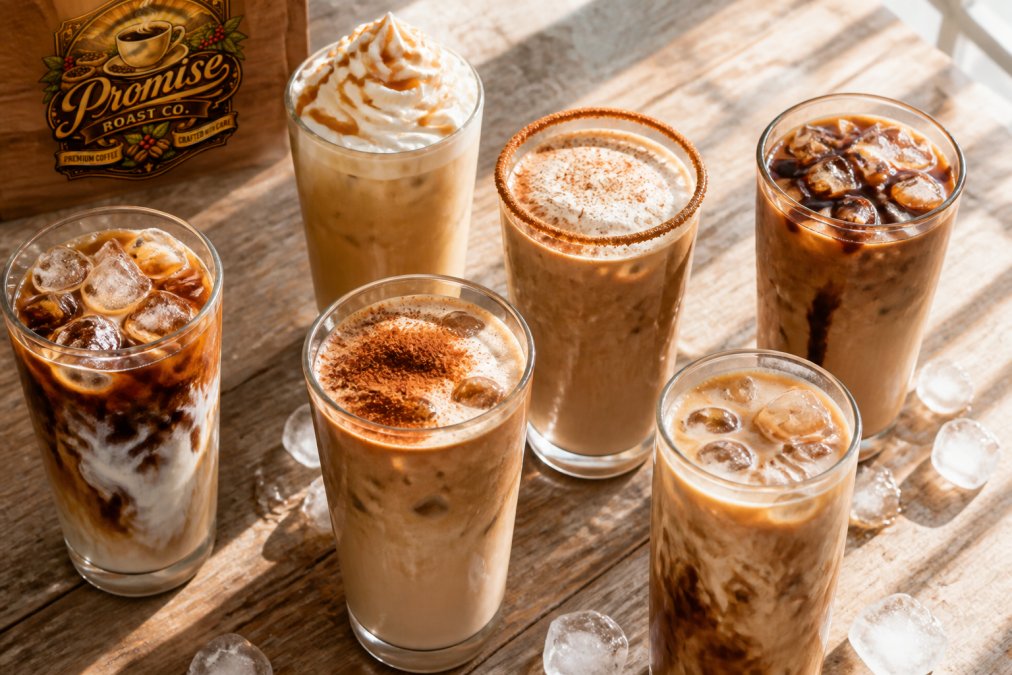
Promise Roast Co. Flavored Blends stand out because they’re roasted fresh after your order is placed, ensuring peak freshness for cold brewing. Small-batch roasting means the flavoring compounds stay vibrant longer. The 1-5 day processing window means your beans arrive at their flavor peak. These are designed specifically for cold applications, the roast level and flavor integration work with cold extraction, not against it. The variety of roast levels and flavor infusions lets you match your preference exactly.
Door County Coffee Sinful Delight delivers a dessert-like experience with balanced notes of buttery caramel and roasted pecan. This blend works well for cold brewing because the flavor compounds are stable in cold water. The pecan adds depth that prevents the caramel from tasting one-dimensional. Requires brewing and cooling time, but the result is smooth and full-bodied.
La Colombe Cold Brew Concentrate offers convenience with quality. The concentrate format lets you control strength by adjusting dilution ratio. The fruity, cherry-like flavor profile is distinctive, this works better for those who want complexity rather than traditional dessert flavors. The ready-to-dilute format saves time compared to brewing from beans.
Califia Farms Pure Black Medium Roast serves as an excellent blank canvas. If you prefer to add your own flavoring through syrups or creamers, this cold brew provides a smooth, low-acid base that won’t fight with your additions. The medium roast has enough body to support flavoring without tasting thin.
Starbucks Dark Roast Iced Coffee is widely available and unsweetened, making it ideal if you want full control over flavoring. The dark roast provides enough boldness to stand up to syrups and milk additions. This works best if you’re comfortable adding your own flavoring rather than buying pre-flavored options.
Premium Artisan Roasts for Maximum Freshness
Artisan roasts prioritize flavor complexity over consistency. Each batch varies slightly based on bean origin and roasting conditions. This variation is a feature, not a flaw, it means you’re tasting the actual coffee, not a standardized product.
Small-batch roasters typically roast in smaller quantities, which means faster turnover. Fresh beans taste noticeably better in cold brew because the flavor compounds haven’t oxidized yet. Beans roasted more than two weeks ago start losing brightness and develop stale notes.
Promise Roast Co.’s approach of roasting after your order arrives means your beans are at peak freshness when they reach you.
Single-origin beans from specific regions offer distinct flavor profiles. Ethiopian beans tend toward fruity and floral notes. Brazilian beans lean toward chocolate and nutty. Colombian beans offer balanced acidity and sweetness.
Ready-to-Drink and Concentrate Options
Ready-to-drink bottles offer maximum convenience but less flexibility. You get what’s in the bottle, no customization. These work well if you’ve found a flavor profile you love and want consistency.
How Roast Level and Bean Origin Shape Flavor Profile
Roast level determines which flavor compounds survive the roasting process. Light roasts preserve origin flavors, you taste the bean’s terroir, the geographic and environmental factors that shaped it. Dark roasts develop roasted flavors, caramel, chocolate, toasted nuts, that come from the roasting process itself.
| Roast Level | Flavor Profile | Best For Iced Coffee | Origin Characteristics |
|---|---|---|---|
| Light | Bright, acidic, origin-forward | Limited; tastes sour when cold | Bean’s geographic flavors shine |
| Medium | Balanced, some roasted notes | Excellent; smooth and complex | Origin character + roasted depth |
| Dark | Deep, roasted, stable flavors | Excellent; bold and smooth | Roasted flavors dominate |
Storage and Shelf-Life of Homemade Flavored Cold Brew
Homemade cold brew keeps longer than hot coffee because cold storage slows oxidation. An airtight container in the refrigerator stays fresh for two weeks. After that, the flavor starts to fade, not from spoilage, but from oxidation. The coffee doesn’t go bad; it just tastes stale.
Frequently Asked Questions
What flavors work best in iced coffee?
Caramel, vanilla, hazelnut, and cinnamon are the most popular choices because they complement the natural bitterness and acidity of cold brew. Fruity notes like cherry and berry also work well, especially with lighter roasts. The key is choosing flavors with enough body to stand up to dilution from ice without becoming watered down. Avoid overly floral or delicate notes that disappear when chilled.
How do you prevent flavored coffee from tasting watered down when iced?
Use a higher coffee-to-water ratio during brewing, brew a stronger cold brew concentrate, or use larger ice cubes that melt more slowly. Flavor concentration matters too: natural flavor infusions hold up better than artificial ones. Brewing your own cold brew from freshly roasted beans ensures the flavor profile stays intact through dilution. Adding creamers or syrups after pouring also helps maintain flavor balance.
What’s the difference between natural and artificial coffee flavoring?
Natural flavorings come from real sources like vanilla beans, caramel, or fruit extracts, while artificial flavorings are chemically synthesized compounds designed to mimic those tastes. Natural flavors tend to have more complexity and depth, evolving as they cool. Artificial flavors can taste one-dimensional or leave a chemical aftertaste, especially in cold applications where they’re less masked by heat.
Can I make flavored iced coffee by brewing hot coffee and chilling it?
Yes, but cold brew extracts flavors differently than hot brewing. Cold water extraction takes longer but pulls out less acidity and bitterness, creating a smoother base. If you brew hot coffee and chill it, add your flavoring syrups or creamers before chilling to ensure they blend well. The flavor profile will be slightly different from cold brew, with more pronounced acidity, but it’s still a valid method for flavored iced coffee at home.
How long does homemade flavored cold brew stay fresh?
Properly stored cold brew concentrate lasts 2-3 weeks in the refrigerator in an airtight container. If you’ve added cream or milk-based flavorings, consume within 5-7 days. Freshly roasted beans brewed into cold brew maintain peak flavor for about 10 days. Store in glass containers away from light and heat. The fresher your starting beans, the longer the final cold brew will maintain its flavor profile and aroma.