Table of Contents
- What Is Espresso Blend Cold Brew?
- Cold Brew vs Espresso: Flavor, Caffeine, and Brewing
- Best Coffee Beans for Cold Brew: What to Look For
- Cold Brew Concentrate Ratio and Steeping Guide
- Espresso Cold Brew Recipe: Step-by-Step
- Ready-to-Drink Espresso Blend Cold Brew Options
- Whole Bean Espresso Blends for Home Cold Brewing
- Flavor Profile and Tasting Notes
- Frequently Asked Questions
Last Updated: October 5, 2026
What Is Espresso Blend Cold Brew?
Espresso blend cold brew is made by steeping espresso-roasted beans in cold water for 12 to 24 hours, producing a smooth, concentrated brew with bold flavor, no espresso machine needed. Unlike espresso, which uses pressure and heat for quick extraction, cold brew relies on time and cold water to slowly pull out the bean’s oils and solids.
Espresso blend cold brew combines the depth of dark-roasted beans with the smoothness of cold water extraction, delivering bold flavor without the acidity or bitterness of hot brewing.
This guide explains what makes an espresso blend work in cold brew and how to choose or brew it well.
The Difference Between Espresso Blend, Espresso Roast, and Espresso Method
Espresso blend is a mixture of beans selected and roasted for espresso machines but works equally well in cold brew. Espresso roast is a dark roast level that produces the body espresso machines need. Espresso method is the brewing technique: forcing hot water through grounds under pressure.
You can brew an espresso roast with cold water or brew a non-espresso blend with an espresso machine, roast level and bean selection matter more than the label. An espresso blend steeped cold delivers concentrated, smooth coffee with just a jar.
For cold brew, darker roasts have lower acidity and more body, qualities that translate well to cold water extraction. Lighter roasts work too but taste brighter and more delicate.
Cold Brew vs Espresso: Flavor, Caffeine, and Brewing
Espresso uses pressure and heat for 25-30 seconds; cold brew uses time and cold water for 12-24 hours. The extraction method changes which compounds end up in your cup.
Cold brew made from espresso blend beans is smoother and less acidic than hot espresso because cold water doesn’t extract as many bitter compounds. This makes it gentler on the stomach, though it can be more concentrated in caffeine with a stronger ratio.
Caffeine content depends on the ratio and steep time, not the brewing method. According to the National Institutes of Health on caffeine content in beverages, a standard serving of cold brew can range significantly based on how strong you brew it. An espresso shot delivers roughly 75 milligrams of caffeine in a 1-ounce serving.
Espresso has intensity and crema (emulsified oils); cold brew has body and smoothness but no crema. Adding hot water or steam to cold brew concentrate creates a warmer mouthfeel, a clever middle ground some call “cold brew espresso.”
Best Coffee Beans for Cold Brew: What to Look For
Cold water pulls flavor slowly and selectively, so choose beans with enough body and intensity to shine after a long steep without becoming harsh.
Look for medium-dark to dark roast beans, which have the body and reduced acidity cold brewing emphasizes. Lighter roasts work but taste thinner and more delicate.
Central American and South American beans offer chocolate, nut, and caramel notes ideal for cold brew. African origins bring bright berry and fruit notes. Indonesian beans offer earthy, full-bodied profiles. Try a few origins to find what resonates with your palate.
Roast Level and Flavor Profile
Dark roast beans are standard for espresso blend cold brew, developing chocolate, nuts, caramel, and smokiness that come through in cold water without the acidity hot water amplifies.
Medium-dark roast retains more origin character than full dark roast, offering complexity without losing boldness.
Avoid light roasts for espresso blend cold brew unless you want a bright, acidic cup. Cold water pulls delicate notes too slowly, producing a thin concentrate.
Origin and Bean Selection
Blends are more reliable than single-origin beans for cold brew because the roaster has already balanced them for consistent results.
For single-origin cold brew, choose Colombian, Brazilian, or Sumatran beans for body and sweetness. Avoid Ethiopian and Kenyan unless you enjoy fruity, tea-like profiles.
Promise Roast Co. sources beans with attention to quality and origin, ensuring care from farm to cup.
Cold Brew Concentrate Ratio and Steeping Guide
The coffee-to-water ratio is the single biggest lever you have over cold brew strength. Get this right, and you control whether your concentrate is subtle or intense.
Water-to-Coffee Proportions
A standard ratio is 1 part coffee to 4 parts cold water by weight. Use 1:3 for stronger concentrate, 1:5 for milder.
For a quart jar at 1:4 ratio, use roughly 6 ounces of ground coffee and 24 ounces of cold water. A scale ensures repeatable results.
For cold brew, use a coarse grind (sea salt texture) to slow extraction and produce a balanced concentrate in 12-24 hours.
Steep Time and Refrigeration
Steep for 12 hours minimum for smooth, concentrated cold brew. Twenty-four hours produces fuller flavor. Beyond 24 hours risks over-extraction and bitterness.
Steep in the refrigerator for slow, controlled extraction. Room-temperature steeping for 8-12 hours, then refrigerating, speeds things up without sacrificing quality.
Strain through fine mesh or cheesecloth and store in a sealed container in the refrigerator for 10-14 days (flavor peaks in the first week).
Espresso Cold Brew Recipe: Step-by-Step
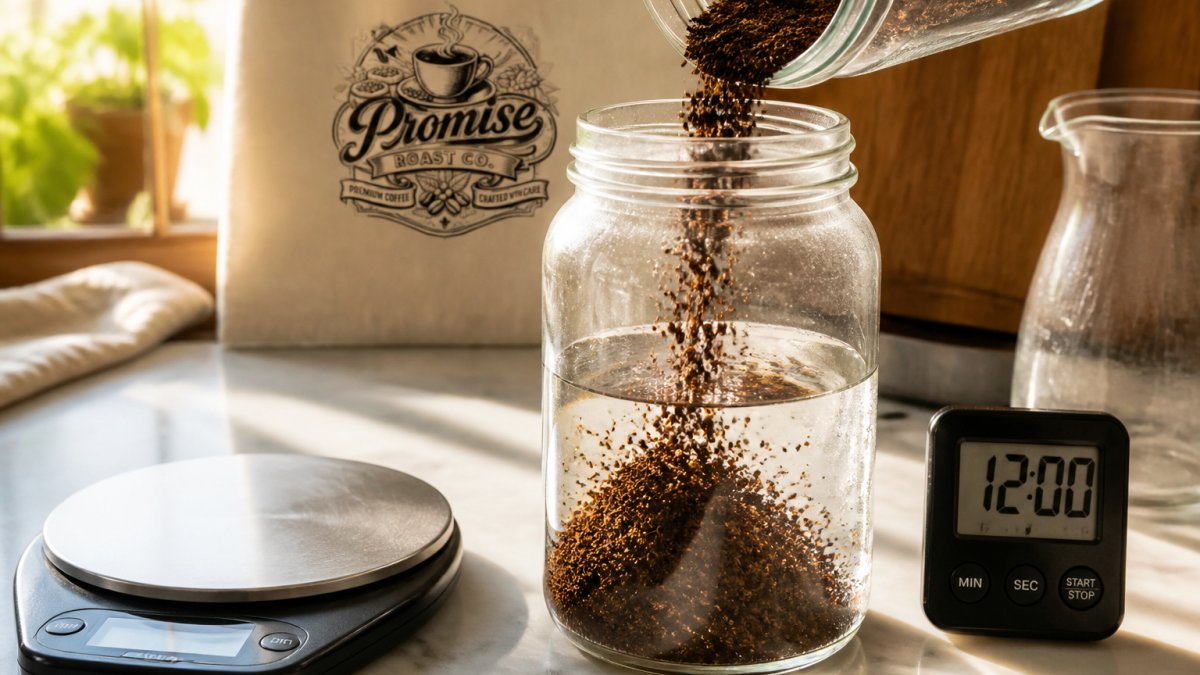
Making espresso blend cold brew at home takes five minutes of active work and then patience. Here’s the process:
Step 1: Measure your beans and grind. Weigh out your coffee using the ratio you’ve chosen, 1:4 is a good starting point. Grind coarse, like sea salt. If you don’t have a scale, a rough guide is 1 ounce of beans per 4 ounces of water, or about 1/4 cup of beans per cup of water.
Step 2: Add water. Pour cold, filtered water into a clean jar. Add your ground coffee and stir well to make sure all grounds are wet. Air pockets slow extraction, so mix thoroughly.
Step 3: Cover and refrigerate. Seal the jar and place it in the refrigerator. You can steep for 12 to 24 hours depending on how strong you like it.
Step 4: Strain. Pour the mixture through a fine mesh strainer or cheesecloth into another container. This removes the grounds. If you want extra clarity, strain a second time through a coffee filter.
Step 5: Dilute and serve. Your concentrate is now ready. Mix it with water, milk, or ice to taste. A typical serving is 1 part concentrate to 1 part water or milk, but adjust to your preference.
The whole process requires minimal equipment, a jar, a grinder, a scale (optional but helpful), and a strainer. No special brewer needed.
Ready-to-Drink Espresso Blend Cold Brew Options
Ready-to-drink options offer convenience for busy mornings or when you want consistency without brewing.
STŌK Espresso Blend Unsweetened Cold Brew
STŌK’s unsweetened espresso blend cold brew uses an Arabica-based blend and arrives ready to drink with no added sweeteners.
The unsweetened format lets you customize sweetness. The ready-to-drink format eliminates brewing. A 12-ounce serving delivers caffeine comparable to cold brew concentrate.
Ready-to-drink cold brew may lose freshness in transit and costs more per ounce than home-brewed concentrate.
Bizzy Organic Cold Brew Coffee, Espresso Blend
Bizzy offers a 48-ounce organic espresso blend with 250 milligrams of caffeine per 12-ounce serving.
Organic certification signals sourcing care. The 48-ounce size is economical. Exact caffeine content removes guesswork.
Organic certification doesn’t guarantee superior flavor. Shelf life and freshness depend on storage and distribution beyond your control.
Whole Bean Espresso Blends for Home Cold Brewing
For people who prefer to brew at home, whole bean espresso blends offer control and freshness. You grind what you need and steep on your schedule. Whole beans stay fresh longer than pre-ground coffee, so flavor remains peak throughout the bag.
Red Bird Espresso Cold Brew Blend
Red Bird markets this blend for both espresso and cold brew, with guidance for 1 serving per 32 ounces of water and 12-24 hour steep time.
The dual-purpose design works for both brewing methods. The roaster has optimized for cold water extraction. Clear guidance removes confusion.
A 1-pound bag makes 4-5 servings, requiring frequent reorders. The listing lacks roast level and tasting notes.
Promise Roast Co. Espresso Blends
Promise Roast Co. roasts espresso blends fresh after your order, ensuring peak freshness. Small-batch roasting means fresher beans extract more cleanly and taste brighter.
Our espresso blends emphasize chocolate, nut, and caramel notes that shine in cold brew without hot water’s sharpness. Free U.S. shipping is available.
What works: Freshness is the differentiator. Beans roasted after your order arrives taste noticeably better than beans roasted weeks or months ago. The small-batch approach means you’re not getting commodity coffee. Our diverse selection means you can explore different origins and blends.
What doesn’t: Roasting to order takes 1 to 5 days before shipping, so you won’t have coffee in hand immediately. This is a trade-off: you wait a few days to get fresher beans than you’d find anywhere else.
Flavor Profile and Tasting Notes
Espresso blend cold brew typically delivers a specific flavor spectrum. Understanding these tasting notes helps you choose a blend that matches your preferences.
Chocolate and cocoa notes are the foundation of most espresso blends. These come from the roasting process and from bean origins like Colombia and Brazil.
Nutty notes, hazelnut, almond, walnut, complement chocolate and add complexity. These flavors develop during roasting and become more pronounced in cold water extraction.
Caramel and brown sugar sweetness emerge from the roasting and from certain bean origins.
Berry and dried fruit notes appear in some espresso blends, particularly those that include African origins. These are brighter, more delicate notes that work well if you prefer complexity over boldness.
Smoky or earthy undertones signal a darker roast. These notes are intentional in espresso blends meant for people who want bold, intense coffee.
The best way to discover your preference is to try a few blends and pay attention to what you enjoy. Some people gravitate toward chocolate-forward blends.
Choosing an espresso blend for cold brew comes down to understanding what you want from the final cup.
Frequently Asked Questions
What is espresso blend cold brew?
Espresso blend cold brew is cold-brewed coffee made from espresso-roasted or espresso-blend beans steeped in cold water for 12-24 hours. The result is a smooth, bold concentrate with lower acidity than hot espresso but richer body than standard cold brew. Espresso blends typically feature dark roast beans from Central America or South America, often with chocolate, nutty, or caramel notes that intensify during slow steeping.
How is espresso blend cold brew different from regular cold brew?
Espresso blend cold brew uses beans specifically roasted for espresso, darker roasts with bolder, more concentrated flavor, while regular cold brew often uses medium roasts. The espresso blend version delivers stronger chocolate, nutty, and smoky notes with less acidity. Regular cold brew tends toward brighter, more balanced profiles. Both steep in cold water, but espresso blend creates a richer, more intense concentrate suitable for serving straight or diluted.
What caffeine content should I expect from espresso blend cold brew?
Caffeine in espresso blend cold brew depends on serving size and brew strength. Ready-to-drink versions like Bizzy Organic provide 250 mg per 12 oz serving. Homemade concentrates vary based on your coffee-to-water ratio; a 1:4 ratio (1 part coffee to 4 parts water) typically yields 150-200 mg per 8 oz serving. Espresso roasts contain slightly more caffeine than lighter roasts, though the difference is modest. Always check product labels for exact milligrams per serving.
How long should espresso blend coffee steep for cold brew?
Espresso blend cold brew typically steeps for 12-24 hours in the refrigerator. Shorter steeps (12 hours) produce lighter, more nuanced flavor; longer steeps (18-24 hours) create bolder, more concentrated results. Begin checking flavor around 12 hours and adjust to your taste. Temperature matters: colder water extracts more slowly, so refrigerated steeping takes longer than room-temperature steeping. Once steeped, strain through a fine mesh and store the concentrate for up to 2 weeks.
What coffee-to-water ratio works best for espresso blend cold brew?
A 1:4 ratio (1 part coffee to 4 parts water by weight) is standard for espresso blend cold brew concentrate. For example, 8 ounces of grounds to 32 ounces of cold water. If you prefer a stronger concentrate, try 1:3. Dilute the finished concentrate with water, milk, or ice before drinking. Red Bird’s product guidance recommends one serving per 32 oz of water, aligning with the 1:4 standard. Adjust ratios based on your preferred strength and serving method.