Table of Contents
- What Small Batch Coffee Actually Means
- Small Batch vs Commercial Coffee: A Side-by-Side Look
- The Benefits of Small Batch Roasted Coffee for Flavor and Freshness
- The Impact of Roast Date on Coffee Flavor
- Precision, Quality Control, and the Role of the Roastmaster
- Sustainability, Waste Reduction, and Environmental Impact
- How to Store Small Batch Coffee to Protect Freshness
- Conclusion
Last Updated: August 21, 2026
What Small Batch Coffee Actually Means
Small-batch roasting is the practice of roasting coffee in intentionally limited quantities, sized to preserve precision over volume, so that every bean receives consistent, controlled heat exposure. This is fundamentally different from large commercial operations that prioritize throughput. The roastmaster monitors each batch individually, adjusting variables in real time rather than running automated profiles.
The practical result is coffee that reaches you closer to its roast date, processed with more care per bean, and traceable to a specific origin and roast session. For coffee enthusiasts wondering why their home-brewed cup never matches specialty café quality, the roast batch size is often the overlooked answer.
Small Batch vs Commercial Coffee: A Side-by-Side Look
The gap between small-batch and commercial coffee extends far beyond scale. It shapes every production decision.
Batch Size, Roast Frequency, and Equipment
Commercial roasters operate industrial drum roasters capable of processing hundreds or thousands of pounds per hour. The thermal mass requires aggressive, standardized profiles to maintain consistency across massive runs. Small-batch roasters use smaller drums that respond faster to temperature adjustments, allowing more nuanced heat transfer curves. This equipment constraint forces precision.
Commercial operations roast to inventory, meaning coffee may sit in warehouses for weeks or months before reaching retail shelves. Small-batch roasters, particularly those roasting to order, compress the time between roast and delivery dramatically.
Traceability, Sourcing, and the Supply Chain Difference
Commercial coffee supply chains are often opaque, blending beans from multiple origins and harvests to hit consistent flavor targets and price points. Small-batch roasters typically source from specific farms or cooperatives, with single-origin offerings tracing coffee to a specific country, region, or farm.
According to the Specialty Coffee Association’s resources on coffee traceability, traceability in coffee sourcing connects the final cup back to the farm where beans were grown, mattering for flavor, sustainability, and the people growing the coffee.
| Factor | Small-Batch Roasting | Commercial Roasting |
|---|---|---|
| Batch size | Small, precise runs | High-volume, continuous |
| Roast frequency | Roasted to order or weekly | Roasted to inventory |
| Traceability | Single-origin, farm-level | Often blended, limited |
| Roast profile control | Manual, batch-specific | Automated, standardized |
| Time to consumer | Days | Weeks to months |
| Sustainability focus | High, waste-minimal | Variable |
The Benefits of Small Batch Roasted Coffee for Flavor and Freshness
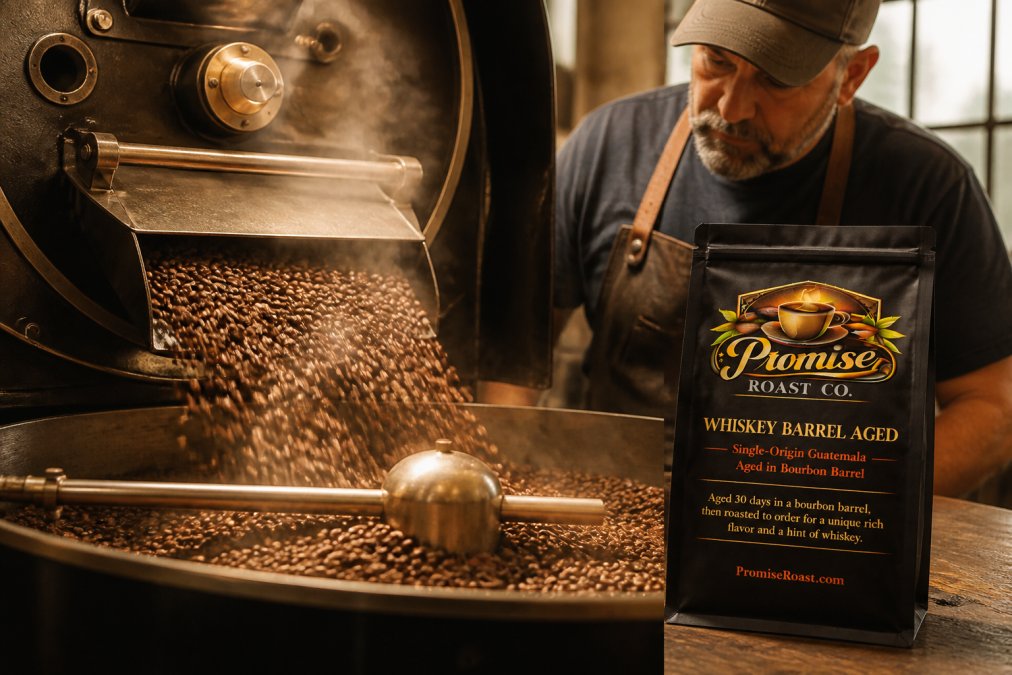
Freshness is measurable. Coffee begins degassing carbon dioxide immediately after roasting, and aromatic compounds responsible for sensory experience are volatile, dissipating over time. A bag sitting on a retail shelf for two months has already lost significant aromatic profile. Small-batch roasting, especially roast-to-order models, collapses the time between roast date and your first brew, where flavor lives.
The Maillard Reaction, Roast Profiles, and Flavor Compounds
The Maillard reaction creates most flavor compounds in roasted coffee when heat causes amino acids and reducing sugars to react, producing hundreds of distinct aromatic molecules. The roast profile, the precise temperature curve over time, determines which compounds develop and in what proportion.
A skilled roastmaster can adjust the roast profile in response to bean density, moisture content, and origin characteristics. Dense beans from high-altitude farms require different heat transfer timing than lower-density beans. Commercial profiles cannot accommodate these differences at scale. This is why two coffees roasted to the same visual level taste dramatically different.
As the National Coffee Association’s guide to coffee roasting explains, time and temperature are the primary variables determining final cup character.
Degassing, Shelf Life, and the Aromatic Profile Window
After roasting, coffee needs 24 to 72 hours to release built-up CO2 before brewing. The aromatic profile window, when coffee is optimally fresh, generally falls between 5 and 21 days post-roast, varying by roast level and origin. Commercial coffee often passes through this window before reaching you. Small-batch coffee roasted to order arrives inside it.
The Impact of Roast Date on Coffee Flavor
Roast date is the single most important piece of information on a coffee bag. Coffee four weeks past its roast date tastes noticeably flatter, less aromatic, and often carries a stale or papery quality that no brewing method can fix.
Roast date affects extraction as well. Freshly roasted coffee extracts differently than aged coffee. For filter brewing, coffee in the 7-to-14-day post-roast window typically produces the most balanced extraction with clear flavor clarity. Buying coffee without a roast date is a gamble. Small-batch roasters who roast to order remove that uncertainty entirely.
Precision, Quality Control, and the Role of the Roastmaster
Small-batch coffee roasting manages variation intentionally. The roastmaster understands how each origin, harvest, and bean density requires a slightly different approach, then executes with precision.
Cupping, the formal tasting protocol used across specialty coffee, is central to this process. A roastmaster cups each batch against a reference profile to verify the roast achieved its intended flavor targets. Small-batch roasters cup frequently, sometimes every batch. This consistency is paradoxically more reliable than industrial consistency, commercial roasting achieves it by flattening variation, while small-batch roasting achieves it by responding to it.
Sustainability, Waste Reduction, and Environmental Impact
Roasting to order means producing only what has been sold. There is no surplus inventory to discard. Commercial roasters must overproduce to ensure shelf availability, generating waste when product doesn’t sell within its shelf life.
Smaller batch sizes allow roasters to work with micro-lots and experimental origins that would be unviable at commercial scale. These coffees are often grown by small farms using traditional or sustainable methods that cannot supply the volume a commercial roaster requires. Supporting small-batch roasters directly supports the farmers and growing practices producing the most interesting and sustainably cultivated coffees.
According to the USDA’s resources on sustainable agriculture and supply chains, shorter, more transparent supply chains are associated with reduced food waste and better outcomes for producers.
How to Store Small Batch Coffee to Protect Freshness
Getting fresh small-batch coffee and storing it poorly wastes the quality you paid for. The enemies of fresh coffee are oxygen, light, heat, and moisture, in roughly that order.
- Oxygen: Keep coffee in an airtight container. Many small-batch bags come with one-way degassing valves, which allow CO2 to escape without letting oxygen in.
- Light: Store coffee away from direct sunlight. Opaque containers or matte bags are better than clear glass jars.
- Heat: Room temperature storage is fine. Avoid storing coffee near the stove or above the refrigerator.
- Moisture: Do not refrigerate or freeze coffee unless storing a large quantity for more than a month. Condensation from temperature cycling is more damaging than cold is helpful.
For most people buying small-batch coffee in 250g or 340g quantities, use the coffee within two to three weeks of the roast date. An airtight bag or small container at room temperature is all you need.
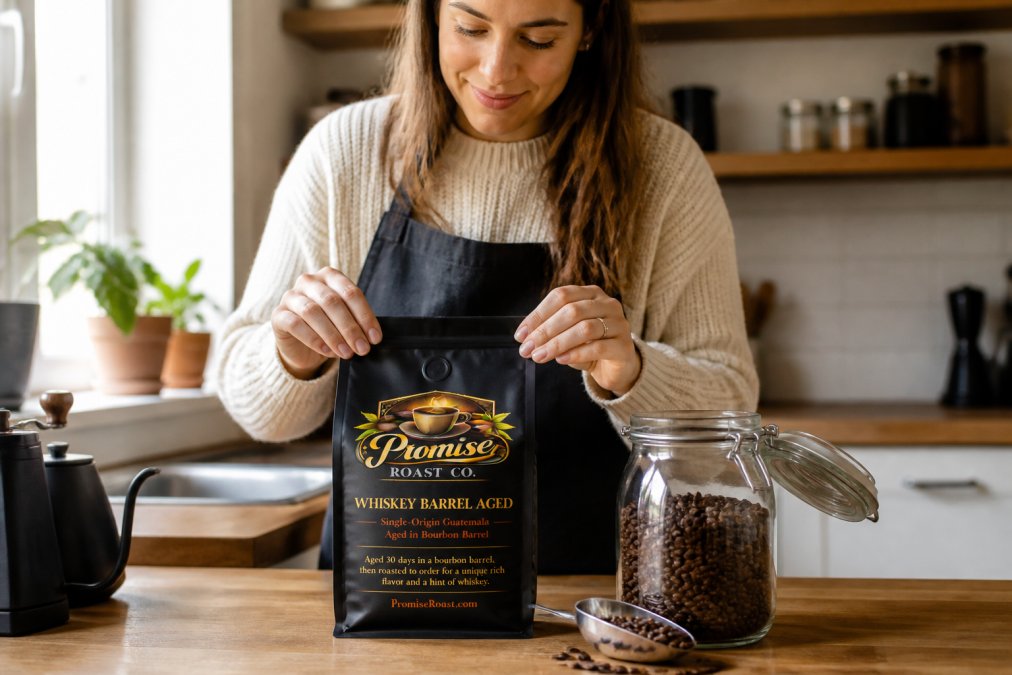
The barrel-aging process adds complexity that only works when underlying bean quality and freshness are dialed in. Check the product page for current pricing, package size, and available options. To compare cost per serving, divide the current package price by the number of servings you actually brew.
| Storage Method | Ideal For | Freshness Window |
|---|---|---|
| Original bag, sealed with clip | Up to 2 weeks post-roast | Best for quick use |
| Original bag with one-way valve | Up to 3 weeks post-roast | Most practical option |
| Airtight opaque container | Up to 3-4 weeks post-roast | Good for decanted beans |
| Freezer (sealed, no cycling) | Long-term storage only | Thaw once, use fully |
A common mistake is grinding coffee in advance. Ground coffee has dramatically more surface area exposed to oxygen and goes stale in days. Grind immediately before brewing.
The challenge most coffee drinkers face is finding coffee that arrives fresh enough to deliver on its promise. Promise Roast Co. addresses this by roasting every order individually, with a 1-to-5-day processing window designed to put coffee in your hands at peak freshness. Free shipping across the U.S. removes the cost barrier that often pushes people toward bulk retail purchases. Shop Coffee at Promise Roast Co. and experience what the roast date actually means for your morning cup.
Frequently Asked Questions
Is small batch coffee actually better than mass-produced coffee?
For most coffee drinkers who prioritize flavor, yes. Small batch roasting means beans are roasted in shorter production runs, often to order, which preserves volatile flavor compounds that degrade quickly after roasting. Mass-produced coffee is typically roasted weeks or months before it reaches a shelf. The sensory difference is most noticeable in the aromatic profile, small batch coffee smells and tastes noticeably brighter. That said, quality depends on sourcing and roasting skill, not batch size alone.
How long should you wait to drink freshly roasted coffee?
Most specialty coffee roasters recommend waiting 24 to 72 hours after roasting before brewing. Freshly roasted beans release CO2 through a process called degassing, and brewing too soon can produce uneven extraction and a slightly sour or gassy taste. For espresso, waiting 5 to 7 days often produces the best results. Drip and pour-over methods typically peak between 3 and 10 days post-roast. After about 3 to 4 weeks, most of the aromatic compounds have dissipated noticeably.
What defines ‘small batch’ in the coffee roasting industry?
There is no single regulated definition, but small batch roasting generally refers to production runs under 15 to 25 pounds per roast cycle, often on drum roasters sized for artisanal output rather than industrial throughput. The key distinction is roasting frequency and intent: small batch roasters typically roast more often, in smaller quantities, to keep inventory fresh. Some roasters, including Promise Roast Co., roast each order individually, which is the most direct form of small batch production.
Does roasting to order really make a noticeable difference in how my coffee tastes?
It does, particularly in the first two to three weeks after roasting. Coffee begins losing its most volatile flavor compounds within days of roasting. Beans that ship the same week they are roasted arrive with their full aromatic profile intact. Coffee that has sat in a warehouse or on a retail shelf for 60 to 90 days before purchase has already lost much of that complexity. Cupping tests consistently show that roast date is one of the strongest predictors of perceived freshness and flavor intensity.
This article was written using GrandRanker