Table of Contents
- Fresh Roasted Coffee vs Grocery Store: What Sets Them Apart
- How to Tell if Coffee Beans Are Fresh
- The Science of Coffee Freshness and Flavor Decay
- Flavor Profile Differences: Fresh vs Mass-Produced
- How to Store Coffee Beans for Maximum Freshness
- Cost Analysis: Price Per Cup and Real Value
- Where Each Option Wins: Use Cases and Recommendations
- Conclusion
Last Updated: August 26, 2026
Fresh Roasted Coffee vs Grocery Store: What Sets Them Apart
The difference between fresh roasted coffee and grocery store coffee is significant. When you brew fresh roasted coffee, you’re tasting the result of careful sourcing, precise roasting, and timing, factors that vanish from beans sitting on a supermarket shelf for months. At Promise Roast Co., we roast every order individually to lock in peak freshness.
Coffee begins degrading the moment it’s roasted. Oxidation starts immediately, breaking down the aromatic compounds that make coffee taste vibrant and complex. Grocery store coffee, roasted weeks or months before you buy it, has already lost much of what made it worth brewing. The real question isn’t whether fresh roasted tastes better, it objectively does, but whether that difference justifies the price and ordering process.
The Freshness Factor
Fresh roasted coffee reaches peak flavor within days of roasting. The critical phase happens in the first 1-5 days after roasting, when the beans are still degassing and releasing CO2 (peer-reviewed research). After that, the flavor profile becomes more stable, still excellent for weeks, but gradually losing the brightness and nuance that define specialty coffee.
Grocery store coffee has already passed through this window by the time you purchase it. Most supermarket beans are roasted 2-4 weeks before they hit shelves, sometimes longer (the FDA). By the time you brew them, they’re 4-6 weeks past roasting. At that point, oxidation has degraded the volatile aromatics that carry flavor.
The roast date is your most reliable indicator of freshness. If a bag doesn’t display one, that’s a signal the roaster wants you to focus on the brand name rather than product quality. Promise Roast Co. prints the roast date clearly on every bag.
Quick Comparison Table
| Factor | Fresh Roasted | Grocery Store |
|---|---|---|
| Roast Date Visibility | Clearly printed | Often missing or vague |
| Days Since Roasting | 1-14 days | 21-60+ days |
| Flavor Complexity | High (bright, nuanced) | Low (flat, muted) |
| Aroma Intensity | Strong, vibrant | Weak, stale |
| Price per Bag | See current product pricing | See current product pricing |
| Sourcing Transparency | Single-origin or named blend | Generic “coffee” |
| Packaging | One-way valve, airtight | Standard bag or can |
| Best Brewing Window | Immediate to 3 weeks | Use quickly or waste |
How to Tell if Coffee Beans Are Fresh
Freshness is measurable. You can evaluate beans before brewing by checking three things: the roast date, visual appearance, and aroma.
Checking the Roast Date
The roast date is non-negotiable. If a bag doesn’t have one, don’t buy it. Look for a printed date on the bag, not a “best by” date, which is different. Ideally, you want beans roasted within the last 2 weeks. Anything older than 4 weeks has already started losing its peak flavor window.
Some roasters use a roasting code instead of a full date. If you see numbers like “082626,” that’s August 26, 2026, the roast date encoded. Grocery store coffee often skips this entirely, replacing it with vague language like “freshly roasted” without any date to verify the claim.
Visual and Sensory Cues
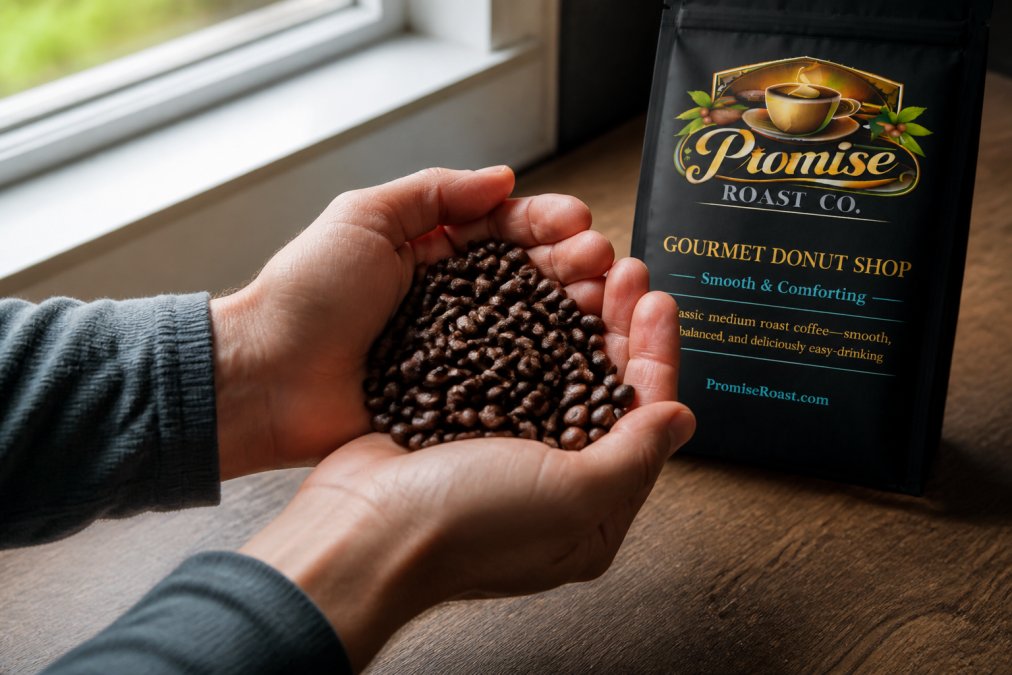
Fresh beans have a subtle sheen from the coffee oils that remain on the surface. Over time, as the beans oxidize, they become duller and more matte. The color should be consistent across the batch. Fresh roasted coffee has uniform coloring because all the beans roasted together at the same time.
Smell the beans if you can. Fresh roasted coffee has an intense, complex aroma with notes specific to the origin: chocolate, fruit, nuts, flowers. Stale coffee smells flat, sometimes almost musty. If the aroma is weak or absent, the coffee has already lost volatile compounds.
The Science of Coffee Freshness and Flavor Decay
Coffee flavor depends on volatile organic compounds, aromatic molecules that dissolve in hot water and create taste. These compounds are fragile and begin breaking down the moment roasting ends.
Oxidation and the Degassing Phase
Oxidation is the enemy of coffee freshness. When roasted beans are exposed to oxygen, volatile compounds oxidize into different molecules that don’t taste as good. The process is gradual but relentless.
Immediately after roasting, beans release CO2, a byproduct of the roasting process. This degassing actually improves flavor during the first few days because it allows water to extract the coffee more evenly during brewing. The sweet spot is 2-5 days post-roast, when the beans have released enough CO2 to brew cleanly but haven’t yet lost their aromatic complexity.
Grocery store coffee has completed its degassing phase long before you buy it. The CO2 is gone, but so are many of the flavor compounds that made the coffee interesting.
Why Roast Date Importance Cannot Be Overstated
The roast date determines everything about what you’ll experience in your cup. It’s more important than the price, the brand name, or the marketing on the bag. Coffee flavor decay is a function of time, not storage method. You can store beans perfectly and they’ll still oxidize.
This is where fresh roasted coffee wins decisively. Promise Roast Co. roasts your order after you place it, meaning your beans reach peak flavor when they arrive at your door.
Flavor Profile Differences: Fresh vs Mass-Produced
The taste difference between fresh and stale coffee comes down to which flavor compounds remain in the beans. Fresh roasted coffee tastes bright, layered, and complex. Grocery store coffee tastes flat, one-dimensional, and sometimes bitter.
Acidity, Body, and Complexity
“Acidity” in coffee doesn’t mean sour, it means liveliness. Fresh roasted coffee has pronounced acidity that makes the flavor pop. This acidity comes from specific organic acids that oxidize away over time.
Body refers to the weight and texture of the coffee in your mouth. Fresh roasted coffee often has a fuller, more syrupy body. Stale coffee tastes thin and watery by comparison.
Complexity is the range of flavors you detect in a single cup. A fresh roasted Colombia might show notes of dried orange, berry, and chocolate all in one sip. The same coffee roasted 6 weeks ago tastes like generic coffee, brown, slightly bitter, missing the flavor layers.
Grocery store coffee is often roasted darker specifically to mask the flavor loss that comes with age. Dark roasts have bold, obvious flavors that survive oxidation better than the delicate fruit and floral notes of lighter roasts.
The Impact of Sourcing and Batch Roasting
Where the coffee comes from matters enormously. Single-origin beans have distinct flavor profiles shaped by altitude, soil, climate, and processing method. A Colombia roasted fresh tastes bright, fruity, and balanced. The same Colombia roasted 8 weeks ago tastes generic because the flavor compounds that made it distinctive have oxidized.
Promise Roast Co. roasts to order in small batches, meaning each bag is roasted when you order it and reaches you at peak freshness. Mass-produced grocery store coffee often uses blends of beans from multiple origins and roasts mixed together, masking inconsistency but also eliminating the distinctive character of a single origin.
How to Store Coffee Beans for Maximum Freshness
Storage doesn’t stop oxidation, but proper storage slows it down significantly. The goal is to minimize the coffee’s exposure to oxygen, light, heat, and moisture.
Storage Best Practices
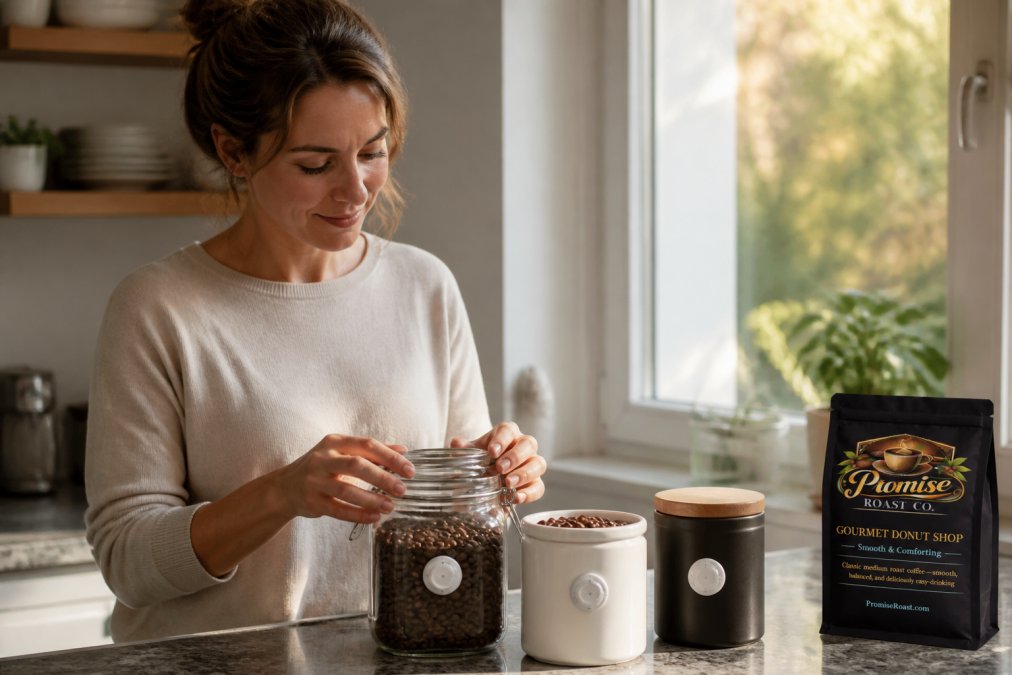
Store whole beans in an airtight container away from direct sunlight and heat. A sealed bag with a one-way valve (which lets CO2 escape but prevents oxygen from entering) is ideal. Keep the container in a cool, dark place, a cabinet or pantry, not above the stove or on a sunny counter.
Temperature matters more than most people realize. Coffee stored at room temperature (65-75°F) stays fresh longer than coffee stored in warm environments. Whole beans stay at peak flavor for 3-4 weeks, acceptable for 4-8 weeks (peer-reviewed research).
Whole Bean vs Pre-Ground
Buy whole beans whenever possible. Whole beans expose a tiny surface area to oxygen. Pre-ground coffee has been broken into hundreds of small pieces, each one oxidizing independently. Pre-ground coffee from a grocery store shelf is often already stale by the time you buy it.
If you don’t have a grinder, buy whole beans and ask the roaster to grind them for you immediately before you leave. Or invest in a basic burr grinder. The $30-50 cost pays for itself within a few bags in flavor quality.
Cost Analysis: Price Per Cup and Real Value
Fresh roasted coffee costs more upfront than grocery store coffee. Check the product page for current pricing, package size, and available options. To compare cost per serving, divide the current package price by the number of servings you actually brew.
A standard bag contains about 12 ounces, which brews roughly 12-15 cups depending on your brewing method and strength preference. Check the product page for current pricing, package size, and available options. To compare cost per serving, divide the current package price by the number of servings you actually brew.
The math seems to favor grocery store coffee, but this calculation misses the actual value proposition. Fresh roasted coffee is more flavorful, which means you’re more likely to actually enjoy your morning ritual. There’s also the waste factor. Stale grocery store coffee often tastes so unpleasant that people don’t finish the bag. Fresh roasted coffee gets consumed because it tastes good.
Where Each Option Wins: Use Cases and Recommendations
Neither option is objectively “better” for everyone. The right choice depends on your priorities, budget, and how much you care about the daily coffee experience.
When Fresh Roasted Makes Sense
Buy fresh roasted coffee if you drink coffee daily and want to actually taste it. If your morning ritual matters to you, fresh roasted coffee transforms that experience. The flavor complexity makes a difference you’ll notice and appreciate.
Buy fresh roasted if you’re exploring different origins and flavor profiles. Single-origin coffees only reveal their character when they’re fresh.
Buy fresh roasted if you can finish a bag within 3-4 weeks. Fresh roasted coffee’s advantage disappears if you let it sit for months.
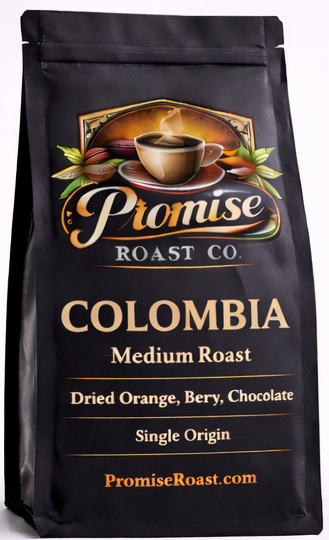
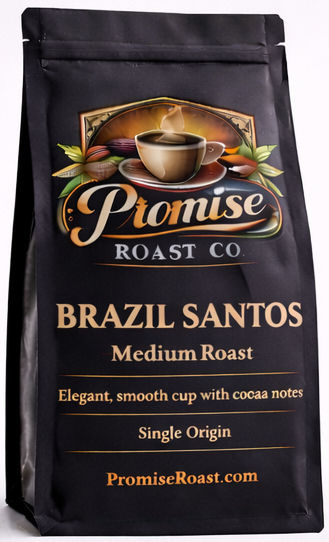
Promise Roast Co. makes sense for this category. If you want to explore single origins, our Colombia delivers bright fruit-and-chocolate notes, or try the Brazil Santos for a classic, mellow profile. Each bag is roasted after your order, ensuring peak freshness when it arrives. Check the product page for current pricing, package size, and available options. To compare cost per serving, divide the current package price by the number of servings you actually brew. Explore: House Blend · smooth, consistent flavor · Colombia · Brazil Santos.
When Grocery Store Coffee Is Acceptable
Buy grocery store coffee if you’re budget-limited and need to prioritize cost over flavor. Caffeine is the goal and taste is secondary.
Buy grocery store coffee for cooking or baking, where the subtlety of fresh roasted coffee would be lost anyway.
Buy grocery store coffee if you drink it rarely, once or twice a week. Fresh roasted coffee’s advantage is wasted on someone who doesn’t drink enough to stay in the optimal freshness window.
Conclusion
The difference between fresh roasted coffee and grocery store coffee is measurable, consistent, and immediately noticeable in the cup. Fresh coffee tastes brighter, more complex, and more alive. Grocery store coffee tastes flat by comparison, not because it’s bad, but because oxidation has already claimed the volatile compounds that carry flavor.
If you drink coffee daily and care about the taste, fresh roasted is worth the premium. Promise Roast Co. roasts every order individually to guarantee peak freshness when it reaches you. For a more adventurous palate, explore our single-origin options like Colombia or Bali Blue, each roasted to order and shipped free. Get started with Promise Roast Co. and experience the difference that peak freshness makes. Check the product page for current pricing, package size, and available options. To compare cost per serving, divide the current package price by the number of servings you actually brew. Explore: House Blend · Colombia · Bali Blue.
Frequently Asked Questions
Is fresh roasted coffee actually better than store-bought?
Yes, fresh roasted coffee delivers noticeably better flavor because the beans retain more volatile aromatic compounds and oils that degrade over time. Grocery store coffee often sits on shelves for weeks or months, losing acidity, complexity, and sweetness through oxidation. Small-batch roasters roast to order, meaning your beans reach peak freshness within days rather than months. The difference becomes especially clear when you brew single-origin beans side by side, fresh roasted shows brighter flavor notes and cleaner extraction.
How long does coffee stay fresh after the roast date?
Coffee reaches peak freshness 3-7 days after roasting, when the degassing phase completes and flavor compounds stabilize. Whole beans stay flavorful for 2-4 weeks if stored properly in an airtight container away from heat and light. After one month, oxidation noticeably diminishes acidity and complexity. Pre-ground coffee degrades faster, within 1-2 weeks, because the larger surface area accelerates flavor loss. Check the roast date on your bag; if it’s more than 30 days old, expect a flatter, less vibrant cup.
How can you tell if coffee beans are fresh?
The roast date is your most reliable indicator. Look for bags labeled with a recent roast date (within the last 2-3 weeks). Fresh beans also have a glossy appearance and strong aroma when you open the bag. Stale beans look dull and may smell musty or rancid. If the bag has no roast date printed on it, the coffee is likely old, supermarket shelves often stock beans that are months past roasting. When in doubt, choose whole beans over pre-ground, as they preserve freshness longer.
Why does the coffee roast date matter so much?
The roast date matters because it marks the beginning of flavor degradation. Immediately after roasting, beans release carbon dioxide during the degassing phase, which affects extraction and taste. Within days, coffee oils oxidize and volatile aromatics evaporate, causing acidity to fade and bitterness to increase. A roast date tells you exactly how long ago those changes began. Fresh roasted coffee with a recent roast date guarantees you’re buying beans at their peak sensory profile, with the bright, complex flavor notes the roaster intended, rather than a stale product that’s lost its character.
This article was written using GrandRanker