Table of Contents
- Why Most Coffee Labels Hide the Truth About Quality
- The Coffee Roast Date Importance: Your First Quality Filter
- 5 Clear Signs of Fresh Roasted Coffee Before You Brew
- Visual and Tactile Checks: What High Quality Coffee Beans Look Like
- How to Taste Coffee Notes and Evaluate Body and Acidity
- Sourcing and Roasting: Why Single-Origin and Small Batches Matter
- Brewing for Quality: Extraction, Ratios, and Water Temperature
- Common Misconceptions About Identifying High Quality Coffee
- Frequently Asked Questions
Last Updated: September 9, 2026
Why Most Coffee Labels Hide the Truth About Quality
Walk down any grocery aisle and you will see bags promising “premium,” “artisan,” and “small-batch” coffee. The reality is that most of these labels tell you almost nothing about the quality of the beans inside. High quality coffee is defined by measurable factors like roast date, origin transparency, and bean density, not by marketing adjectives.
At Promise Roast Co., we roast every order individually to guarantee peak freshness. A bag of coffee can sit on a shelf for months before reaching your cup, and no amount of fancy branding will fix stale beans. Learning how to identify high quality coffee starts with ignoring the front of the bag and reading the fine print.
The Coffee Roast Date Importance: Your First Quality Filter
The single most reliable indicator of coffee quality is the roast date printed on the bag. Coffee is perishable, and its flavors degrade rapidly after roasting due to oxidation and the release of carbon dioxide.
Coffee beans peak in flavor between 4 and 14 days after roasting (ncausa.org). During the first few days, beans undergo degassing, where trapped carbon dioxide escapes; brewing too early can result in a flat, under-extracted cup.
A common mistake is confusing the “best by” date with the roast date. The best-by date is a conservative shelf-life estimate that can be 12 to 18 months out, while the roast date tells you when the beans were transformed from green to brown.
5 Clear Signs of Fresh Roasted Coffee Before You Brew
- A pronounced aroma upon opening the bag. Freshly roasted beans release a bold, sweet fragrance that fills the room instantly. If the smell is flat or barely noticeable, the beans are past their prime.
- An audible pop when you crack a bean. Fresh beans are dense and brittle. Squeeze one between your fingers and listen for a crisp snap.
- Visible oils on the surface. Depending on the roast level, fresh beans may show a light sheen of natural oils. Darker roasts reveal oils within days of roasting.
- A specific roast date within the last two weeks. This is the most objective sign and should always take priority over subjective checks.
- Beans that feel firm and dense, not light and crumbly. Stale beans lose moisture and become brittle in a way that feels distinctly hollow.
Visual and Tactile Checks: What High Quality Coffee Beans Look Like
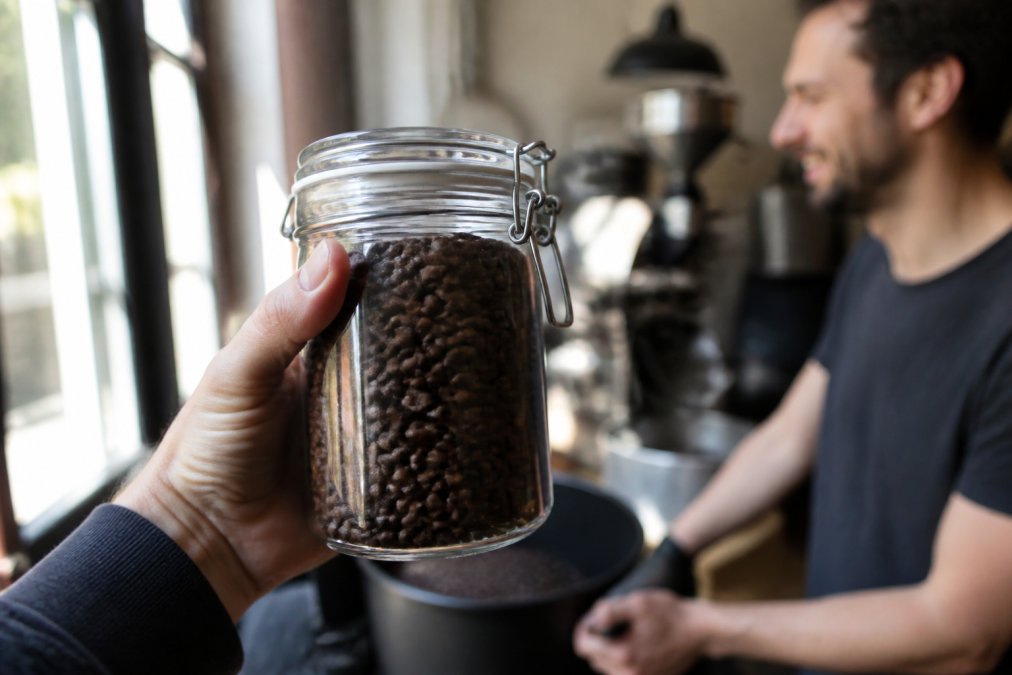
Beyond freshness, the physical appearance of the beans reveals how they were processed and handled. High quality coffee beans have a uniform size and color, indicating careful sorting and even roasting.
Inspect your beans for defects. Cracks, chips, or beans with a noticeably different color suggest inconsistent roasting or poor sorting. Specialty-grade coffee permits very few defects per sample, and quality-focused roasters remove broken beans before packaging (sca.coffee).
Grind consistency matters as much as the bean itself. A quality burr grinder produces uniform particles, while a blade grinder shatters beans into uneven fragments, leading to uneven extraction where smaller particles over-extract and taste bitter while larger ones under-extract and taste sour.
How to Taste Coffee Notes and Evaluate Body and Acidity
Most guides tell you to look for “bright acidity” or “heavy body,” but they never explain how to train your palate. Professional tasters use a structured method called cupping, developed by the Specialty Coffee Association, to evaluate beans objectively. You can replicate this at home.
The Home Cupping Protocol: A Step-by-Step Method
- Grind coarsely. Use a burr grinder set to a coarse setting, similar to sea salt. You need about 8.25 grams of coffee per 5-ounce cup.
- Add hot water. Heat filtered water to 200°F (just off the boil) and pour it over the grounds. Start a timer.
- Smell the crust. After 4 minutes, the grounds will form a crust on top. Put your nose close to the cup and inhale deeply. This is the first aromatic impression, and it is often the most intense.
- Break the crust. Use a spoon to push the crust aside gently. Smell again as you do this; the release of trapped gases carries a second wave of aromatics.
- Skim the foam. Remove any remaining grounds from the surface with two spoons.
- Slurp and evaluate. Once the coffee cools to a drinkable temperature, take a spoonful and slurp it loudly. The slurping aerates the coffee and spreads it across your palate, which is how you perceive both flavor and mouthfeel.
- Repeat as it cools. Flavors change dramatically as the coffee drops from 160°F to 120°F. A coffee that tastes flat when hot may reveal sweet, fruity notes as it cools.
A Practical Flavor Lexicon for Identifying Defects
| Attribute | Positive Descriptor | Defect Descriptor | What It Signals |
|---|---|---|---|
| Acidity | Bright, wine-like, citrusy, malic (apple-like) | Sour, sharp, acetic (vinegar-like) | Sourness often indicates under-extraction or under-ripe beans; acetic notes suggest fermentation issues during processing. |
| Body | Syrupy, heavy, creamy, juicy | Thin, watery, gritty | A watery body can mean stale beans or over-extraction that strips the coffee of its oils. |
| Flavor | Chocolate, caramel, berry, floral, nutty | Earthy, rubbery, medicinal, papery | Earthy or musty notes often point to mold or improper drying; rubbery notes can indicate over-fermentation. |
| Aftertaste | Clean, lingering, sweet | Short, bitter, astringent | A bitter, drying aftertaste (astringency) is a classic sign of over-extraction. |
The Role of Temperature in Flavor Perception
Your palate is most sensitive to sweetness and acidity when coffee is warm, not hot. As coffee cools, bitter compounds become more perceptible, which is why professional cuppers evaluate at multiple temperatures. If you are tasting a new coffee at home, let it sit for 10 minutes and taste it again. A high quality coffee will maintain its structure and reveal new layers as it cools, while a lower-grade coffee will often collapse into a flat, bitter brew.
This structured approach moves you from passive drinking to active evaluation. It is the same method used to assign cupping scores of 80 or above, the threshold for the “specialty” designation. You are not just guessing whether a coffee is good; you are measuring it against an industry-standard rubric.
Sourcing and Roasting: Why Single-Origin and Small Batches Matter
Single-origin coffee comes from one specific farm, cooperative, or region, allowing the unique terroir to shine through with distinct tasting notes. In contrast, blends combine beans from multiple origins to achieve a consistent, balanced flavor profile.
Small-batch roasting is equally important because it allows the roaster to develop each bean to its full potential. Roasting 10 pounds requires constant attention to temperature and time, while roasting 1,000 pounds relies on automated systems that cannot adapt to the beans’ changing moisture content.
Promise Roast Co. sources single-origin beans like Bali Blue from Kintamani and Ethiopia Natural from the Sidama Zone, both grown by smallholder farmers who hand-pick and process their harvest. These coffees are roasted individually after you place your order, with a 1-5 day processing window that ensures they arrive at peak flavor.
Brewing for Quality: Extraction, Ratios, and Water Temperature
Even the finest beans will produce a mediocre cup if your brewing method is off. The goal is to extract soluble compounds in the right proportions, a balance that depends on grind size, water temperature, brew time, and the coffee-to-water ratio. But two factors are almost universally ignored: the mineral content of your water and the calibration of your grinder.
The Coffee-to-Water Ratio: A Starting Point, Not a Rule
The coffee-to-water ratio is the foundation of a good brew. A standard starting point is 1 gram of coffee for every 16-18 grams of water, about 2 tablespoons per 6 ounces. Use a digital scale rather than measuring spoons, since bean density varies by roast level: light roasts are denser than dark roasts, so a tablespoon of light roast weighs more. If you switch between roast levels, the scale is your only reliable guide.
Water Temperature: The 195°F-205°F Window
Water temperature should be between 195°F and 205°F, just below boiling. Water that is too hot over-extracts, producing bitter flavors, while cooler water under-extracts and leaves the cup sour and weak. But temperature alone is not enough; the mineral content of your water is arguably more important.
Advanced Water Chemistry: Why Your Tap Water Is Sabotaging Your Brew
- Magnesium (Mg²⁺): 100-150 ppm (parts per million). Magnesium is the extraction workhorse. It binds to flavor compounds in the coffee grounds and pulls them into the water. Water with too little magnesium under-extracts, leaving the cup flat and sour.
- Calcium (Ca²⁺): 50-100 ppm. Calcium also aids extraction but is more important for body and mouthfeel. Too much calcium, however, can combine with compounds in the coffee to form scale and create a chalky, dull taste.
Most municipal tap water in the U.S. is either too hard (high in calcium and bicarbonate) or too soft (low in both minerals). Chlorine also masks delicate aromatics. A simple carbon filter removes chlorine but does not adjust mineral content. For a precise approach, many home brewers start with distilled water and add a commercial mineral packet (such as Third Wave Water) designed to hit the SCA’s target ranges. This is the single highest-impact upgrade you can make after buying a burr grinder.
Equipment Calibration: Dialing In Your Grinder
A burr grinder is essential, but owning one is not enough. You must calibrate it for your specific brewing method. Start with a grind setting that matches the texture recommended for your method (e.g., table salt for pour-over, sea salt for French press) and then adjust based on taste.
- If the coffee tastes sour, watery, or lacks sweetness: Your grind is too coarse. The water is flowing through too quickly, under-extracting. Grind finer.
- If the coffee tastes bitter, astringent, or hollow: Your grind is too fine. The water is over-extracting the bitter compounds. Grind coarser.
- If the coffee tastes balanced but weak: Your ratio is off. Add more coffee, not more time.
Make one change at a time and brew a full cup before adjusting again. Changing two variables at once makes it impossible to know which one fixed the problem. Dialing in a new bag of beans typically takes 2-3 cups.
The Bloom: A Non-Negotiable Step
For pour-over methods, the bloom is critical. After adding your first pour of water (about twice the weight of the coffee), wait 30-45 seconds for the grounds to release carbon dioxide and expand. This allows subsequent water to saturate the grounds evenly rather than channeling through dry pockets. Skip the bloom, and you will get uneven extraction, no matter how precise your ratio and water chemistry are.
National Coffee Association brewing guidelines recommend a contact time of 2-4 minutes for most drip methods, with immersion methods like the French press requiring closer to 4 minutes.
By controlling water chemistry and grinder calibration, you move beyond generic advice and troubleshoot your brew scientifically, the only way to consistently produce a cup that does justice to the quality of the beans you bought.
Common Misconceptions About Identifying High Quality Coffee
Several myths persist about judging coffee quality. The most widespread is that dark roasts are stronger or higher quality than light roasts. In reality, dark roasting can mask defects in lower-grade beans, while light roasting highlights the origin’s natural characteristics.
Another myth is that oily beans are always fresh. While some surface oil is normal for dark roasts, excessively shiny beans may indicate they were roasted too long ago or at too high a temperature, causing oils to migrate to the surface prematurely.
Expensive coffee is not automatically high quality coffee. Price reflects many factors, including import costs and brand positioning, but it does not guarantee freshness or careful roasting. A moderately priced bag with a recent roast date will almost always outperform a premium-priced bag that has sat in a warehouse for months.
Finally, many assume flavored coffees use artificial syrups that mask poor bean quality. Promise Roast Co. offers flavored roasts, such as our Coffee with Mushrooms Dark Roast, which infuses specialty-grade beans with Lion’s Mane, Cordyceps, and Reishi mushrooms for a smooth cup that works hot or iced. Our Coffee with Mushrooms Dark Roast, for example, infuses specialty-grade beans with Lion’s Mane, Cordyceps, and Reishi mushrooms for a smooth cup that works hot or iced.
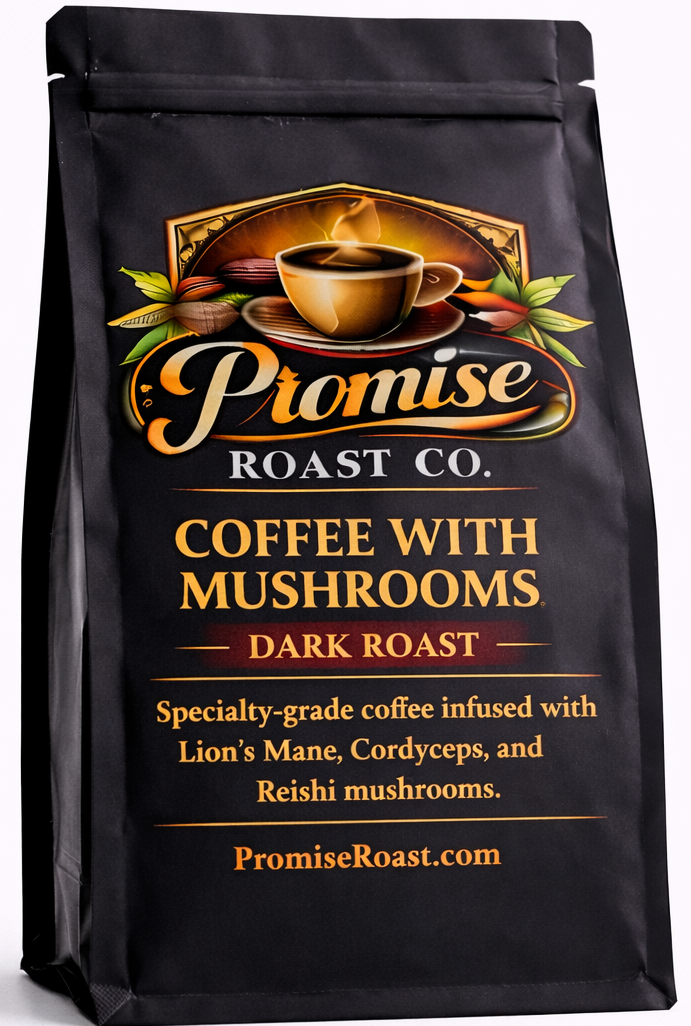
Identifying high quality coffee comes down to a few verifiable facts rather than marketing language. Check the roast date, examine the beans for uniformity, and understand the flavor profile you are looking for. When you order from a roaster like Promise Roast Co. that roasts every batch after your order is placed, you eliminate the guesswork entirely. Our single-origin coffees like Kenya and Sumatra arrive at their peak, with free U.S. shipping and a 1-5 day processing window. Shop our full selection of small-batch coffees and experience the difference that roasting to order makes in your daily ritual.
Frequently Asked Questions
How does artisan coffee differ from regular coffee?
Artisan coffee comes from small-batch roasters who prioritize peak freshness and traceable sourcing. Unlike mass-produced bags that sit in warehouses for months, artisan roasters like Promise Roast Co. roast after you order and ship within days. The difference shows up in the cup: brighter acidity, clearer tasting notes, and a sweeter finish. You also get transparency about the origin and roast date, which is rare with commercial brands.
Why is the roast date important when identifying high quality coffee?
The roast date tells you how much time has passed since the beans were roasted, which directly affects flavor. Coffee tastes best between 3 and 14 days after roasting. After that, beans slowly lose their aromatic compounds and taste flat. If a bag only shows a ‘best by’ date, the roaster is likely hiding the age of the beans. Always look for an explicit roast date, and aim to brew within a month of that date.
How can you tell if coffee beans are stale?
Stale beans lose their aroma, smell flat or cardboard-like, and produce a dull cup with no distinct tasting notes. Visually, they may look dry or oily on the surface depending on the roast level. When you squeeze the bag, you will not hear the hiss of escaping carbon dioxide, which signals degassing. Fresh beans release gas for days after roasting. If you brew stale beans, the crema will be thin, and the coffee will taste bitter or hollow.
What are the visual indicators of high-quality coffee beans?
Look for beans with a consistent size and color, which indicates even roasting. High-quality beans have a matte finish, not an oily sheen, unless they are a dark roast. You should see few to no broken beans or foreign debris in the bag. Whole beans are also a better sign than pre-ground coffee, since grinding exposes more surface area and accelerates staling. If the beans look uniform and smell fragrant when you open the bag, you are on the right track.
How do you taste coffee notes like chocolate or citrus?
To taste coffee notes, start by smelling the grounds and the brewed coffee to identify aromas. Take a small sip and let it coat your tongue. Focus on the acidity, which feels bright or crisp, and the body, which feels heavy or light. Tasting notes like chocolate, caramel, or citrus are comparisons to familiar flavors. For example, a Kenya roast often shows citrus and floral notes, while a Sumatra tends toward dark chocolate and earthiness. Comparing two single-origin coffees side by side makes the differences much easier to spot.
What role does single-origin sourcing play in coffee quality?
Single-origin coffee comes from one farm, region, or cooperative, which makes its flavor profile distinct and traceable. This transparency is a strong quality signal because it means the roaster knows exactly where the beans came from. Single-origin beans also let you experience the unique character of a place, such as the fruity brightness of Ethiopia or the syrupy body of Sumatra. Blends can be good, but they often mask lower-quality beans. Single-origin sourcing gives you a clearer standard for evaluating what is in your cup.
Is it 1 or 2 tablespoons of coffee per cup?
The standard ratio is 2 tablespoons of ground coffee for every 6 ounces of water, which equals about 1:16 coffee-to-water. Using only 1 tablespoon produces a weak, watery cup that hides the coffee’s flavor. For a stronger brew, adjust to 1:15. A digital scale gives you more precision than a scoop, because bean density varies by roast. Weighing your coffee ensures you can consistently evaluate quality and replicate a good cup every time.