
Table of Contents
- What Oxidation Does to Coffee Beans
- 7 Signs of Oxidized Coffee Beans to Check Today
- How to Tell If Coffee Beans Are Fresh Before You Brew
- How Roast Level Changes the Oxidation Timeline
- How Long Do Coffee Beans Last After Roasting?
- The Best Way to Store Coffee Beans to Slow Oxidation
- How to Train Your Senses to Catch Oxidation Early
- When to Toss Oxidized Coffee Beans (and What to Do Instead)
- Frequently Asked Questions
Last Updated: September 16, 2026
What Oxidation Does to Coffee Beans
Oxidation is the chemical reaction between oxygen and the compounds inside a roasted coffee bean, and it is the primary driver of staleness. Every bag begins losing quality the moment it meets air. At Promise Roast Co., we roast each order individually because that window between roast and brew matters.
Volatile Compounds and Carbon Dioxide Loss
The compounds responsible for coffee’s aroma are fragile. Volatile compounds like aldehydes and ketones evaporate or degrade when exposed to oxygen, heat, and light. Meanwhile, the lipids in the bean, the oils that carry much of the flavor, react with oxygen and eventually turn rancid. coffee chemistry overview from the National Coffee Association notes that freshness depends heavily on limiting oxygen exposure after roasting.
7 Signs of Oxidized Coffee Beans to Check Today
Identify oxidized coffee beans by checking aroma, appearance, and taste in that order. Here are the seven most reliable signals.
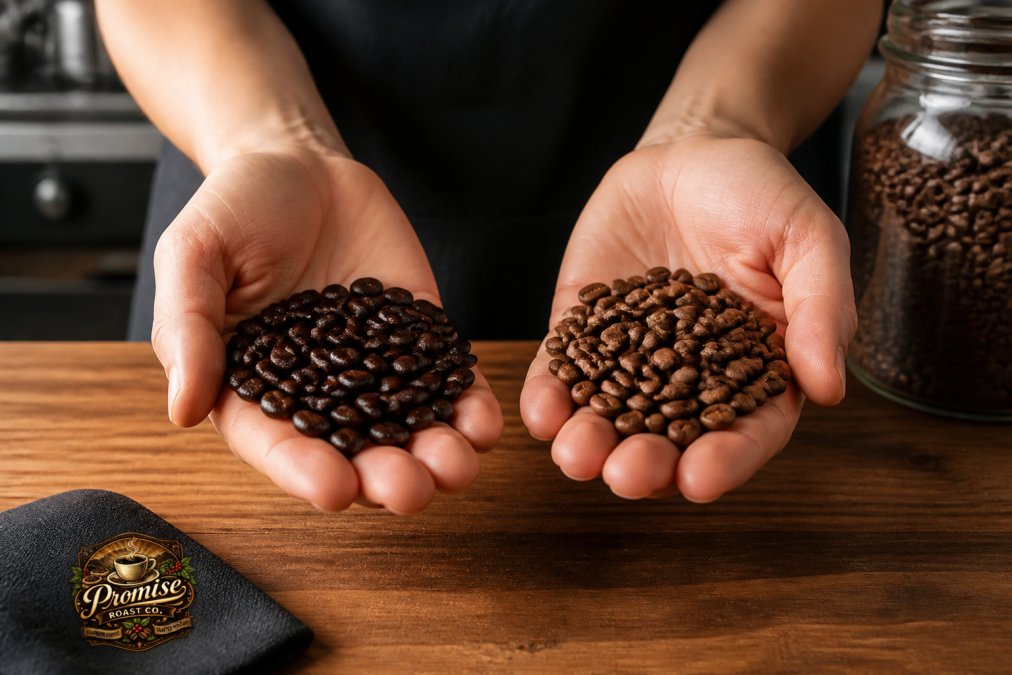
- Muted or cardboard-like aroma. Fresh beans smell sweet, fruity, or chocolatey. Stale beans smell like paper, sawdust, or nothing at all.
- Surface oil migration. Oily, shiny beans can signal that lipids have moved to the surface and begun oxidizing. Some dark roasts are naturally oily, so compare against the roast date.
- A flat, hollow flavor. The cup tastes thin and lifeless, missing the sweetness and acidity you remember.
- Rancid or bitter notes. When oils break down, they produce a harsh, slightly sour bitterness distinct from normal coffee bitterness.
- No bloom when brewing. Fresh coffee puffs up dramatically when hot water hits it. Flat, quiet grounds are a warning sign.
- Dry, brittle bean texture. Squeeze a bean between your fingers. Fresh beans have some give; oxidized beans crumble.
- A stale, dusty smell from the bag. If the bag itself smells like a pantry rather than a roastery, oxidization is well underway.
The Bloom Test: A Two-Minute Freshness Check
The bloom test is the fastest home method for spotting oxidized coffee beans. Place a tablespoon of grounds in a mug, pour hot water over them, and watch: fresh coffee releases trapped carbon dioxide and forms a thick, bubbly dome, while beans past their prime barely react.
Aroma, Acidity, and the Shift Toward Rancid Notes
Aroma is the earliest and most honest indicator. Your nose detects volatile compounds at concentrations far below what your tongue can taste, so a stale smell shows up before a stale flavor. As oxidation progresses, the bright acidity of a good single-origin bean fades first, replaced by dull, muted bitterness.
How to Tell If Coffee Beans Are Fresh Before You Brew
Before you brew, check three things: the roast date, the aroma, and the bean’s surface. The roast date is the most useful information on any bag; a “best by” date tells you almost nothing about when the coffee was roasted.
How Roast Level Changes the Oxidation Timeline
Roast level changes how fast a bean oxidizes, and the reason is oil. During roasting, heat drives lipids from the bean’s interior to the surface: the darker the roast, the more oil is exposed to oxygen from the moment the beans cool. Light roasts keep more oils locked inside the cell structure, slowing oxygen exposure and stretching the freshness window.
Why Surface Oil Is the Real Clock
A roasted bean is a porous structure full of aromatic oils. In a light roast, those oils stay largely internal, protected by the bean’s matrix. In a dark roast, the cell walls have broken down further and the oils migrate outward, forming the glossy sheen on the surface. That sheen is not a sign of quality, it means the bean’s flavor is directly exposed to air, and once those surface oils oxidize they turn rancid, giving the cup painty, harsh notes.
A Practical Timeline by Roast Level
Exact days vary with storage, packaging, and climate, but most roasters observe a consistent pattern:
- Light roasts. Typically hold peak flavor for roughly three to four weeks after the roast date when stored well. The internal oils and denser structure buy extra time.
- Medium roasts. Usually peak for about two to three weeks. A moderate amount of surface oil appears, so the decline is faster than light but slower than dark.
- Dark roasts. Often peak for only one to two weeks. Heavy surface oil means oxidation starts almost immediately, and the drop-off is steep once it begins.
- Espresso blends roasted dark for crema. These are the most oxidation-prone beans in most kitchens. If you buy them, buy small and drink fast.
What This Means for How You Buy
If you prefer dark, oily beans, adjust your buying habits rather than fighting the chemistry: buy smaller quantities, choose a roaster that ships close to the roast date, and finish the bag within a couple of weeks. If you keep beans for a month or more, a lighter or medium roast holds its character longer with the same storage effort.
Store dark roasts in smaller quantities and drink them first. Their surface oils make them the most oxidation-prone beans in your cupboard, so they reward fast consumption.
How Long Do Coffee Beans Last After Roasting?
Whole coffee beans last roughly two to four weeks after the roast date for peak flavor, though they remain drinkable longer. The window depends on roast level, storage, and how you define “good.” Peak flavor is a narrow target; acceptable flavor lasts considerably longer.
The Best Way to Store Coffee Beans to Slow Oxidation
The best way to store coffee beans is in an airtight, opaque container in a cool, dark place. Oxygen, light, heat, and moisture are the four enemies of freshness, and good storage addresses all four.
- Use an airtight container with a tight seal, ideally one with a one-way valve that lets carbon dioxide escape without letting oxygen in.
- Keep beans whole until you brew, and grind just before use to protect the volatile compounds.
- Skip the fridge and freezer for daily use. Temperature swings introduce moisture, and moisture accelerates degradation.
- Buy in quantities you will finish within a few weeks rather than stockpiling.
- Consider vacuum sealing for longer-term storage, which limits oxygen exposure more aggressively.
Storing beans in the refrigerator door is a common mistake. The repeated temperature changes cause condensation on the beans, and that moisture speeds up oxidation and can introduce off-flavors.
How to Train Your Senses to Catch Oxidation Early
Sensory analysis is a skill you can build, and it pays off every time you buy coffee. Most advice stops at “flat” and “dull,” which does not help you tell the difference between coffee that is merely past peak and coffee that has actually turned. Here is a comparative framework so you can name what you are tasting.
Build a Reference Point First
The trick is calibration. Buy two small bags from the same roaster, one roasted recently and one that has sat for several weeks, then cup them side by side using the same dose, grind, water temperature, and ratio. Tasting fresh and stale together trains your palate far faster than reading descriptions, because your brain needs contrast to register a difference.
The Off-Note Ladder: Cardboard vs. Rancid vs. Rubber
Oxidation does not produce one stale flavor but a sequence, and each stage points to a different level of decline. Use this ladder to place what you are tasting:
- Papery or cardboard. The earliest and mildest stage. The bean has lost its aromatics but the oils have not broken down yet. This is “past peak,” not spoiled. It often shows up as a hollow mid-palate and a shortened finish.
- Sawdust or dry hay. A step further. The sweetness has dropped out and the cup reads dusty rather than bright. Still usable in cold brew or milk drinks.
- Flat and chalky. Acidity is gone, body is thin, and the cup feels empty on the tongue. This is advanced staling but usually not yet rancid.
- Rancid or painty. This is the linseed-oil or old-paint note that comes from lipid oxidation, not from the coffee’s normal bitterness. It coats the mouth and lingers unpleasantly.
- Rubbery or burnt-rubber. A late-stage off-note that often overlaps with rancidity. If you smell this in the bag, the beans are done.
A Structured Five-Minute Tasting Protocol
- Smell the whole bean first. Note the first impression before you grind. Fresh beans smell sweet, fruity, or chocolatey; oxidized beans smell like paper, sawdust, or nothing.
- Grind and smell again. Grinding releases volatiles, so a stale bag will often smell worse ground than whole. This is a strong tell.
- Slurp the hot cup. Slurping spreads the coffee across your palate and pushes aroma up the back of your throat, which is where you detect the papery and rancid notes.
- Wait for it to cool. As coffee cools, sweetness and acidity recede and off-notes become more obvious. If the cup tastes worse cold than hot, oxidation is likely.
- Check the finish. Count how long the flavor stays. Fresh coffee lingers; oxidized coffee drops off quickly or leaves a harsh, drying aftertaste.
Keep a Simple Log
Write down three things for each bag: roast date, first aroma impression, and the off-note you detected. After a handful of entries you will see patterns, for example, that a particular dark roast goes papery around day ten while a lighter one holds past three weeks. That log is worth more than any generic freshness chart because it is calibrated to your palate and storage.
The fastest way to learn this skill is comparison plus vocabulary. A single side-by-side tasting of fresh versus stale beans, scored against the off-note ladder, teaches more than a dozen articles about oxidation.
When to Toss Oxidized Coffee Beans (and What to Do Instead)
Toss beans once the flavor turns genuinely rancid, not merely flat. Beans that have lost their brightness are still usable; beans with a harsh, oily, or sour-bitter edge are not worth brewing.
Frequently Asked Questions
Is oxidized coffee safe to drink?
Yes, oxidized coffee beans are not a food safety risk in the way spoiled milk or moldy bread would be. Oxidation is a chemical reaction with oxygen, not bacterial growth, so drinking stale coffee will not make you sick. The real cost is quality: flat flavor, muted acidity, and papery or rancid notes replace the sweetness and aroma the beans had at peak. If you see visible mold or the beans smell musty rather than just dull, toss them. Otherwise, oxidized coffee beans are safe but disappointing.
How do I tell if my coffee beans are bad?
Start with the bloom test. Pour hot water over a small scoop of grounds and watch: fresh roasted coffee releases carbon dioxide and puffs up into a thick, bubbly dome, while oxidized coffee beans barely react. Then smell the bag. Aromas should be sweet, fruity, or roasty, not papery or like cardboard. Finally, check the surface. Oily sheen on a light or medium roast is a warning sign, since oil migration usually means the bean has been sitting long past its roasted date.
Does coffee oxidation change the caffeine content?
Caffeine is a stable molecule and does not break down at the same rate as the volatile compounds that carry aroma. A stale bean still delivers roughly the same caffeine per gram as it did when fresh. What changes is your perception: oxidized coffee beans taste flatter and less sweet, so you may brew a stronger cup to compensate, which can raise your actual caffeine intake. The bitterness you notice in old coffee comes from flavor degradation, not extra caffeine.
How long do coffee beans last after roasting?
Roasted coffee beans hit peak flavor roughly 4 to 14 days after the roast date, once degassing slows. After that, oxidation begins to dull the aroma and acidity. Whole beans stored in an airtight, oxygen-barrier container away from heat and light hold acceptable quality for about 4 to 6 weeks. Ground coffee loses freshness in days, not weeks, because the increased surface area speeds up oxygen exposure. Freezing whole beans in a vacuum seal can extend shelf stability for several months.
The hardest part of great coffee is not the brewing method or the grinder. It is getting beans that are still fresh when they reach your kitchen. Promise Roast Co. roasts each order after you place it, offers small-batch blends and single-origin beans alongside convenient pods, and ships free so your coffee arrives close to its roast date. Shop Coffee with Promise Roast Co. and taste what peak freshness actually means in the cup.