Shopping at Promise Roast Co.: This store currently offers one-time purchases. Automatic recurring subscriptions are not available. Subscription services discussed below are general comparisons. See current products and pricing.
Table of Contents
- Fresh Roasted Coffee vs Grocery Store Coffee: The Core Difference
- What Makes Fresh Roasted Coffee Better?
- The Benefits of Small Batch Roasted Coffee
- How to Tell if Coffee is Fresh Roasted
- Cost-Per-Cup Breakdown: Is Fresh Worth It?
- Our Fresh Roasted Coffee Picks at Promise Roast Co.
- The Verdict: Making the Switch to Fresh
- Frequently Asked Questions
Last Updated: September 7, 2026
Fresh Roasted Coffee vs Grocery Store Coffee: The Core Difference
The debate between fresh roasted coffee vs thatscoffee alternatives often misses the real issue: time. A bag of whole bean coffee sitting on a grocery store shelf may have been roasted months ago, long before it reached the display. Fresh roasted coffee is coffee that has been roasted recently, typically within days or weeks of brewing, when the volatile compounds responsible for aroma and flavor are still intact.
This guide from Promise Roast Co. breaks down why that timing matters more than origin, brand, or price. We roast every order individually, meaning your beans are processed after you purchase them, not before. Below, we’ll show you exactly how to spot the difference, what it costs per cup, and why small-batch roasting changes your daily ritual.
The core distinction is simple: grocery store coffee optimizes for shelf stability, while fresh roasted coffee optimizes for flavor. One sits in a warehouse for months. The other reaches your grinder within days of roasting.
What Makes Fresh Roasted Coffee Better?
Fresh roasted coffee is better because it preserves the delicate oils and gases that carry flavor. After roasting, coffee beans release carbon dioxide for several days, a process called degassing. Once that gas escapes and oxygen moves in, oxidation begins degrading the bean, flattening the flavor profile and muting the aroma.
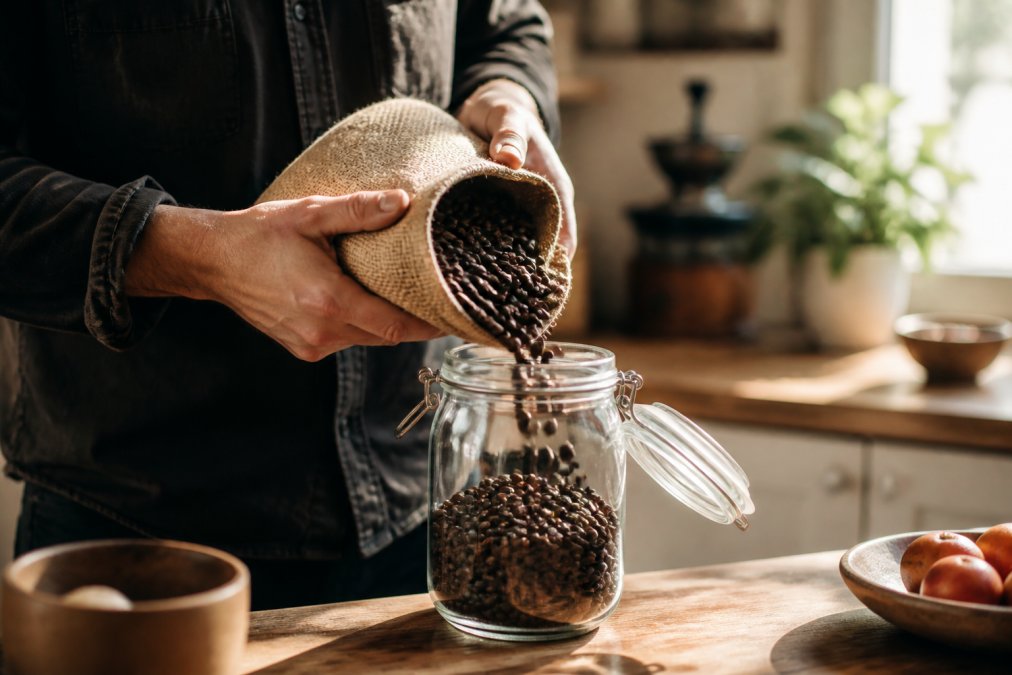
Most grocery store coffee carries a “best by” date, which tells you little about when the bean was actually roasted. Without a roast date, you are guessing. A whole bean coffee roasted three weeks ago will still produce a lively cup with noticeable acidity and sweetness. The same bean roasted six months ago tastes flat, with a cardboard-like staleness that no brewing method can fix.
The sensory difference is clear. When you compare a fresh roast against a grocery store staple, the fresh lot often shows brighter notes, a cleaner finish, and more complexity. The older coffee tastes muted by comparison.
The Chemistry of Staling: What Actually Happens Inside the Bean
The degradation is not vague, it follows a predictable chemical sequence. Within the first 24 hours after roasting, beans emit up to 40% of their total CO2 (peer-reviewed research). That gas is a protective blanket; as it dissipates, oxygen infiltrates the cellular structure. Once oxygen contacts the oils, it triggers lipid peroxidation, the same process that turns cooking oil rancid. The result is a loss of volatile aromatic compounds, the molecules responsible for floral, fruity, and sweet notes, and the formation of aldehydes and ketones that taste sour, papery, or stale.
Roast level changes the speed of this decline. Dark roasts have more porous cell walls and a thinner bean density, so they stale faster, often within 7 to 10 days of roasting (sca.coffee). Light roasts, being denser, retain their gases longer and can stay vibrant for up to 4 to 6 weeks when stored properly. Medium roasts fall in between. This is why a single freshness window is misleading: the optimal drinking period depends on how dark the bean was roasted.
A Home Cupping Protocol: Testing Freshness Objectively
Most comparisons rely on opinion. You can do better with a structured cupping session at home. The Specialty Coffee Association publishes a standardized cupping form, but you do not need a lab to get useful data. Use this simplified protocol:
- Grind 10 grams of each coffee to a coarse texture (similar to sea salt) and place in separate cups.
- Smell the dry grounds immediately after grinding. Rate aroma intensity from 1 to 5, noting any sour or musty off-notes.
- Pour 180 mL of water heated to 200°F over the grounds. Start a timer.
- At the 4-minute mark, break the crust by stirring with a spoon. Smell again, this is the “wet aroma” and it reveals the most about freshness.
- Let the cup cool for 8 minutes, then slurp a spoonful. Evaluate acidity (bright vs. flat), sweetness (present vs. absent), and finish (clean vs. lingering bitter).
Repeat this with a fresh roast and a grocery store bag. Most tasters find the fresh sample scores higher on all three axes. The stale sample typically shows a muted aroma, a flat acidity, and a short, bitter finish.
Why “Best By” Dates Fail You
A “best by” date on a grocery store bag is a manufacturer estimate of peak quality, not a roast date. It assumes a warehouse-to-shelf journey of 60 to 90 days. In practice, many bags sit on trucks, in distribution centers, and on shelves for weeks before purchase. By the time you open the bag, the coffee may be 4 to 6 months past roast. The flavor compounds have already degraded, and no brewing method can reverse that.
Fresh roasted coffee, by contrast, is roasted after you order it. At Promise Roast Co., every order is processed within 1 to 5 days of purchase, so the beans arrive at your door within days of roasting, not months. That timing is the single most important variable in the cup.
The Benefits of Small Batch Roasted Coffee
Small batch roasted coffee offers quality control. Roasters working in small batches can monitor each lot closely, adjusting temperature and time to highlight a bean’s best characteristics. This is why the benefits of small batch roasted coffee can show up clearly in the cup: more consistent roasts, fewer defects, and a flavor profile that reflects the origin rather than the roaster’s volume targets.
Mass-market roasters often roast large quantities quickly to maximize throughput. Small-batch roasting can allow for lighter, more nuanced profiles where single-origin beans can express their regional character.
For the home brewer, this can translate to a more forgiving bean. Fresh coffee has more dissolved gases, which helps water extract flavors evenly. Stale coffee can brew bitter and thin because the soluble compounds have already deteriorated.
How to Tell if Coffee is Fresh Roasted
How to tell if coffee is fresh roasted comes down to three checks: the roast date, the aroma, and the bloom. First, find the roast date on the bag. Specialty coffee roasters print it clearly, while grocery store brands often omit it entirely, relying on a vague “best by” date instead.
Second, open the bag and smell the beans. Fresh roasted coffee releases a strong, sweet aroma that fills the room. Stale beans smell faint, dusty, or even sour. Third, grind a small amount and pour hot water over it. Fresh coffee blooms, swelling and bubbling as trapped carbon dioxide escapes. If the grounds barely react, the coffee has lost its gases and much of its flavor.
| Freshness Check | What to Look For | What It Tells You |
|---|---|---|
| Roast date on bag | A specific date within the last 2-4 weeks | When the bean was actually roasted |
| Aroma of whole beans | Sweet, fragrant, pronounced | Volatile compounds still intact |
| Bloom after pouring water | Grounds swell and bubble | Carbon dioxide still present |
| Grind and brew clarity | Bright acidity, clean finish | Oxidation has not flattened flavors |
If you are ordering online, you cannot smell or inspect the beans first. The solution is to choose a roaster that roasts to order. At Promise Roast Co., every order is roasted individually with a 1-5 day processing window, so the coffee leaves our facility at peak freshness rather than after months in storage.
Cost-Per-Cup Breakdown: Is Fresh Worth It?
A common objection is that ordering fresh roasted coffee costs more than buying bulk at a warehouse store. The math tells a different story when you calculate cost per cup rather than cost per bag.
Consider a 12-ounce bag of specialty coffee at around $22, which yields roughly 32 cups depending on your brew ratio. That works out to about $0.69 per cup. A large grocery store bag might cost less upfront, but if it tastes stale and you end up pouring half of it down the drain or covering it with cream and sugar, the value collapses.
The real cost comparison also includes what you are not spending. A stale, bitter cup can lead to a second coffee purchase later in the day at a cafe. A fresh, satisfying cup at home can eliminate that need. For home-based workers who brew daily, the savings can add up quickly.
The Per-Serving Math: Breaking Down Every Line Item
Let’s be precise about what a cup actually costs. A standard brew ratio is 1:16, one gram of coffee to 16 grams of water. A 12-ounce bag (340 grams) at that ratio yields about 21 cups of coffee at 16 ounces per cup, or roughly 32 cups at a standard 8-ounce serving. Here is the comparison:
| Cost Factor | Grocery Store Bag | Fresh Roasted (Promise Roast Co.) |
|---|---|---|
| Bag price | See current product pricing | See current product pricing |
| Price per ounce | See current product pricing | See current product pricing |
| Cups per bag (8 oz serving) | ~84 | ~32 |
| Cost per cup | See current product pricing | See current product pricing |
| Typical waste (stale, discarded) | 20-30% | <5% |
| Effective cost per usable cup | See current product pricing | See current product pricing |
At face value, the grocery store bag appears cheaper. But the comparison ignores three factors that change the equation.
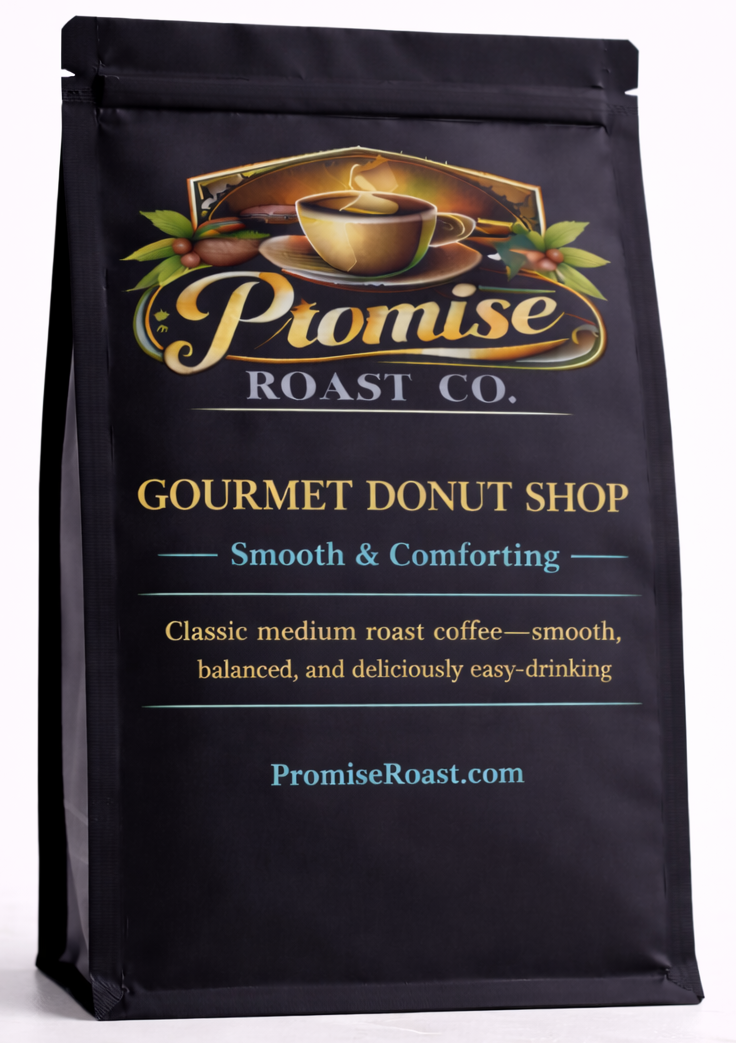
First, waste. A 36-ounce warehouse bag takes most drinkers 6 to 8 weeks to finish. By week three, the coffee has lost most of its volatile aromatics. By week five, it tastes flat. Many drinkers either throw out the remainder or use more coffee per brew to compensate for the weak flavor, effectively doubling their per-cup cost. A 12-ounce fresh bag is consumed within 2 to 3 weeks, well within the optimal freshness window.
Second, the cost of masking. Stale coffee tastes bitter and thin. The typical response is adding cream, sugar, or flavored syrups. A pump of vanilla syrup adds about $0.15 to $0.25 per cup. A splash of half-and-half adds another $0.10. Over a month of daily brewing, that is $7.50 to $10.50 in additives, enough to offset the price difference between grocery store and fresh roasted beans.
Third, the cafe fallback. When your home coffee fails to satisfy, the easiest fix is stopping at a cafe. A daily $5 latte adds up to $150 per month. Even two cafe visits per week cost $40 monthly. Fresh roasted coffee at home eliminates that fallback because the cup is genuinely good.
The Subscription Math: Locking in Freshness at Scale
If you brew daily, a subscription model changes the economics further. Promise Roast Co. offers free U.S. shipping on all orders. Check the product page for current pricing, package size, and available options. To compare cost per serving, divide the current package price by the number of servings you actually brew.
The real comparison is not grocery store vs. specialty. It is the total cost of your daily caffeine ritual. If you currently buy a $4 to $6 cafe drink on weekdays, you are spending $80 to $120 monthly. A fresh roasted subscription at $44 can deliver great coffee, at home, with no commute. That can be a significant reduction in monthly coffee spend.
The Hidden Cost of Stale Coffee: More Than Just Taste
There is also a practical cost to stale beans that rarely appears in price comparisons. Stale coffee can be harder to dial in. It can brew unevenly, extract poorly, and produce inconsistent results. Fresh coffee can be more forgiving. It can brew predictably, which means you spend less time troubleshooting and more time enjoying the cup.
For home-based workers, the math can be even clearer. A single cafe visit costs 15 to 20 minutes of round-trip time plus the drink price. Fresh roasted coffee at home can eliminate that time cost entirely. When you calculate the full cost, beans, additives, waste, cafe fallbacks, and time, fresh roasted coffee can often be a more cost-effective option.
Our Fresh Roasted Coffee Picks at Promise Roast Co.
For most drinkers, the best entry point is a medium roast blend that balances approachability with complexity. Our House Blend fits that description perfectly. Sourced from Central and South America, it delivers a medium body with tasting notes of nutty sweetness, sweet chocolate, and mild citrus, finishing clean and bright. Check the product page for current pricing, package size, and available options. To compare cost per serving, divide the current package price by the number of servings you actually brew. Explore: House Blend.
If you prefer a gentler morning cup, the Breakfast Blend offers the same smooth, balanced profile with a morning-friendly character. It works well in a drip machine, pour-over, or French press. For those who want convenience without sacrificing quality, our single-serve capsules are sealed with zero oxygen inside, preserving freshness from the first capsule to the last. Check the product page for current pricing, package size, and available options. To compare cost per serving, divide the current package price by the number of servings you actually brew. Explore: Breakfast Blend · single-serve capsules · 12 Pack · 60 Pack.
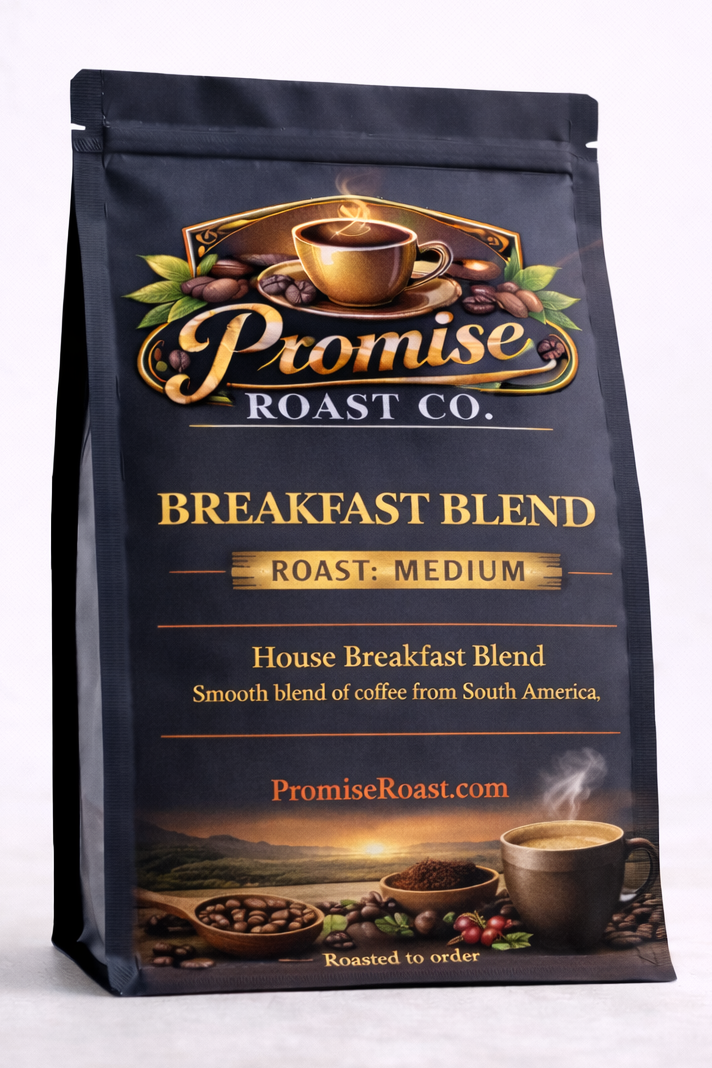
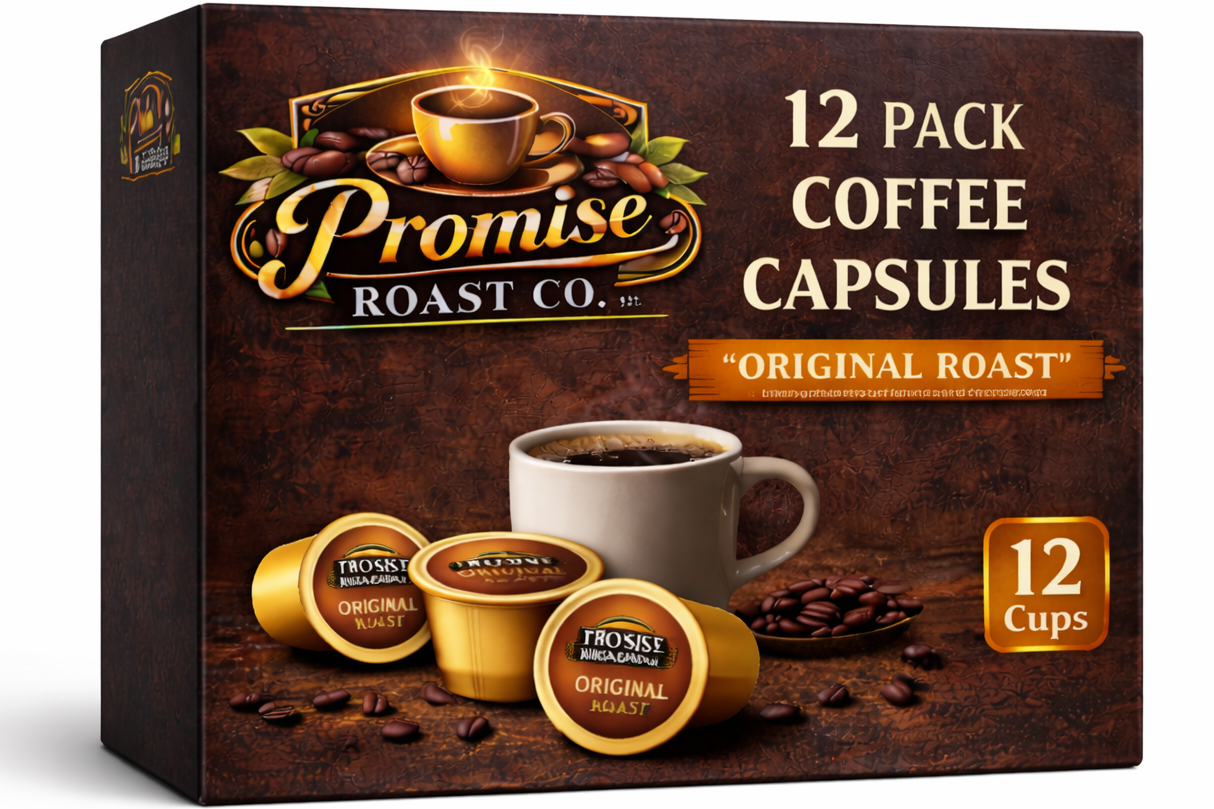
When you order from Promise Roast Co., your coffee is roasted after you place the order, not pulled from a warehouse shelf. Free U.S. shipping means the beans arrive within days of roasting, ready to brew at their peak.
The Verdict: Making the Switch to Fresh
The case for fresh roasted coffee is not about snobbery. It is about the difference between drinking a product at its intended quality and drinking a degraded version of it. Grocery store coffee prioritizes shelf stability and long distribution cycles. Fresh roasted coffee prioritizes the sensory experience in your cup.
If you are skeptical, try a side-by-side comparison at home. Brew your current grocery store bag and a fresh roasted lot using the same grinder, water temperature, and brew method. The difference in aroma, flavor, and mouthfeel will be immediately apparent.
The specialty coffee industry has built its reputation on transparency, from direct trade relationships to clear origin labeling. According to the Specialty Coffee Association’s quality standards, freshness and proper roasting are foundational to specialty grade coffee. When you buy fresh, you support a supply chain that values quality over volume.
Making the switch also simplifies your morning. You no longer have to guess whether a bag is fresh, because the roast date tells you. You no longer have to mask staleness with syrups and flavorings. You just brew and enjoy.
Choosing between fresh roasted coffee and grocery store staples comes down to whether you value the experience or the convenience of a long shelf life. At Promise Roast Co., we believe you should not have to choose. Our small-batch roasting, individual order processing, and 1-5 day freshness window deliver rich flavor and smooth mornings without compromise. Explore our blends, single-origin beans, and pods to find your new daily cup. Shop Coffee and taste the difference that days, not months, make.
Frequently Asked Questions
Is fresh roasted coffee actually better than mass-produced brands?
Yes, for most coffee drinkers. Coffee starts losing its volatile aroma compounds and flavor within days of roasting. Mass-produced grocery store coffee can sit in warehouses for months before you buy it, leaving it stale and flat. Fresh roasted coffee, especially small-batch roasted coffee, is typically shipped within a few days of roasting. This preserves the delicate oils and gases that carry the flavor and aroma. You may notice a brighter acidity, more complexity, and a cleaner finish compared to older, mass-produced options.
How does the roast date affect the flavor profile of coffee?
The roast date is the starting point for a coffee’s flavor journey. Freshly roasted beans release carbon dioxide for several days, a process called degassing. Brewing coffee before degassing is complete can result in an uneven extraction. The best window for peak flavor is usually between 4 and 14 days after roasting. After that, oxidation sets in, and the coffee’s flavor profile begins to dull, losing its distinct notes, aroma, and acidity. Checking the roast date is the most reliable way to ensure you are buying fresh coffee.
How can I tell if my coffee beans are truly fresh roasted?
Look for a roast date on the bag, not just a ‘best by’ date. A ‘best by’ date is often a conservative estimate of shelf life, which can be many months away. A roast date tells you exactly when the beans were roasted. Additionally, fresh whole bean coffee will feel firm and have a strong, sweet aroma when you open the bag. If you see oily surfaces on dark roasts, it is a sign of age. Beans should also make a crisp ‘pop’ when you grind them.
Is fresh roasted coffee more expensive than grocery store coffee?
The upfront cost can be higher, but the value can be better. A bag of fresh, small-batch roasted coffee might cost around $22. Grocery store coffee can be $10-$15. However, fresh coffee can require less to brew a flavorful cup because it is denser and more concentrated. You may often use less coffee per brew, which can help offset the price difference. When you factor in the superior flavor and the lack of waste from stale batches you throw away, the cost per cup can be competitive.