
Table of Contents
- Why Make Natural Flavored Coffee at Home
- Best Flavored Coffee Without Artificial Taste
- Natural Coffee Flavoring Ingredients to Use
- How to Infuse Coffee Beans With Spices
- Making Homemade Coffee Syrups
- Storage, Shelf Life, and Equipment Care
- Troubleshooting Bitter or Off-Flavors
- Frequently Asked Questions
Last Updated: September 25, 2026
Why Make Natural Flavored Coffee at Home
Making natural flavored coffee at home lets you control every ingredient and preserve bean quality. Store-bought flavored coffee relies on artificial additives that mask the actual taste.
You infuse whole beans with real spices, vanilla, nuts, and syrups, no artificial taste, just pure coffee enhanced with ingredients you recognize.
Promise Roast Co. specializes in small-batch, fresh-roasted beans perfect for infusions. Peak-freshness beans roasted to order provide the clean foundation that makes added flavors shine instead of covering them up.
This guide covers dry infusion, syrup-making, spice pairings, infusion timing, and grinder care.
Best Flavored Coffee Without Artificial Taste
The best flavored coffee without artificial taste starts with two choices: your roast level and your flavor pairing strategy.
Understanding roast level and flavor compatibility
Light roasts work best with subtle spices like cardamom or vanilla. Medium roasts pair well with warm spices like cinnamon and nutmeg. Dark roasts handle stronger flavors without getting lost.
A light roast infused with hazelnut tastes delicate; the same hazelnut on a dark roast becomes richer and more pronounced.
Fresh roasting matters: peak-freshness beans provide a clean foundation that makes added flavors pop instead of blending into muddy, artificial-tasting coffee.
Seasonal flavor pairings for single-origin beans
Spring: vanilla bean with light African beans. Summer: light vanilla or hazelnut with Central American beans. Fall: cinnamon, nutmeg, and cloves with medium-roast Latin American or Indonesian beans. Winter: deep vanilla infusions or spice blends with dark roasts from Brazil or Sumatra. Let the bean’s origin guide your choice.
Natural Coffee Flavoring Ingredients to Use
Real ingredients make real flavored coffee. Here’s what actually works.
Whole spices: cinnamon, cardamom, cloves, and nutmeg
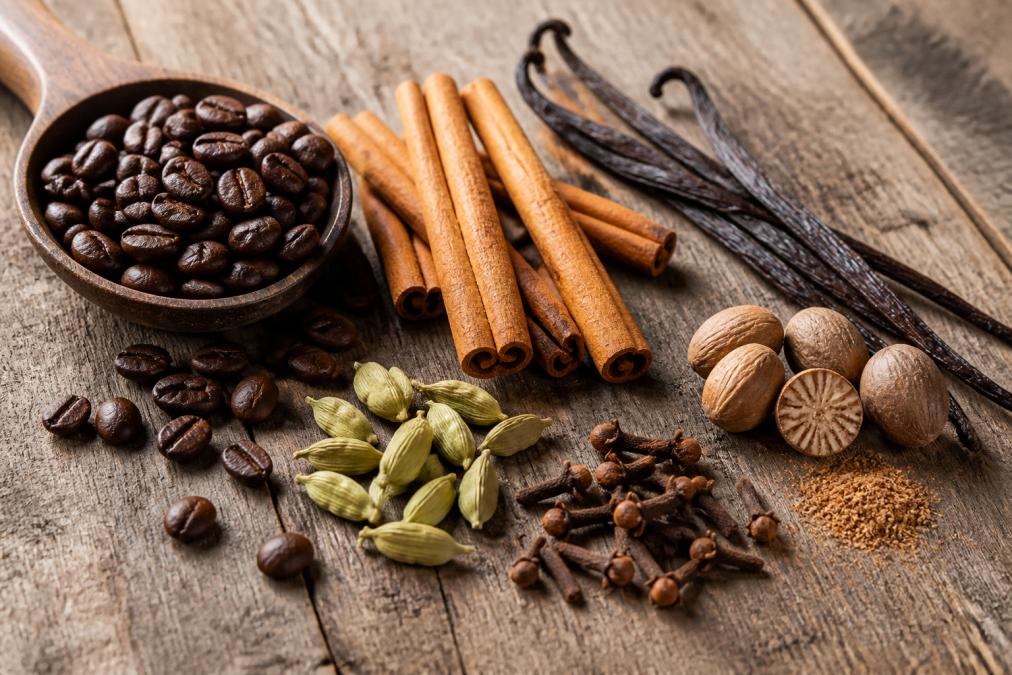
Cinnamon sticks: Break into pieces and add to beans. Cardamom pods: Crack open so seeds contact beans; works well with lighter roasts. Cloves: Use sparingly; a few flavor an entire batch and pair best with darker roasts. Nutmeg: Grate fresh nutmeg directly onto beans; a little goes a long way.
Vanilla bean and extracts
Split a vanilla bean lengthwise and scrape the seeds into your beans; the flecks dissolve during infusion and won’t clog your grinder. Pure vanilla extract can be added to finished brewed coffee, but avoid vanilla-flavored syrups and imitation vanilla, which contain sweeteners and artificial compounds.
Hazelnuts and other aromatic additions
Toast whole hazelnuts lightly, crack into pieces, and add to beans for rich, buttery flavor. Other options: dried orange peel (dark roasts), star anise (medium roasts), lavender buds (light roasts), allspice berries, or dried ginger. Start small with unfamiliar ingredients, you can add more but can’t remove flavor once infused.
How to Infuse Coffee Beans With Spices
The dry infusion method is simplest and most reliable: whole beans and spices exchange flavor in an airtight container through volatile compound diffusion.
Understanding the science of infusion timing
Days 1-2: volatile compounds begin migrating into beans; subtle fragrance appears. Days 3-5: peak infusion window; flavor compounds penetrate deeper. After day 5: risk of bitter tannins and oxidation increases. Don’t infuse longer than 7 days. Store at 65-70°F for normal infusion; warmer storage accelerates both infusion and oxidation.
Step 1: Prepare your beans and spices
Use whole beans, not ground coffee, which infuses too quickly and becomes over-flavored within 24-48 hours. Baseline ratio per pound of beans: one cinnamon stick (broken into 3-4 pieces), 8-10 cardamom pods (cracked open), 3-4 whole cloves, or half a vanilla bean (split lengthwise). When combining multiple spices, reduce each quantity by 25%. Crack open cardamom pods and break cinnamon sticks before adding to increase surface area without creating fine particles that clog grinders.
Step 2: Use the dry infusion method
Place whole beans and prepared spices in an airtight container and seal tightly. Shake daily for 3-5 days to distribute flavor evenly. After day 3, smell the beans and taste a small sample (1 tablespoon brewed in a French press). The aroma should be noticeably fragrant and flavor present but not aggressive. If subtle, continue to day 5. If strong, stop immediately. Don’t infuse longer than 7 days; flavor saturation peaks and off-flavors increase after day 6.
Step 3: Store in an airtight container
Transfer beans to an airtight container. Remove spices to stop flavor development, or leave them in for continued slower development. Store in a cool, dark place away from sunlight and heat; beans stay fresh for 2-3 weeks. Grind just before brewing; ground infused coffee loses volatile compounds within hours.
Step 4: Monitor infusion duration and flavor saturation
Log each infusion: spices used, quantity, start date, stop date, and flavor rating. Common problems: weak flavor (increase spice by 25-50% or use fresher beans), bitter taste (reduce infusion time to 3-4 days or reduce cloves by 50%), uneven flavor (shake daily and crack cardamom pods fully), stale flavor (use beans roasted within 2 weeks and limit infusion to 5-6 days).
Making Homemade Coffee Syrups
Coffee syrups add sweetness and flavor without the dry infusion wait time. You can make them in under 30 minutes.
Simple syrup base and flavor ratios
Basic simple syrup: equal parts sugar and water, heated until sugar dissolves, then cooled. For vanilla: add one split vanilla bean while hot, steep 15 minutes, remove bean. For spice syrups: 1 cup simple syrup plus 1 teaspoon spice (cinnamon, nutmeg, or cloves work best). Start conservative with flavor intensity; you can add more but can’t remove it once mixed.
Simmering techniques for vanilla and spice syrups
Simmer gently on low heat; high heat burns flavors. Vanilla: split bean, scrape seeds into syrup, add pod, simmer 10 minutes. Cinnamon: break 2-3 sticks into pieces, simmer 12-15 minutes. Nutmeg: grate directly into warm syrup, stir, let sit 5 minutes (don’t simmer). Cool completely before storing; syrups stay stable for 3-4 weeks refrigerated. Add 1-2 tablespoons to hot brewed coffee.
Storage, Shelf Life, and Equipment Care
Proper storage keeps your infused beans and syrups tasting fresh. Equipment care prevents damage to your grinder and brewing equipment, which is where most home brewers encounter problems they don’t anticipate.
Proper bean storage and shelf life expectations
Store infused whole beans in an airtight container away from light, heat, and moisture. Whole infused beans stay fresh for 2-3 weeks (shorter than plain beans due to accelerated oxidation). Ground infused coffee stays fresh for 5-7 days. Don’t refrigerate or freeze; condensation degrades flavor and causes clumping.
Understanding oil extraction and equipment impact
Infused beans release oils from spices and mobilized bean lipids. These oils damage burr grinders (reducing cutting efficiency and causing overheating), clog espresso machines (reducing water flow and creating weak shots), and coat drip coffee maker heating elements (creating burnt flavors and mold risk).
Protecting your grinder from oil extraction buildup
Weekly: Run a small handful of uncooked white rice through the grinder on your normal setting; the rice absorbs oils and can be discarded. Monthly: Disassemble grinder (if removable), wipe burrs with a dry cloth or soft brush, use compressed air to clear particles, reassemble, and run plain beans through. When switching beans: Always clean your grinder to avoid ghost flavors. Consider a dedicated grinder for infused beans ($30-$60) to eliminate cross-contamination.
Protecting your espresso machine and other equipment
Espresso machines: If you use infused beans in an espresso machine, clean the group head screen and portafilter basket immediately after each use. Backflush the group head (if your machine allows it) with water only, no coffee, to push out oil residue. Weekly, soak the portafilter and basket in hot water with espresso machine cleaning powder (such as Cafiza) for 15 minutes, then scrub with a brush and rinse thoroughly.
Do not run infused beans through your espresso machine more than once per week unless you’re willing to perform this deep cleaning every single time. The risk of internal damage is too high.
Drip coffee makers: After brewing infused coffee, run plain water through the machine (without coffee) to rinse the heating element and internal lines.
Syrup storage and shelf life
Store homemade syrups in a clean glass jar or bottle in the refrigerator. Syrups stay fresh for 3-4 weeks. If you notice mold, cloudiness, or off-smells, discard the batch.
Troubleshooting Bitter or Off-Flavors
Sometimes infusions don’t turn out right. Here’s how to fix common problems.
Frequently Asked Questions
How can I flavor my coffee naturally without artificial additives?
Use whole spices like cinnamon sticks, cardamom, and cloves with your coffee beans in an airtight container for 3-7 days (dry infusion method), or make a simple syrup by simmering your chosen spices with sugar and water. Both methods preserve the natural flavor profile of your beans without synthetic additives. Scraped vanilla bean or pure extracts added to brewed coffee also work well for a cleaner taste.
What are the best whole spices to use for flavoring coffee beans?
Cinnamon sticks, cardamom pods, cloves, and nutmeg are classic choices that complement most roast levels. For lighter roasts, vanilla bean and hazelnuts enhance the bean’s origin characteristics. Pumpkin pie spice blends work seasonally. Start with one spice at a time to understand how it pairs with your beans, then experiment with combinations.
How long does it take to infuse coffee beans with natural flavors?
Dry infusion typically takes 3-7 days for noticeable flavor saturation, depending on how finely you want the spice notes to come through. Check your beans daily after day 3 to monitor flavor intensity. If you want quicker results, add extracts or syrups directly to brewed coffee instead. Shelf life for infused beans remains about 2-3 weeks in an airtight container before flavor and freshness begin to decline.
Will flavored coffee damage my grinder or brewing equipment?
Yes, infused beans release oils during grinding that can accumulate in your grinder and affect future batches. To protect your equipment, use a separate grinder for flavored beans, or grind them less frequently and clean your grinder thoroughly with dry rice or specialized grinder brushes. If you add syrups to brewed coffee, they won’t harm your equipment, but always clean your equipment promptly to prevent buildup.