Table of Contents
- Understanding Coffee Roast Profiles Explained
- Single Origin vs Blend Coffee: Which Suits You?
- Identifying Flavor Profiles and Tasting Notes
- Match Your Brewing Method to the Right Blend
- How to Store Gourmet Coffee Beans for Peak Freshness
- Reading Coffee Labels and Bean Quality Indicators
- How to Choose Gourmet Coffee Blends: Your Action Plan
- Conclusion
- Frequently Asked Questions
Last Updated: September 27, 2026
Understanding Coffee Roast Profiles Explained
The roast level determines how a coffee tastes more than any other single factor. Light roasts preserve the bean’s origin characteristics. Medium roasts balance acidity with body. Dark roasts develop bold, caramelized flavors. Understanding these profiles helps you choose gourmet coffee blends that match your taste preferences.
The roast profile shapes everything about your experience, a light roast from the same beans as a dark roast will taste completely different because the roasting process brings out different compounds.
Light Roasts: Bright Acidity and Origin Clarity
Light roasts highlight the bean’s origin flavors. These roasts are removed from the heat before the first crack. The result is a coffee with bright, crisp acidity and pronounced flavor notes from where the beans grew.
Light roasts work best for pour-overs and drip brewing, which extract delicate flavors without overwhelming them. If you enjoy tasting terroir and complexity, light roasts deliver that fully.
Common light roast flavor notes include:
- Fruity and floral characteristics
- Tea-like body with clean finish
- Bright, snappy acidity
- Lighter color (light brown)
Medium Roasts: Balanced Body and Sweetness
Medium roasts hit the sweet spot between origin clarity and developed flavor, reaching the first crack and stopping shortly after to deliver both origin character and caramelized sweetness.
Most coffee drinkers prefer medium roasts for their balanced flavor, present acidity without sharpness, full body without burnt taste.
Medium roast characteristics include:
- Balanced acidity and body
- Caramel and chocolate notes
- Medium brown color
- Works well in most brewing methods
Dark Roasts: Bold, Full-Bodied Character
Dark roasts develop deep, smoky flavors. These roasts continue past the first crack into the second crack. The heat brings out oils and creates darker, more intense flavors.
Dark roasts taste bold and full-bodied, working exceptionally well in espresso machines and French presses for those preferring strong coffee with less acidity.
Dark roast flavor notes typically include:
- Smoky, earthy flavors
- Chocolate and caramel undertones
- Full body with low acidity
- Dark brown to nearly black color
Single Origin vs Blend Coffee: Which Suits You?
Single-origin beans come from one specific region or farm, while blends combine beans from multiple origins. Each approach has distinct advantages depending on what you value.
Understanding this choice is essential when you choose gourmet coffee blends. The decision affects flavor consistency, complexity, and how much you pay per cup.
Single-Origin Beans: Terroir and Complexity
Single-origin coffees express the unique characteristics of their growing region, altitude, soil, climate, and processing method all influence the final flavor.
These coffees offer complexity and uniqueness, with each season bringing slightly different flavor notes, a variability coffee enthusiasts love because it mirrors wine appreciation.
Single-origin benefits include:
- Unique flavor profile reflecting terroir
- Higher complexity and nuance
- Seasonal availability creates anticipation
- Educational tasting experience
- Supports specific farms and regions
Single-origin coffees work best for brewing methods that highlight delicate flavors, such as pour-overs and AeroPress, which showcase subtle notes.
Coffee Blends: Consistency and Flavor Design
Coffee blends combine beans from multiple origins to create a specific flavor profile through intentional balancing, resulting in consistent, predictable flavor from bag to bag.
Blends offer reliability and consistency, appealing to those who want their morning coffee to taste the same every day. Roasters highlight specific flavor characteristics by combining beans strategically.
Blend advantages include:
- Consistent flavor from bag to bag
- Balanced, approachable flavor profiles
- Often better value than single-origin
- Designed for specific brewing methods
- Easier for beginners to enjoy
At Promise Roast Co., we craft blends that balance brightness, body, and sweetness. Our approach combines complementary origins to create coffee that tastes smooth and intentional.
Blends work well in espresso machines and French presses, which benefit from the balanced body blends provide.
Identifying Flavor Profiles and Tasting Notes
Learning to identify flavor notes transforms how you experience coffee. Tasting notes describe flavors beyond “coffee taste”, like blueberry, chocolate, or caramel, that come from the beans’ origin, processing method, and roast level.
Flavor profiles develop differently based on brewing method and water temperature, which is why matching your brewing method to the blend matters.
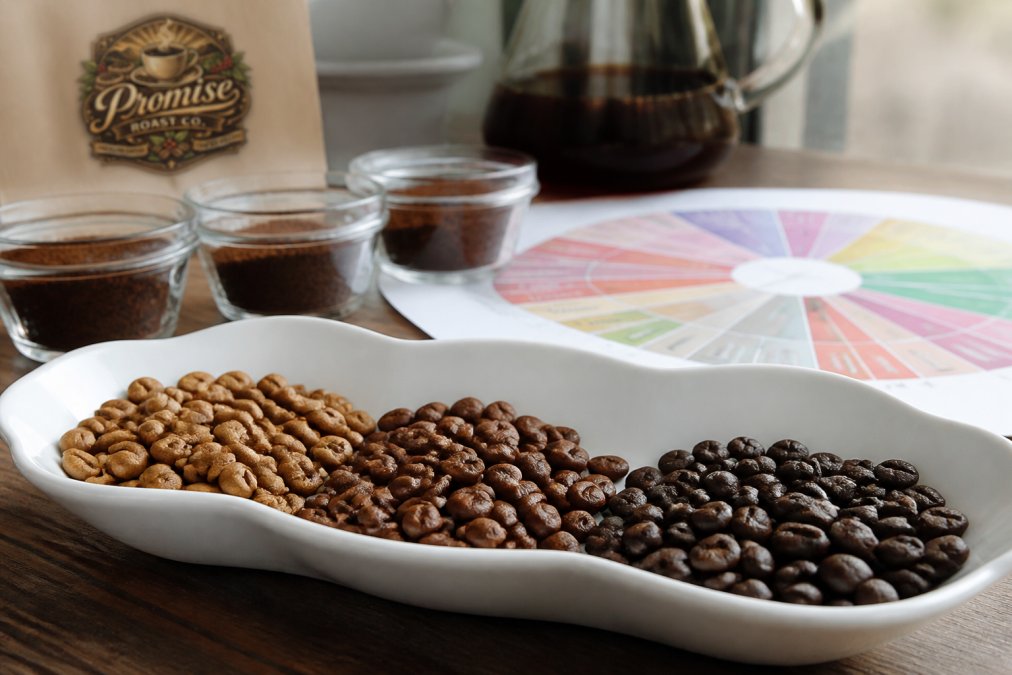
Common coffee flavor families include:
- Fruity (berry, citrus, stone fruit)
- Floral (jasmine, rose, honeysuckle)
- Chocolate and cocoa notes
- Nutty (almond, hazelnut, walnut)
- Caramel and brown sugar sweetness
- Earthy and spice notes
To identify tasting notes, brew a small amount and taste it intentionally, noticing the aroma first and then tasting at different temperatures as it cools.
Match Your Brewing Method to the Right Blend
Your brewing method determines which blends will perform best. A blend designed for espresso might taste weak in a French press, so understanding this connection prevents disappointment.
Espresso and Moka Pots
Espresso machines require medium to dark roasts, as high pressure and fast extraction work best with developed body and oils. Light roasts often taste thin and sour in espresso.
Key considerations for espresso:
- Choose medium or dark roasts
- Select blends with full body
- Look for lower acidity
- Aim for balanced, smooth flavor profiles
Pour-Over and Drip Brewing
Pour-over and drip methods work well with light to medium roasts, extracting coffee slowly through gravity with longer contact time that allows lighter roasts to develop flavor fully.
Pour-over and drip work best with:
- Light to medium roasts
- Single-origin beans for complexity
- Freshly ground coffee
- Filtered water for better extraction
French Press and Immersion Methods
French press brewing uses immersion, with coffee sitting in hot water for 4 minutes. This extended contact time extracts coffee fully, making medium to dark roasts best as they handle long extraction without tasting weak.
French press and immersion methods prefer:
- Medium to dark roasts
- Blends with full body and sweetness
- Coarse grind size
- Water between 195-205°F for hot brewing
How to Store Gourmet Coffee Beans for Peak Freshness
Coffee freshness determines flavor quality more than most people realize. Storing it correctly slows flavor loss significantly.
The Roast Date and Freshness Window
The roast date tells you when the coffee was roasted, which matters more than the expiration date. Coffee peaks in flavor 3-14 days after roasting, when it has fully degassed but hasn’t staled.
The freshness window depends on the roast level:
- Light roasts: peak 5-14 days post-roast
- Medium roasts: peak 3-10 days post-roast
- Dark roasts: peak 1-7 days post-roast
Container and Environment Best Practices
Store coffee in an airtight container away from light, heat, and moisture. Ceramic or opaque glass works well; clear containers expose coffee to light, which degrades flavor.
Proper storage practices include:
- Use airtight containers (ceramic or opaque glass)
- Keep away from direct sunlight
- Store in a cool, dry location
- Avoid temperature fluctuations
- Grind beans immediately before brewing
- Buy smaller quantities more frequently
Reading Coffee Labels and Bean Quality Indicators
Coffee labels contain information that helps you choose gourmet coffee blends wisely. Understanding what to look for separates excellent coffee from mediocre options.
Key label information to check:
- Roast date (within 2-4 weeks is ideal)
- Origin or regions (single-origin or blend components)
- Roast level (light, medium, dark)
- Flavor notes or tasting profile
- Processing method (washed, natural, honey)
- Altitude (higher altitude typically means more complexity)
- Certifications (fair trade, organic, specialty coffee)
How to Choose Gourmet Coffee Blends: Your Action Plan
Choosing gourmet coffee blends becomes easier once you understand the key factors. Follow this step-by-step approach to find blends you’ll love.
Step 1: Determine Your Brewing Method
Step 2: Select Your Roast Level Preference
Step 3: Decide Between Single-Origin and Blend
Step 4: Check the Roast Date
Step 5: Read the Flavor Notes
Step 6: Start Small and Experiment
Conclusion
Choosing gourmet coffee blends requires understanding roast profiles, brewing methods, and freshness. The best blend matches your brewing equipment and taste preferences. When you choose gourmet coffee blends, prioritize the roast date above all else, fresh coffee tastes dramatically better than stale coffee.
Frequently Asked Questions
What defines a gourmet coffee blend?
A gourmet coffee blend combines beans from different origins, roast profiles, or processing methods to create a consistent, intentional flavor profile. Unlike commodity coffee, gourmet blends prioritize complexity, balance, and freshness. Quality matters more than volume, small-batch roasters craft blends to highlight specific tasting notes like chocolate, fruit, or caramel. The roast date on the label confirms the coffee was roasted recently.
How does roast level affect the flavor profile of a blend?
Roast level dramatically changes what you taste. Light roasts preserve the bean’s origin character and highlight bright acidity and floral notes. Medium roasts balance acidity with body, bringing out sweetness and subtle complexity. Dark roasts develop bold, full-bodied flavors with lower acidity and pronounced bitterness. The roasting process affects extraction during brewing, lighter roasts need precise water chemistry and grind size, while darker roasts tolerate more variation. Choose your roast profile based on your brewing method and flavor preference.
What is the difference between single-origin and gourmet blends?
Single-origin beans come from one farm, region, or country, showcasing terroir and the bean’s natural flavor complexity. Gourmet blends combine beans from multiple origins to create consistency and intentional flavor design. Single-origins highlight unique tasting notes tied to altitude, processing method, and climate. Blends offer reliability, the same flavor profile every time, and often provide better value. Your choice depends on whether you prioritize exploration and complexity or consistency and convenience.
How should you store gourmet coffee to maintain freshness?
Store whole beans in an airtight container away from heat, light, and moisture. A sealed bag with a one-way valve works well for short-term storage (2-4 weeks). Keep beans at room temperature, never refrigerate or freeze, as condensation damages the flavor oils. Check the roast date on the label; most gourmet blends peak within 2-4 weeks of roasting. Pre-ground coffee loses freshness faster, so grind just before brewing. Proper storage preserves the aroma, acidity, and tasting notes that make gourmet blends worth choosing.