Table of Contents
- What Is the 15-15-15 Rule for Coffee?
- Understanding Coffee Bean Degassing Process
- The Best Time to Drink Coffee After Roasting
- How to Store Coffee Beans for Freshness
- Impact of Brewing Methods on Freshness
- Why Freshness Matters for Your Coffee’s Flavor Profile
- Applying the 15-15-15 Rule to Your Daily Ritual
- Frequently Asked Questions
Last Updated: September 28, 2026
What Is the 15-15-15 Rule for Coffee?
The 15-15-15 rule coffee is a simple framework that guides when to drink coffee after roasting for optimal flavor. It breaks down into three 15-unit intervals: wait 15 days after roasting before brewing, grind your beans within 15 minutes of brewing, and consume the brewed coffee within 15 minutes of brewing. This rule prioritizes the coffee bean degassing process and ensures you’re capturing the peak flavor window when volatile compounds are at their most expressive.
The rule isn’t arbitrary, it’s rooted in the chemistry of how coffee beans release carbon dioxide and develop their flavor profile after roasting.
The first 15 represents degassing time: freshly roasted beans release CO2 for about two weeks, and brewing too early traps excess gas, creating uneven extraction and a sour cup. The second 15 is about grinding, once beans are cracked open, oxidation accelerates dramatically within minutes. The final 15 captures the sweet spot where extraction happens best, before the brewed coffee cools and loses volatile compounds.
Understanding this rule transforms how you approach coffee. It’s not just about freshness, it’s about matching your brewing timing to the actual chemistry happening inside the bean.
Understanding Coffee Bean Degassing Process
Degassing is the process where freshly roasted beans release carbon dioxide generated during roasting. When beans are heated, sugars and organic compounds break down and create CO2, which gets trapped inside the bean structure and slowly releases through the porous surface over days.
Excess CO2 interferes with water penetration during brewing. If you brew too early, the gas creates channels that water follows, bypassing bean material and producing under-extraction, weak, sour, thin coffee.
In coffee chemistry, the 15-15-15 rule coffee principle means “fresh” is properly degassed, not recently roasted. A bean roasted three days ago that hasn’t fully degassed tastes worse than one roasted eight days ago. The first 15 in the 15-15-15 rule is the minimum window for degassing to progress enough for balanced extraction.
Light roasts degas more slowly due to denser bean structure. Medium roasts degas at a moderate pace. Dark roasts release CO2 faster initially due to structural damage from heat. The 15-day window is a practical average across roast levels.
If you’re buying roasted coffee from a roaster, always check the roast date on the bag. This tells you exactly when your degassing window started. Promise Roast Co. includes the roast date clearly on every order so you know exactly when your 15-day window starts.
The Best Time to Drink Coffee After Roasting
The ideal brewing window is between days 15 and 25 after roasting, when degassing is complete for clean extraction but before oxidation degrades volatile compounds that create complexity and aroma.
The 15-Day Flavor Peak Window
Day 15 marks the threshold where degassing has progressed enough for even water extraction. Before this point, residual CO2 creates channeling and uneven extraction. After day 15, the flavor profile opens up and the cup becomes cleaner and more balanced.
Days 15 through 25 is the flavor peak window. Volatile compounds are still present in meaningful concentrations, harsh notes have faded, and the coffee expresses its intended character.
After day 30, oxidation accelerates and volatile compounds degrade. By day 45, most coffee has noticeably lost complexity.
Variations by Roast Level
Light roasts maintain their peak flavor window longer than dark roasts because denser bean structure slows oxidation. Light roasts can remain excellent through day 30 or 35.
Medium roasts peak around day 18-20 and remain excellent through day 28.
Dark roasts peak around day 15-18 and the window closes faster, as extended roasting has already oxidized more volatile compounds.
How to Store Coffee Beans for Freshness
Proper storage determines whether coffee reaches its flavor peak or degrades prematurely. Oxidation accelerates with exposure to light, heat, moisture, and air.
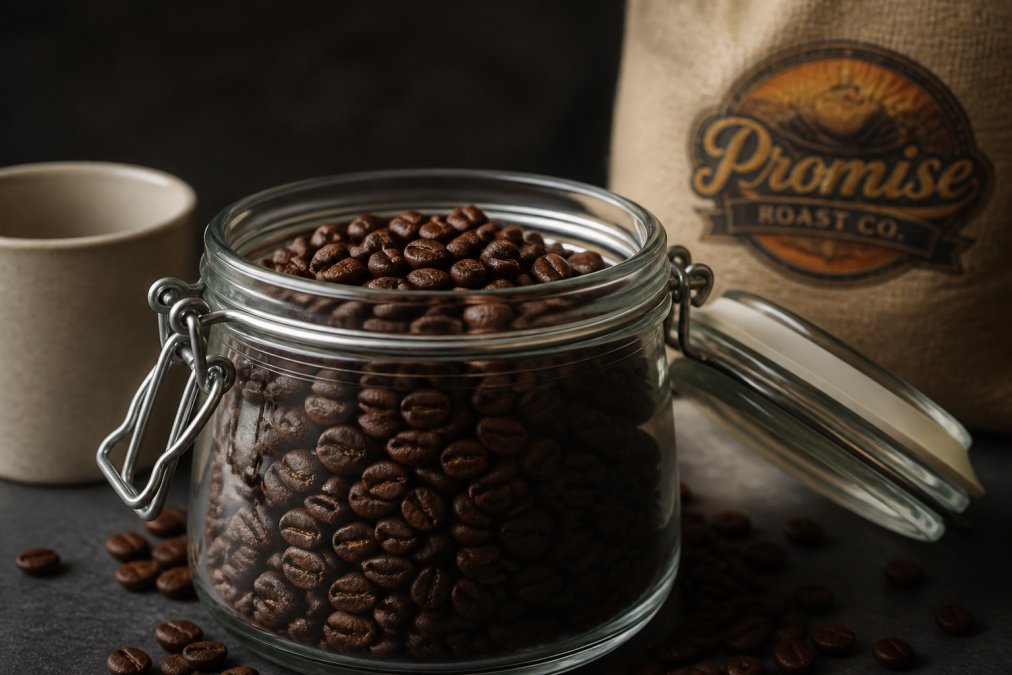
Store beans in an airtight container in a cool, dark, dry place. An airtight container is non-negotiable, once beans are exposed to oxygen, oxidation begins immediately. Paper bags and loose-lid jars don’t work.
Every 10-degree temperature increase roughly doubles oxidation rate. Room temperature (70°F) is acceptable; 60-70°F is better. Never use the refrigerator or freezer, condensation when cold beans warm up is more damaging than room-temperature storage.
Light accelerates flavor compound breakdown.
Never store whole beans in the freezer expecting them to stay fresher longer. Freezing and thawing creates condensation inside the bag or container, introducing moisture that accelerates staling. Room temperature storage in an airtight container beats frozen storage every time.
Storage Container Science
Not all airtight containers are equal. The material and seal design determine how well they actually prevent oxidation and moisture exchange.
Troubleshooting Stale Beans
If coffee tastes flat or muted, staling is likely. Stale beans can still be used with adjustment.
Impact of Brewing Methods on Freshness
Different brewing methods have different extraction windows and sensitivity to bean age.
The 15-15-15 rule works across all brewing methods, but some methods are more forgiving of beans that are slightly past peak. Understanding your brewing method helps you time your coffee purchases and consumption for the best results.
Why Freshness Matters for Your Coffee’s Flavor Profile
Coffee freshness directly determines aroma and flavor notes. Volatile compounds that create aroma and complexity disappear over time through oxidation.
Applying the 15-15-15 Rule to Your Daily Ritual
Putting the 15-15-15 rule into practice requires a simple shift in how you think about coffee timing and storage.
Frequently Asked Questions
What is the 15-15-15 rule for coffee freshness?
The 15-15-15 rule breaks down coffee freshness into three key timeframes: green coffee beans remain viable for up to 15 months before roasting, roasted beans reach their flavor peak between 5 and 15 days after roasting, and ground coffee should be brewed within 15 minutes of grinding. This rule helps coffee enthusiasts understand when their beans deliver the richest aroma profile and most vibrant flavor notes. Small-batch roasters like Promise Roast Co. emphasize the 15-day window because that’s when volatile compounds and carbon dioxide create optimal extraction conditions.
How long after roasting should you wait to brew coffee?
Most coffee experts recommend waiting 5 to 10 days after roasting before brewing for the best flavor. During the first few days, beans are still degassing, releasing carbon dioxide that can interfere with extraction. After day 5, the degassing process has progressed enough that the beans are ready for brewing, and they remain at peak flavor until around day 15. If you wait longer than 15 days, flavor degradation accelerates as oxidation increases. For small-batch roasted coffee delivered fresh to your door, this optimal consumption window is one of the key benefits of roasting-to-order.
Is the 15-15-15 rule applicable to all roast profiles?
The rule applies broadly, but timing varies slightly by roast level. Light roasts have a shorter, more intense flavor peak, often reaching their best between days 7 and 12 due to their delicate flavor notes. Medium roasts align closely with the standard 15-day window. Dark roasts, which lose more moisture and volatile compounds during roasting, can remain flavorful slightly longer, sometimes extending toward day 18 before significant flavor degradation. Understanding your specific roast level helps you time your brewing window for maximum sensory experience. Promise Roast Co. includes roast date information on every bag so you can track freshness for your preferred roast style.
What is the best way to store coffee beans to maintain freshness?
Store whole beans in an airtight container away from light, heat, and moisture. Glass or opaque containers work best because they block light exposure, which accelerates oxidation and flavor degradation. Keep your beans at room temperature, never in the refrigerator or freezer, as temperature fluctuations can cause condensation and moisture damage. A cool, dark cupboard or pantry is ideal. Once opened, consume within the 15-day flavor peak window. For ground coffee, use it immediately after grinding, ideally within 15 minutes, since the increased surface area exposed to oxygen speeds up the staling process dramatically.
How does oxygen affect coffee bean freshness?
Oxygen triggers oxidation, the chemical process that breaks down the volatile compounds responsible for coffee’s aroma profile and flavor notes. Once beans are roasted, they begin losing their freshness through oxidation and degassing. During the first 5 to 10 days, degassing (the release of carbon dioxide) dominates, but after day 15, oxidation becomes the primary factor in flavor degradation. Airtight containers slow oxidation by minimizing oxygen exposure, which is why storage conditions are critical. Grinding beans increases their surface area exposed to air, accelerating oxidation significantly, which is why the 15-minute window from grind to brew is so important for preserving bean density and cup quality.
Does coffee flavor peak after 15 days?
No. The 15-day mark represents the end of the flavor peak window, not the beginning. Coffee flavor typically peaks between days 5 and 15 after roasting, with the sweet spot often falling around days 10 to 12 for most roasts. After day 15, flavor degradation accelerates noticeably as oxidation intensifies. The beans don’t become undrinkable immediately after day 15, but the sensory experience declines as flavor notes flatten and bitterness can increase. For the richest flavor profile and optimal extraction, consume your beans within the 15-day window. Small-batch roasting ensures you receive beans early in their freshness timeline.
What are signs that my coffee beans have gone stale?
Stale beans show several telltale signs. The aroma becomes flat or muted instead of vibrant and complex. Flavor notes taste dull or bitter, lacking the clarity and brightness of fresh beans. Visually, older beans may appear darker or duller than freshly roasted beans, though this varies by roast level. When brewed, stale coffee often produces a thin body and weak extraction, even if you adjust grind size or brewing method. If your beans are beyond 30 days post-roast, staling has likely progressed significantly. Storing beans in poor conditions (warm, humid, or exposed to light) accelerates these changes. Tracking your roast date is the simplest way to avoid stale coffee altogether.