Table of Contents
- What Makes a Great Coffee Brewing Method
- 1. Pour-Over Brewing: Precision and Clarity
- 2. French Press: Full-Bodied Immersion Brewing
- 3. AeroPress: Versatility Meets Speed
- 4. Moka Pot: Stovetop Espresso Alternative
- 5. Automatic Drip Coffee Makers: Convenience Without Compromise
- Coffee Brewing Ratios for Beginners
- Quick Comparison Table
- Frequently Asked Questions
Last Updated: October 1, 2026
What Makes a Great Coffee Brewing Method
The difference between a forgettable cup and one you actually look forward to comes down to three things: extraction, consistency, and the ritual itself. When Promise Roast Co. roasts your coffee fresh after you order it, the brewing method becomes your tool for unlocking those flavors.
What separates a good brewing method from a great one isn’t complexity. It’s repeatability. You need a method that delivers the same quality result whether you’re brewing on a Monday morning or a Saturday afternoon.
1. Pour-Over Brewing: Precision and Clarity
Pour-over is the gold standard for extracting clean, bright flavors from specialty coffee.
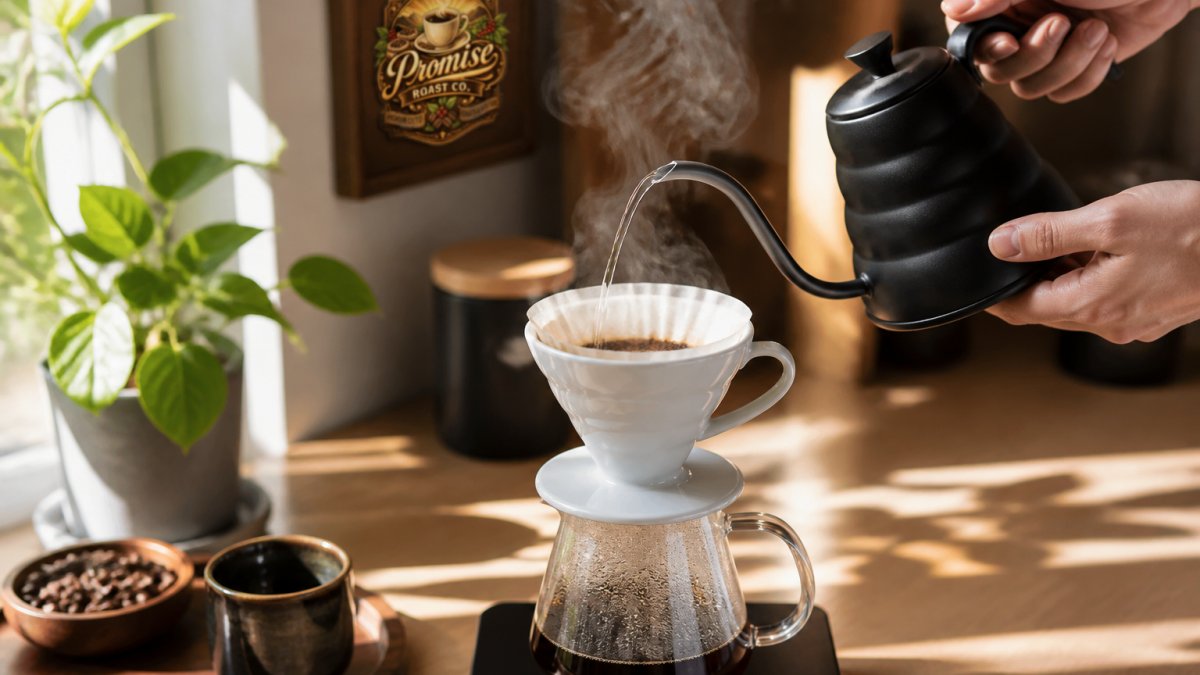
The Hario V60 is a popular entry point. Its spiral ribs control water flow and expansion, forcing even extraction across the grounds.
(/is-burr-grinder-worth-it-home-coffee/), the Baratza Encore Conical Burr Grinder handles the medium-fine grind you need. If you want to dial in consistency, a scale like the Timemore Black Mirror Basic Plus tracks water weight and brew time.
The most common mistake is pouring too fast. A slow, controlled pour over 3-4 minutes beats rushing it in 90 seconds. If you’re new to pour-over, aim for a 1:16 coffee-to-water ratio (1 gram coffee to 16 grams water) and adjust from there.
2. French Press: Full-Bodied Immersion Brewing
French press brewing is immersion, your grounds steep in hot water for 4 minutes, then you press a mesh filter down to separate liquid from solids. This method extracts oils and fine particles that paper filters remove, creating a heavier, more textured cup with deeper body and sweetness.
The Bodum Chambord is a popular choice. Heat-resistant borosilicate glass, a stainless steel plunger, and dishwasher-safe components mean it lasts years. Available in 3-cup to 12-cup sizes, it’s simple enough that consistency comes naturally.
Best coffee grind size for French press:
Use a coarse grind, think sea salt texture. Fine grounds slip through the mesh filter and end up in your cup as sediment.
Brew time matters less with immersion than pour-over. Four minutes is standard, but anywhere from 3.5 to 5 minutes works. The longer you steep, the more body and bitterness develop.
Don’t let grounds sit in water longer than 5-6 minutes. Over-extraction creates harsh, astringent flavors that mask the quality of fresh-roasted beans. This is where a timer becomes essential, it’s easy to forget and come back to over-steeped coffee.
3. AeroPress: Versatility Meets Speed
The AeroPress Original is a hybrid that combines immersion and pressure, producing a clean cup in under two minutes. It’s a portable option, which explains its popularity with travelers and office workers.
The method is forgiving. You immerse grounds in hot water, then press down with air pressure to force the liquid through a paper filter. The result falls between pour-over clarity and French press body, you get clean flavor without sediment, but with more texture than a V60.
Setup is straightforward: grind medium-fine, add grounds and water, stir, then press for about 30 seconds. The entire process takes 90-120 seconds from water to cup.
The one limitation is volume. An AeroPress produces one 8-10 oz cup at a time. If you’re brewing for two people or want to batch brew, this isn’t your method.
4. Moka Pot: Stovetop Espresso Alternative
The Bialetti Moka Express produces strong, concentrated coffee that mimics espresso without an espresso machine.
Moka pots don’t produce true espresso, they lack the 9 bars of pressure that espresso machines generate. But the result is close enough for lattes, Americanos, or drinking straight.
The Bialetti design is nearly unchanged since 1933. It’s durable, compatible with gas and electric stovetops, and costs less than a single bag of specialty beans.
Best grind size is fine, similar to drip coffee but slightly coarser than true espresso.
5. Automatic Drip Coffee Makers: Convenience Without Compromise
If you want specialty-grade coffee without the ritual, the Technivorm Moccamaster KBGV Select is a highly regarded automatic drip machine.
The Moccamaster is certified by the Specialty Coffee Association for its precision. A copper heating element rapidly heats water to 195-205°F and holds it there throughout the brew cycle. The result is full extraction without bitterness.
This is a significant investment, but it’s built in the Netherlands with a 5-year warranty and lasts a decade or more. For home-based workers who brew multiple cups daily, the consistency and speed can be a worthwhile consideration.
Busy professionals who want excellent coffee without hands-on brewing. The Moccamaster handles the precision automatically, you just add grounds and water.
Coffee Brewing Ratios for Beginners
Consistency starts with measurement. Use a coffee-to-water ratio as your baseline, then adjust to taste.
| Brewing Method | Coffee-to-Water Ratio | Brew Time | Grind Size |
|---|---|---|---|
| Pour-Over | 1:16 | 3-4 minutes | Medium-fine |
| French Press | 1:15 | 4 minutes | Coarse |
| AeroPress | 1:16 | 1.5-2 minutes | Medium-fine |
| Moka Pot | 1:10 | 5-7 minutes | Fine |
| Automatic Drip | 1:16 | 4-5 minutes | Medium |
For lighter cups, move toward 1:17 or 1:18. For stronger coffee, go 1:14 or 1:15.
Adjusting ratios for roast profile:
Dark roasts and light roasts extract differently.
Understanding extraction and Total Dissolved Solids (TDS):
Extraction is the percentage of coffee solids that dissolve into water.
Water temperature and its role in extraction:
Water temperature directly controls extraction speed. Aim for 195-205°F.
Sustainability: Filter choice and waste impact:
Your brewing method’s environmental footprint depends partly on filters.
The best coffee brewing methods for home all start with fresh beans and consistent ratios. Promise Roast Co.’s fresh-roasted coffee arrives at peak flavor, your job is simply to extract it properly with the right method, ratio, and temperature. Fresh beans make every technique work better, start there, then dial in your preferred method.
Quick Comparison Table
| Method | Starting Price | Best For | Key Advantage | Learning Curve |
|---|---|---|---|---|
| Pour-Over (Hario V60) | $25 | Flavor clarity and ritual | Highlights bean complexity | Medium |
| French Press (Bodum) | $30 | Full-bodied, textured cups | Simple, no filters needed | Low |
| AeroPress | $39.95 | Speed and portability | Clean cup in 90 seconds | Low |
| Moka Pot (Bialetti) | $35 | Espresso-like concentrate | Affordable intensity | Medium |
| Automatic Drip (Moccamaster) | $349 | Convenience with precision | Hands-off brewing | Low |
The best brewing method is the one you’ll actually use consistently. If you’re drawn to ritual and precision, pour-over rewards attention to detail. If convenience matters most, the Moccamaster can deliver exceptional quality. For travel or office brewing, the AeroPress is a popular choice. French press suits anyone who values simplicity and body over clarity.
What ties all these methods together is starting with fresh-roasted coffee. According to the Specialty Coffee Association’s brewing standards, the first variable in extraction quality is bean freshness. Promise Roast Co. roasts every order individually and ships within 1-5 days, ensuring your coffee arrives at peak flavor regardless of which brewing method you choose. Fresh beans make every technique work better, start there, then dial in your preferred method. Shop Coffee and discover how freshness transforms your morning ritual.
Frequently Asked Questions
What is the most effective coffee brewing method for beginners?
Automatic drip and French press are ideal for beginners because they require minimal technique. Pour-over methods demand more attention to water temperature and pouring speed. For the fastest learning curve with good results, start with a French press or automatic drip machine while you develop your palate. As you grow more confident, explore pour-over or AeroPress methods that give you greater control over extraction and flavor.
How do coffee brewing ratios for beginners affect taste?
The standard ratio is 1 part coffee to 16 parts water by weight, though this varies by method and preference. Too much coffee creates bitterness; too little tastes weak and sour. Using a simple scale removes guesswork and produces consistent results. For French press, use a 1:15 ratio; for pour-over, 1:16 to 1:17. Beginners should measure by weight, not scoops, since coffee density varies. Once you master the basic ratio, adjust slightly based on your roast profile and desired strength.
Can you make espresso without an espresso machine?
Yes. A Moka pot produces a strong, concentrated brew that resembles espresso, though it’s technically percolated coffee, not true espresso. The Moka pot forces hot water through finely ground coffee using steam pressure, creating a bold, thick shot perfect for lattes or Americanos. AeroPress can also produce espresso-like results with fine grounds and shorter brew times. Neither method creates the 9+ bars of pressure that true espresso machines generate, but both deliver intense, rich coffee that works well in milk-based drinks.
What is the best coffee grind size for French press?
French press requires a coarse grind, similar to breadcrumbs or sea salt. Fine grounds slip through the mesh filter and create sediment and over-extraction, resulting in bitter, gritty coffee. Coarse grounds stay in the filter and allow full immersion without over-extraction. The 4-minute steep time with coarse grounds produces a full-bodied, smooth cup. Invest in a burr grinder to achieve consistent coarse particles; blade grinders create uneven sizes that lead to inconsistent results.
Which brewing method preserves coffee freshness best?
All methods preserve freshness equally well if you start with recently roasted beans. What matters is grinding just before brewing and using water between 195°F and 205°F. Pour-over and AeroPress produce cleaner cups because paper or metal filters remove oils and sediment. French press retains all the coffee’s oils, which some prefer for flavor but which can oxidize faster if the cup sits. Store whole beans in an airtight container away from heat and light; grind only what you need for that brewing session to maintain peak freshness.