Table of Contents
- Understanding Peak Freshness for Premium Roast Varieties
- Why Roast Dates Matter for Peak Flavor
- The Coffee Degassing Period: When Beans Reach Optimal Flavor
- How to Tell If Coffee Beans Are Fresh
- How to Store Coffee Beans for Maximum Freshness
- Brewing Method-Specific Freshness Windows
- Small-Batch Roasting: How Individual Roasting Ensures Peak Freshness
- Frequently Asked Questions
Last Updated: October 2, 2026
Understanding Peak Freshness for Premium Roast Varieties
Peak freshness premium roast is the window when roasted coffee beans deliver their most vibrant flavors, balanced acidity, and full aroma profile. For most specialty roasts, this window opens around 7 days after roasting and extends through approximately 21 days, though the exact timing depends on roast level, bean density, and how you plan to brew. Understanding this timeline isn’t academic, it directly determines whether your coffee tastes bright and complex or flat and stale.
The reason this matters has everything to do with chemistry. When beans finish roasting, they’re still releasing carbon dioxide (CO2), a process called degassing (pubmed.ncbi.nlm.nih.gov). This ongoing chemical reaction affects extraction during brewing, which means a bean that’s too fresh tastes sour and under-extracted, while one that’s too old tastes thin and lifeless. The sweet spot, peak freshness, is when degassing has stabilized enough for balanced extraction without losing the volatile aromatic compounds that make specialty coffee worth buying.
At Promise Roast Co., we prioritize this window by roasting every order individually. Small-batch roasting means your beans reach peak freshness during the shipping and first few days after arrival, not weeks later in a warehouse. This approach eliminates the guesswork around whether a bag sitting on a shelf has already passed its optimal window.
Why Roast Dates Matter for Peak Flavor
A roast date label is the only reliable indicator of where a bean sits in its freshness timeline.
Here’s why the date matters more than origin, roast level, or price: flavor degradation follows a predictable curve. The moment beans exit the roaster, they begin losing the delicate volatile compounds responsible for complexity and brightness.
Reading the roast date tells you exactly where on that curve your beans sit. A bag roasted 5 days ago is still degassing heavily. One roasted 15 days ago is likely in its sweet spot.
The challenge is that many retailers don’t print roast dates prominently, if at all. Some use coded dates, vague language like “fresh roasted,” or no date at all.
The Coffee Degassing Period: When Beans Reach Optimal Flavor
Degassing is the process where roasted beans release carbon dioxide accumulated during the roasting process. This isn’t a problem to solve, it’s essential chemistry that directly determines extraction quality. But understanding it changes how you think about freshness windows.
How CO2 Release Affects Extraction
When water meets a freshly roasted bean, the CO2 still trapped inside creates turbulence that disrupts even saturation. The gas bubbles interfere with water contact with the bean’s solids, leading to uneven extraction. Some areas over-extract (creating sourness), others under-extract (creating weakness).
As days pass, CO2 escapes through the bean’s porous structure. By day 7-10, degassing has slowed significantly. Water now contacts the bean more evenly. Extraction becomes balanced. The aroma profile stabilizes. The acidity shifts from sharp to bright.
The valve-sealed bags used by most specialty roasters serve a specific purpose here: they allow CO2 to escape one-way while blocking oxygen from entering. This controlled degassing extends the peak freshness window by slowing oxidation.
Rest Period by Roast Level
Different roast levels degas at different rates. Light roasts have denser bean structure and degas more slowly. Dark roasts have more fractures and pores, releasing CO2 faster.
Light roasts typically reach peak freshness around day 10-14 after roasting. The denser structure means CO2 lingers longer, so waiting an extra few days helps more than it hurts.
Medium roasts hit their window faster, around day 7-12.
Dark roasts degas most quickly and can reach peak freshness as early as day 5-7. The extensive roasting has opened the bean structure so much that CO2 escapes rapidly.
These aren’t rigid rules, they’re guidelines based on typical bean density and roasting profiles. Individual beans vary.
How to Tell If Coffee Beans Are Fresh
Freshness assessment combines label reading, visual inspection, and sensory evaluation. None of these alone is definitive, but together they tell a clear story.
Reading Roast Date Labels
The roast date should be printed clearly on the bag, ideally on the front. If you have to search for it, that’s already a red flag, transparency about freshness is a mark of quality roasters.
Some roasters use Julian dates (a three-digit code representing the day of the year). These are harder to read at a glance.
Check the packaging itself. Bags with one-way degassing valves indicate the roaster understands freshness chemistry. Bags sealed without valves will stale faster because oxygen can enter freely as CO2 escapes. Opaque bags (foil or dark paper) preserve freshness better than transparent ones, which allow light to degrade flavor compounds.
Sensory Indicators of Stale Beans
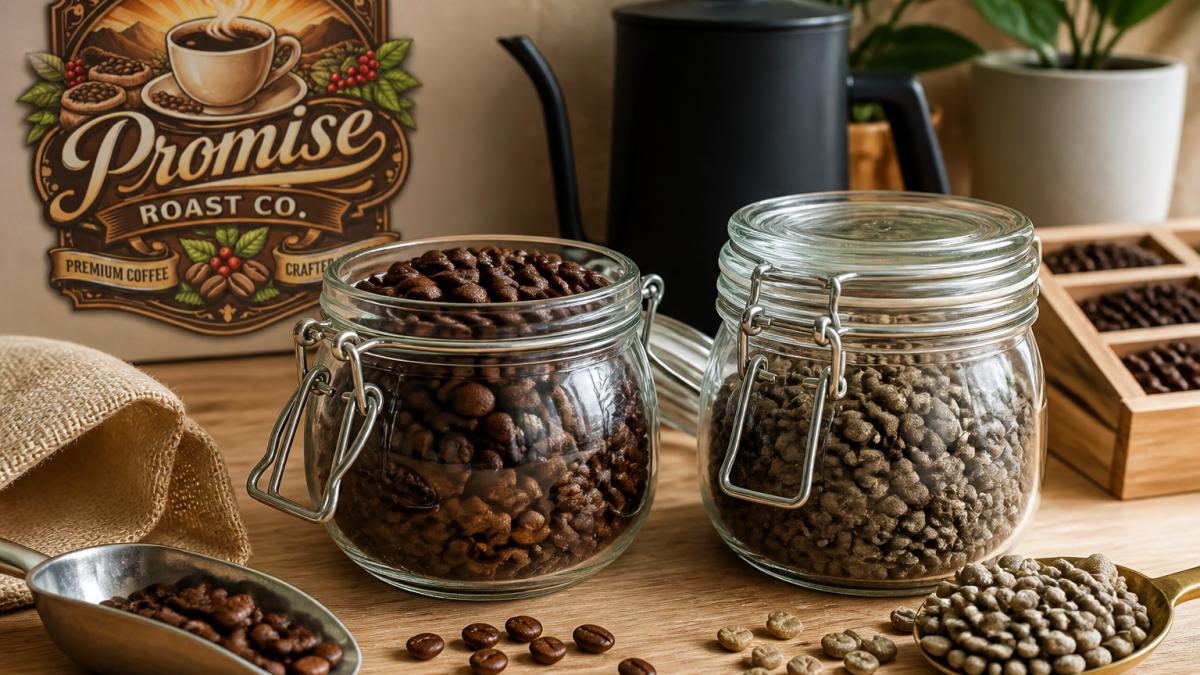
Visual inspection gives you the first clue. Fresh beans have a rich, even color and a subtle sheen from residual oils. Stale beans look dull, sometimes with a grayish cast.
Aroma is the most reliable sensory indicator. Fresh beans smell complex, you notice the origin’s characteristic notes (berry, chocolate, floral, nutty) along with the roast’s contribution (caramel, toast, spice). Stale beans smell flat and one-dimensional.
Grind a small amount and smell immediately. Fresh beans release aroma instantly and intensely. Stale beans smell muted.
When brewed, stale coffee tastes thin, flat, and often slightly bitter in an unpleasant way. Fresh coffee tastes clean, with distinct flavor notes and balanced acidity. This is the ultimate test, but it requires already owning the beans.
How to Store Coffee Beans for Maximum Freshness
Storage conditions determine how quickly your beans degrade after roasting. Even the freshest beans will stale rapidly in poor storage.
Airtight Containers and Valve-Sealed Bags
The original bag your beans arrive in is often your best storage option, provided it has a one-way valve. These bags allow CO2 to escape while blocking oxygen from entering. Keep beans in this bag, sealed between uses, for the first 2-3 weeks after roasting.
After that window, transfer to an airtight glass or opaque ceramic container. Avoid clear plastic, which allows light penetration. The container should seal tightly, a rubber gasket or locking lid works better than a loose-fitting cap.
Never store beans in the original bag once you’ve opened it repeatedly. Each opening introduces oxygen. After the first 2-3 weeks, the one-way valve’s advantage diminishes anyway, since the majority of CO2 has already escaped.
Temperature, Light, and Moisture Control
Store beans in a cool, dark place. Room temperature (around 70°F) is acceptable, but cooler is better, every 10-degree reduction in temperature roughly halves the rate of oxidation. A pantry or cupboard away from direct sunlight works well.
Light degrades flavor compounds through a process called photodegradation. Opaque containers or bags protect against this. If your storage location receives direct sunlight, move your beans.
Moisture is less of a concern for whole beans than for ground coffee, but it still matters. High humidity (above 70%) can introduce moisture into beans, promoting mold growth and off-flavors. Store in a dry location.
Brewing Method-Specific Freshness Windows
Different brewing methods extract differently, which means the optimal bean age varies by how you brew.
Pour-over and filter methods (Chemex, V60, Kalita Wave) work best with beans in the 7-21 day window. These methods rely on even water saturation and controlled extraction.
Espresso is more forgiving of fresher beans because the pressure-driven extraction compensates for aggressive CO2 release.
French press and immersion methods tolerate a wider freshness window because they use extended contact time. Beans 3-30 days old all work reasonably well. The long steep time compensates for degassing variability.
Cold brew is the most forgiving method. The slow extraction rate means even very fresh or somewhat stale beans produce acceptable results. However, peak flavor still emerges around day 10-20.
Understanding your brewing method helps you time your purchases. If you use espresso, buy beans you can brew within 2-3 weeks. If you use French press, you have more flexibility.
Small-Batch Roasting: How Individual Roasting Ensures Peak Freshness
Small-batch roasting, roasting individual orders rather than large batches held in inventory, fundamentally changes the freshness equation. Instead of beans spending weeks in a warehouse before reaching you, they reach peak freshness during shipping and the first few days after arrival.
This model requires coordination. Roasters must roast frequently (sometimes daily), manage inventory tightly, and ship quickly.
Promise Roast Co. operates on this principle. Every order is roasted individually, with 1-5 day processing to ensure beans arrive during their optimal window.
The trade-off is that custom roasting takes time. You can’t order today and expect delivery tomorrow.
Small-batch roasting also enables customization. Different roast levels for different brewing methods, single-origin selections, blends tailored to specific flavor profiles. Large-scale roasters optimize for consistency and shelf stability.
Peak freshness for premium roast isn’t a fixed target, it’s a window defined by roast level, bean density, and how you brew.
Frequently Asked Questions
How long after roasting is coffee at its peak freshness?
Peak freshness for premium roast coffee typically falls between 7 and 21 days after the roast date, depending on roast level and bean density. Light roasts reach optimal flavor around day 7-10, while dark roasts may peak closer to day 14-21. This window accounts for the degassing period, the release of carbon dioxide that continues after roasting. Individual roasting, like Promise Roast Co. offers, ensures your beans arrive within or just entering this ideal window.
What is the coffee degassing period and why does it matter?
The degassing period is when carbon dioxide (CO2) trapped in roasted beans gradually escapes, typically over 7-14 days depending on roast level. This process directly impacts extraction and flavor development. Too early (beans still heavily degassing) and your brew may taste sour or under-extracted. Too late (all CO2 released) and oxidation begins, causing flavor degradation. Understanding this science helps you time your brewing for peak flavor notes and optimal body.
How do I know if my coffee beans are actually fresh?
Check the roast date first, it should be clearly printed on the bag. Fresh beans (within 21 days of roast) show a glossy sheen, especially in dark roasts, and emit a vibrant aroma when opened. Stale beans appear dull and smell flat or rancid. Grind a small amount; fresh beans produce a rich, fragrant bloom when hot water first contacts them, while stale beans bloom weakly. If beans are more than 30 days old, flavor degradation is significant.
Does roast level affect how long coffee stays fresh?
Yes. Light roasts have higher acidity and reach peak flavor faster (7-10 days post-roast). Dark roasts have lower acidity and peak later (14-21 days). Bean density also plays a role, denser beans release CO2 more slowly, extending the degassing period.