Table of Contents
- What Makes an Artisan Bean Subscription Worth Your Morning
- Smooth Morning Coffee Blends That Actually Deliver
- Low Acidity Coffee Beans for Morning: Why Your Stomach Matters
- How to Brew Smooth Artisan Coffee at Home
- Freshness, Roast Profile, and Flavor: What Sets Artisan Roasters Apart
- Subscription Frequency, Flexibility, and Cost Per Cup
- Promise Roast Co. vs. Other Artisan Subscriptions: Where Each Wins
- Frequently Asked Questions
Last Updated: October 6, 2026
What Makes an Artisan Bean Subscription Worth Your Morning
An artisan bean subscription delivers coffee days after roasting, not weeks. Coffee peaks 3-10 days post-roast; grocery-store beans sit for months, losing complexity and brightness.
Promise Roast Co. focuses on freshness, roast precision, and beans matched to your palate. Small-batch roasting means each order is roasted individually, not held in inventory.
An artisan bean subscription also solves choice paralysis: instead of browsing 50 single-origins, you get a curated selection matched to your preferences or the roaster’s seasonal picks.
Smooth Morning Coffee Blends That Actually Deliver
Smooth morning blends are forgiving, balancing acidity, body, and sweetness so coffee tastes good despite slight brewing variations, no sourness from cooler water, no thinness from an off grind.
Smoothness comes down to bean selection and roast profile.
Promise Roast Co. crafts blends for morning drinking: good black, stands up to milk or cream, with enough body to avoid tasting watery or one-dimensional.
Common smooth morning profiles include:
- Medium roasts with chocolate and caramel notes
- Balanced blends combining sweetness and subtle fruit undertones
- Lower-acidity beans that don’t irritate sensitive stomachs
Low Acidity Coffee Beans for Morning: Why Your Stomach Matters
Acidity in coffee is not the same as pH. Coffee sits around pH 4.85-5.10, less acidic than orange juice or soda. When coffee bothers your stomach, you’re usually reacting to chlorogenic acids and other bright compounds, plus caffeine, which stimulates gastric acid.
That distinction tells you what to change: for tangy brightness, choose a lower-acid bean or darker roast; for reflux or jitters, caffeine is the culprit, so decaf or half-caf is the fix.
What Actually Lowers Acidity in a Cup
Four levers move the needle, roughly in this order of impact:
- Origin. Beans grown at lower altitudes in Brazil, Sumatra, and parts of Central America tend to have lower perceived acidity than high-grown East African beans from Ethiopia or Kenya. A general pattern, not a rule.
- Processing method. Natural (dry) process coffees taste rounder and less bright than washed; honey process sits in between. If a washed Ethiopian is too sharp, a natural Brazilian is the easy swap.
- Roast level. Darker roasts break down more acidic compounds. Medium and medium-dark roasts are the sweet spot for sensitive drinkers: gentler than a light roast, without the ashy, flat character of a very dark one.
- Brew method. Cold brew and French press produce a smoother, less acidic cup than pour-over, partly from longer, cooler extraction and partly because paper filters remove some bright compounds.
Decaf and Half-Caf: The Option Most Guides Skip
If caffeine sends you running for an antacid, decaf is no longer a compromise. Modern specialty decaf uses the Swiss Water Process or CO2, both removing caffeine without the harsh solvent aftertaste that gave decaf its bad reputation.
- Swiss Water Process uses water, temperature, and carbon filters to strip caffeine. It is chemical-free and widely used by specialty roasters, though it can mute the brightest top notes, fine for a smooth morning blend, noticeable in a delicate light roast.
- CO2 process uses pressurized carbon dioxide and preserves more of the bean’s original flavor than Swiss Water, but fewer roasters offer it.
Half-caf is the practical middle path: a roughly 50/50 blend of regular and decaf cuts caffeine to about half a cup’s worth while keeping the flavor close to full-caf.
If you are caffeine-sensitive but not ready to go full decaf, a half-caf version of your usual blend can give you a smoother morning without giving up the ritual.
Low-Acid and Decaf Options to Look For
When you are evaluating a subscription for sensitive mornings, check for these signals:
- Roast level listed clearly. If the roaster does not state light, medium, or dark, that is a red flag for a sensitive-stomach buyer.
- Origin and process disclosed. Brazilian natural, Sumatran, and certain Guatemalan lots are the common low-acid picks.
- Decaf method named. Swiss Water or CO2, not just “decaffeinated.”
A Practical Way to Find Your Bean
Isolate the variable. If not, switch to a Swiss Water decaf of the same roast for a week; if that fixes it, caffeine was the driver and half-caf is your answer.
Most “coffee-sensitive” drinkers land on one of three setups: a medium-roast natural Brazilian, a medium-dark Sumatran, or a half-caf blend of either. None require giving up flavor, a well-roasted Sumatran is one of the sweetest, most chocolatey cups you can brew, and one of the gentlest on the stomach.
“Low acid” is not a regulated term on coffee packaging. A bag labeled low-acid may simply be a dark roast, which is not the same thing as a low-acid origin. Look for origin, process, and roast level rather than trusting the front-of-bag claim.
If your morning cup bothers your stomach, the fix is usually origin plus roast level, not giving up coffee. If caffeine is the trigger, Swiss Water decaf or a half-caf blend gets you a smooth morning without the reflux.
How to Brew Smooth Artisan Coffee at Home
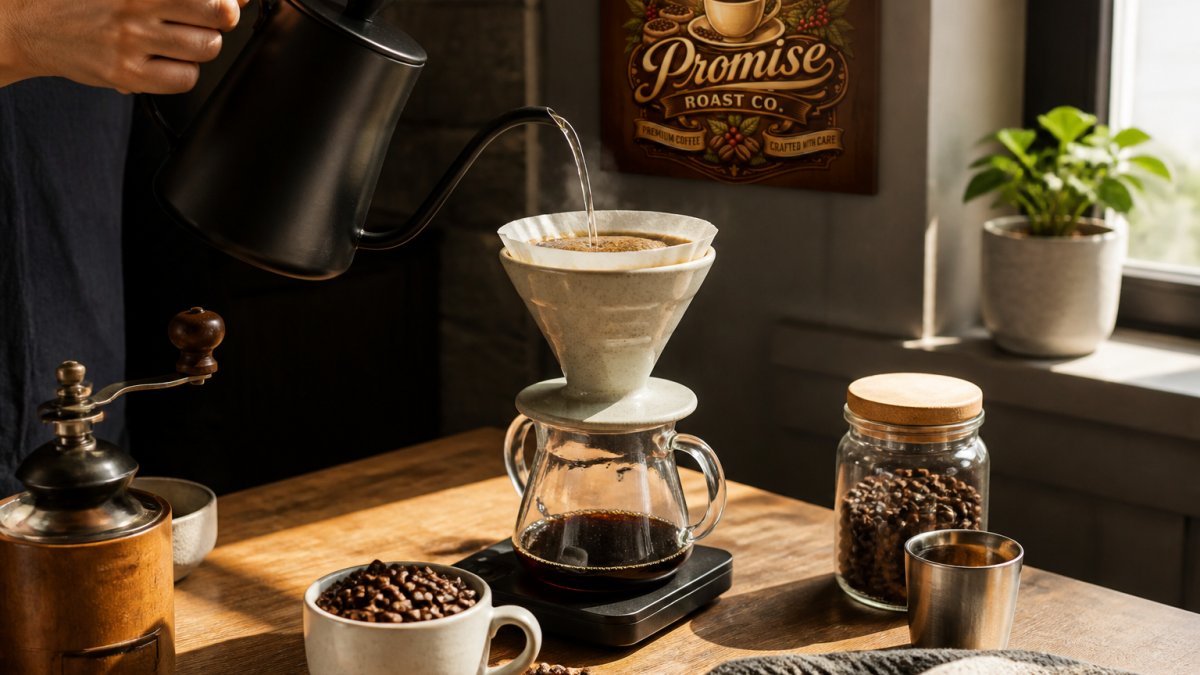
The beans only get you halfway. A smooth morning cup depends on matching your brewing method to the roast in the bag.
Here is how to tune each common home method to the roast you actually received.
Pour-Over (V60, Chemex, Kalita)
Pour-over rewards precision, making it best for light and medium-light roasts where you want origin character, but it punishes stale beans and sloppy pouring more than any other method.
- Dose and ratio: Start at 1:16 (20 g coffee to 320 g water). For light roasts, tighten to 1:15 to push extraction; for medium roasts, 1:16 to 1:16.5 keeps sweetness from tipping into bitterness.
- Water temperature: 200-205°F for light roasts, 195-200°F for medium. Without a thermometer, boil and wait 45-60 seconds for light roasts, 60-90 seconds for medium.
- Grind: Medium-fine, closer to table salt than sea salt, for light roasts. Medium for medium roasts. If the drawdown stalls past 4:30, go coarser.
A common pattern: a smooth blend tastes flat in a V60 because the grind is too coarse. Tighten the grind one click before changing anything else.
French Press
French press is the most forgiving method for smooth, medium, and medium-dark blends because the metal mesh retains the oils paper filters strip out, oils that carry much of the body and chocolate-caramel sweetness in a morning blend.
- Dose and ratio: 1:15 (30 g coffee to 450 g water).
- Water temperature: 195-200°F. French press holds heat well, so no need to start hotter.
- Grind: Coarse, like raw sugar. Too fine and you get sludge and bitterness.
AeroPress
AeroPress is the fastest way to test whether a new subscription bean is smooth or sharp: brew a single cup in under two minutes and adjust on the next one.
- Dose and ratio: 15-17 g coffee to 220-250 g water.
- Water temperature: 185-200°F. Lower temperatures mute acidity, helping if a natural-process bean reads too bright in the morning.
- Grind: Medium-fine for standard brews, medium-coarse for longer steeps.
Automatic Drip
With a drip machine you have less control, but two adjustments matter most: use a medium grind and preheat the carafe so the first drips don’t hit a cold vessel. Use the “bold” setting only for light roasts; it over-extracts medium and dark roasts.
Matching Roast to Method at a Glance
| Roast / Bean Style | Best Method | Why |
|---|---|---|
| Light single-origin | Pour-over | Preserves bright, tea-like clarity |
| Medium smooth blend | French press or drip | Oils and body come through |
| Medium-dark chocolatey blend | French press | Maximizes sweetness and mouthfeel |
| Natural-process low-acid bean | AeroPress at lower temp | Tames brightness without losing flavor |
| Decaf | AeroPress or drip | Short contact time limits the papery notes decaf can develop |
The Two Variables That Matter Most
If you change nothing else, change these:
- Grind before temperature. A 5-degree water swing is a minor flavor shift; a grind one step off is the difference between sweet and sour or bitter.
- Brew within the freshness window. Artisan beans peak 3-10 days after roast. After roughly three weeks, even perfect technique cannot rescue a flat cup, the practical reason a subscription with a short roast-to-ship window outperforms a bag off a shelf.
Keep a small notebook or phone note for each new bag: roast date, grind setting, water temp, and a one-word taste note. Within three or four brews you will have a repeatable recipe for that bean instead of guessing every morning.
Store beans in an airtight, opaque container at room temperature, away from the stove and direct sun. Freezing is fine for unopened bags long-term, but do not move a bag in and out of the freezer; condensation degrades beans faster than room temperature would.
The single biggest upgrade to a smooth morning cup is not a new brewer. It is matching your grind and water temperature to the specific roast in the bag, and brewing inside the 3-10 day post-roast window.
Freshness, Roast Profile, and Flavor: What Sets Artisan Roasters Apart
Freshness is the primary difference between artisan and commodity coffee.
The flavor difference is dramatic: fresh-roasted coffee tastes bright and complex, while stale coffee is flat and one-dimensional. If you’ve only drunk grocery-store coffee, fresh artisan beans are a revelation.
Roast profile is the roaster’s signature. A light roast preserves origin flavors, you taste the specific region where the beans grew.
Promise Roast Co. roasts each order individually, not as part of a bulk batch.
The commitment to freshness shows in the flavor: smooth morning blends taste sweeter, brighter, and more complex when fresh.
Subscription Frequency, Flexibility, and Cost Per Cup
Match frequency to consumption: a one-pound bag lasts about two weeks at one cup daily, one week at two cups.
Flexibility matters because life changes, more coffee during stressful work periods, less on vacation.
Cost per cup varies with bean quality, roast level, and subscription size.
Promise Roast Co. emphasizes flexibility. You control your delivery schedule, adjust as needed, and never feel locked in.
Promise Roast Co. vs. Other Artisan Subscriptions: Where Each Wins
| Subscription | Roasting Model | Best For | Standout Feature |
|---|---|---|---|
| Promise Roast Co. | Individual order roasting | Smooth morning blends, peak freshness | 1-5 day roasting window, free U.S. shipping |
| Trade Coffee | Network of independent roasters | Exploring diverse flavor profiles | Access to 50+ roasters in one subscription |
| Atlas Coffee Club | Curated single-origins | Learning coffee origins | Brewing tips and origin stories included |
| Bean Box | Tasting flights | Sampling multiple roasts | Expertly curated flights in each box |
| Peet’s Coffee | Established brand blends | Consistent, reliable morning coffee | Classic roast profiles, easy management |
| Black & White Coffee Roasters | Roaster’s choice curation | Advanced coffee drinkers | Experimental processing methods |
Promise Roast Co. wins on freshness and convenience: individual order roasting keeps beans under a week old, free shipping removes a hidden cost, and the focus on smooth morning blends means coffee designed for your ritual, not generic single-origins.
The choice depends on your priority: peak freshness and smooth morning blends point to Promise Roast Co.
Your smooth morning starts with fresh beans roasted specifically for your order. Promise Roast Co. delivers exactly that, small-batch, individually roasted coffee that arrives within days of roasting, ensuring peak freshness every time. With free U.S. shipping and flexible subscription management, you get premium artisan quality without the complexity. The Specialty Coffee Association defines peak freshness as 3-10 days post-roast for optimal flavor development, and our roasting-to-order model guarantees you land in that window.
Frequently Asked Questions
What makes an artisan bean subscription different from buying coffee at a grocery store?
Artisan subscriptions deliver freshly roasted beans within days of roasting, preserving the complexity of flavor that degrades over time. Small-batch roasting allows roasters to control roast profiles precisely, creating balanced flavor, acidity, and body tailored to specific origins. Grocery store coffee is often months old and roasted in bulk, losing the nuanced tasting notes that make specialty coffee worth the investment. You’re paying for peak freshness and intentional craftsmanship, not shelf stability.
How does roast level affect the smoothness of my morning coffee?
Lighter roasts preserve more origin complexity and acidity, which can feel sharp on an empty stomach. Medium roasts balance acidity with developed sweetness, creating a smoother mouthfeel for most drinkers. Darker roasts reduce acidity significantly and develop syrupy body, making them naturally smoother but with less flavor complexity. For a smooth morning experience, choose medium roasts or specifically sourced low-acid beans. Your brewing method also matters: immersion brewing (French press, cold brew) produces smoother results than pour-over for the same roast.
Are small-batch coffee subscriptions worth the cost compared to bulk buying?
The cost-per-cup depends on your consumption rate and what you value. If you drink half a bag weekly, individual roast orders ensure you never drink stale coffee, which justifies premium pricing for many drinkers. Bulk buying saves money upfront but beans lose their peak flavor after 2-3 weeks. Small-batch subscriptions with flexible frequency (every 1-4 weeks) let you control costs while maintaining freshness. Calculate your actual cost per cup on the roaster’s website and compare against what you’d spend on fresh beans elsewhere, many find the flavor difference worth the premium.
What should I look for when choosing a smooth artisan bean subscription?
Prioritize freshness guarantee (roasted-to-order or within 5 days), roast profile transparency (medium roasts and single-origins are typically smoother), and flavor profile descriptions that match your preferences. Check whether the subscription offers flexibility in delivery cadence and bag size, working from home with moderate consumption requires different frequency than office workers. Finally, verify they offer low-acid or decaf options if you have stomach sensitivity.
How do I know the coffee will actually taste fresher if I order it online?
Freshness manifests in aroma and flavor complexity. When you open a bag roasted within 5 days, you’ll notice stronger aroma and brighter, more distinct tasting notes, floral, fruity, or sweet notes that fade as coffee ages. Brew a cup and pay attention to the aftertaste: fresh beans leave a clean, pleasant finish, while older beans taste flat or bitter. After ordering from a roaster once, brew side-by-side with grocery store coffee to experience the difference. Many roasters include cupping notes describing what you should taste, which helps you verify freshness yourself.