Table of Contents
- Burr vs. Blade Grinder Taste Test: What Actually Changes
- Why Consistency Matters: The Benefits of Consistent Coffee Grind Size
- The Impact of Grind Size on Flavor Clarity and Extraction
- Best Entry-Level Burr Grinders: Where to Start
- Long-Term Cost of Ownership and Maintenance
- Noise Level, Countertop Space, and Practical Considerations
- Is a Burr Grinder Worth the Investment for Your Routine?
- Frequently Asked Questions
Last Updated: September 22, 2026
Burr vs. Blade Grinder Taste Test: What Actually Changes
The difference between a burr grinder and a blade grinder isn’t subtle, it’s fundamental to how coffee tastes in your cup. Whether a burr grinder worth it for home coffee depends on consistency, it produces uniform particle size, while blade grinders create inconsistent chunks and dust that over-extract and under-extract simultaneously.
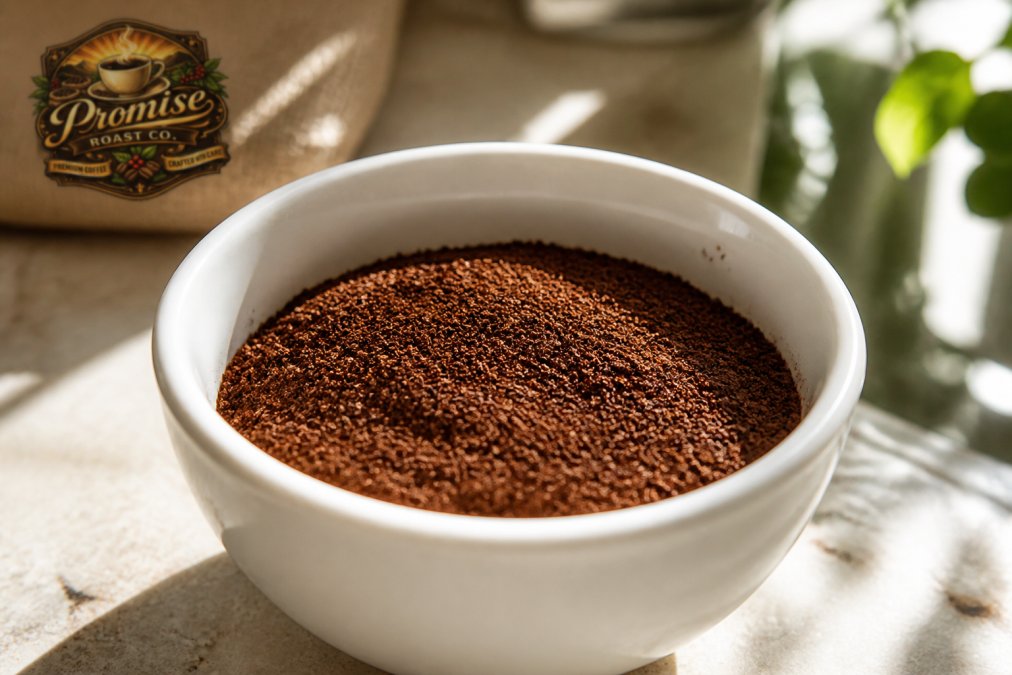
Blade grinders chop beans randomly, creating powder-fine particles and chunky pieces. Fine particles over-extract and turn bitter; larger pieces under-extract and taste thin. The result is muddy, one-dimensional coffee that masks the actual flavor of the beans.
Burr grinders crush beans between two surfaces at a precise distance, creating consistent particle size. Every particle brews at the same rate, ensuring even extraction. You taste clarity and the actual acidity, sweetness, and body the roaster intended.
This matters especially with quality beans. If you’re buying small-batch, artisan-roasted coffee like those from Promise Roast Co., which are roasted fresh after your order and designed for peak freshness, a blade grinder wastes that investment.
Why Consistency Matters: The Benefits of Consistent Coffee Grind Size
Consistency in grind size directly controls extraction yield, how much of the coffee’s soluble compounds actually dissolve into your water. This is where the real advantage of a burr grinder emerges.
When particle sizes vary, extraction is uneven. Fine particles over-extract and release bitter compounds; larger particles under-extract. You end up with a cup that tastes harsh and flat simultaneously, which is nearly impossible to fix by adjusting brew time or temperature.
A burr grinder eliminates this problem. Uniform particles mean uniform extraction and consistent results. You stop chasing variables and start understanding your coffee.
Uniformity also means you can use different grind settings for different brewing methods, fine for espresso, coarse for French press, medium for drip. A burr grinder delivers reliable results; a blade grinder leaves you guessing.
The Impact of Grind Size on Flavor Clarity and Extraction
How Particle Size Distribution Affects Brewing
Particle size distribution determines water flow through the coffee bed. Mixed sizes cause water to race through coarse pieces while getting stuck in fine dust, creating uneven extraction.
This uneven flow creates muddled flavor because you’re brewing several different grinds at once, each extracting at a different rate.
A burr grinder creates a uniform particle bed, allowing consistent water flow and predictable extraction. Flavor clarity improves because you’re tasting the coffee’s characteristics instead of extraction mistakes.
Grind Settings for Different Brewing Methods
Different brewing methods require different grind sizes: espresso (fine, 25-30 seconds), drip (medium, 4-6 minutes), French press (coarse, 4 minutes), and pour-over (medium-fine). A burr grinder lets you adjust reliably between methods; a blade grinder can’t achieve the consistency required for any of them.
Best Entry-Level Burr Grinders: Where to Start
Conical vs. Flat Burrs: Which Performs Better
Conical burrs pull beans down and crush them toward the center. Flat burrs are two discs with ridges that grind beans between them as they spin.
Conical burrs are more forgiving, handle a wider range of grind sizes, run quieter, and retain less heat. For home use, they’re the practical choice.
Flat burrs grind faster and produce slightly more uniform espresso-fine particles, but generate more heat, are louder, and require precise alignment. For home use, the advantages don’t justify the complexity.
The Baratza Encore uses 40mm conical burrs and is the industry standard for entry-level electric grinders at around $150. It delivers consistent results across drip, pour-over, and French press.
The OXO Brew Conical Burr Grinder is a budget alternative at roughly $100 with 15 grind settings and a one-touch timer.
Long-Term Cost of Ownership and Maintenance
A burr grinder’s long-term cost of ownership strongly favors it over blade grinders when you calculate the true expense per cup.
Cost-Per-Cup Analysis Over Five Years
Consider a daily coffee drinker who brews one cup per day, 365 days per year.
Blade Grinder Path:
- Initial cost: $25 (average blade grinder)
- Lifespan: 2-3 years before motor failure or blade dulling
- Replacement cycles in 5 years: 2 grinders at $25 each = $50 total equipment cost
- Cost per cup: $50 ÷ (365 days × 5 years) = $0.027 per cup in grinder cost alone
Entry-Level Burr Grinder Path (Baratza Encore at $150):
- Initial cost: $150
- Lifespan: 10+ years with basic maintenance
- Burr replacement (optional, around year 8): $35
- Total 5-year equipment cost: $150 + $0 (burrs still functional) = $150
- Cost per cup: $150 ÷ (365 days × 5 years) = $0.082 per cup
True 5-Year Cost Comparison:
- Blade grinder: $50 (equipment) + $110 (wasted extraction) = $160
- Burr grinder: $150 (equipment) + $0 (efficient extraction) = $150
Maintenance Costs and Frequency
Maintenance is minimal: daily (30 seconds) brush the hopper and chute; monthly (2 minutes) run uncooked rice through to absorb oils; annually (5 minutes, optional) brush the burrs if removable.
Replacement costs (if needed after 8-10 years):
- Replacement burr sets: $20-40 depending on model
- Replacement motors or gears: $30-60 (rare, and many grinders are repairable rather than replaced)
Durability and Repairability
Quality burr grinders are engineered for longevity. The Baratza Encore, in production since 2010, lasts 10+ years. Replacement parts are widely available and inexpensive ($15-50), extending useful life significantly.
Noise Level, Countertop Space, and Practical Considerations
Noise and kitchen space are practical barriers to burr grinder ownership. Understanding their real-world impact helps you decide if a burr grinder fits your lifestyle.
Noise Level: Decibel Comparison and Timing Strategies
Noise levels vary: blade grinders (80-90 dB), conical burr grinders (70-75 dB), flat burr grinders (75-85 dB), and manual grinders (60-65 dB). A 10-15 decibel difference between conical burr and blade grinders is perceptually significant, roughly half as loud.
Countertop Footprint and Storage Options
Typical dimensions:
| Grinder | Width | Depth | Height | Footprint |
|---|---|---|---|---|
| Baratza Encore | 5.5 inches | 3.5 inches | 8 inches | ~19 sq. inches |
| Fellow Opus | 5.2 inches | 3.8 inches | 8.5 inches | ~20 sq. inches |
| OXO Brew | 5.75 inches | 4 inches | 8.25 inches | ~23 sq. inches |
| Kingrinder K2 (hand grinder) | 3 inches | 3 inches | 5.5 inches | ~9 sq. inches |
Storage options: permanent countertop (most practical for daily use); cabinet or pantry storage (10 seconds to retrieve); drawer storage for hand grinders (ideal for small spaces); or under-cabinet mounting (requires hardware installation).
Static Buildup and Cleanup
Static electricity affects cleanup and consistency. Friction creates static charge that makes fine grounds cling to the hopper, chute, and container, potentially mixing stale grounds with fresh.
Grinders with higher static issues:
- OXO Brew Conical Burr Grinder: Known for noticeable static buildup, especially with lighter roasts. Grounds stick to the plastic chute and container.
Grinders with lower static issues:
- Baratza Encore: Better static management due to its design; grounds flow more cleanly into the container.
- Fellow Opus: Excellent static control; grounds release easily from the chute.
Durability and Build Quality
Burr grinders vary in build quality, which affects long-term reliability and repair costs.
Most durable entry-level options:
- Baratza Encore: Metal burr carrier and motor housing; plastic hopper and chute. Widely repairable; parts are cheap and available. Known to last 10+ years with normal use.
- Fellow Opus: Similar build quality to the Encore with slightly better aesthetics. Equally durable and repairable.
Budget option with acceptable durability:
- OXO Brew: Mostly plastic construction, but solid motor and burrs. Less repairable if something breaks, but generally reliable for 5-7 years of daily use.
Most durable manual option:
- Kingrinder K2: Stainless steel burrs and body; no motor to fail. Essentially indestructible with normal use. Can last 20+ years.
Is a Burr Grinder Worth the Investment for Your Routine?
A burr grinder worth it if you drink coffee more than a few times per week and care about flavor. If you’re buying quality beans, especially fresh-roasted coffee designed to highlight specific flavor profiles, a burr grinder is essential. It’s the difference between tasting the coffee and tasting extraction mistakes.
| Grinder | Type | Starting Price | Best For | Key Strength |
|---|---|---|---|---|
| Baratza Encore | Electric, Conical | $149.95 | Daily drip and pour-over brewing | Industry-standard reliability |
| Fellow Opus | Electric, Conical | $195.00 | Multiple brewing methods including espresso | Versatile grind range and compact design |
| OXO Brew | Electric, Conical | $99.99 | Budget-conscious home brewers | Excellent value and simple interface |
| Kingrinder K2 | Manual, Flat | $75.00 | Travelers and quiet grinding | Portable and durable construction |
Frequently Asked Questions
What is the main difference between a burr grinder and a blade grinder?
Burr grinders use two revolving abrasive surfaces to crush beans to a uniform size, while blade grinders chop beans randomly with a spinning blade. Burr grinders produce consistent particle size distribution, which improves extraction yield and flavor clarity. Blade grinders create uneven grounds with dust and larger chunks, leading to over-extraction and bitterness in some particles while others remain under-extracted.
Does a burr grinder really make coffee taste better?
Yes. Consistent grind size allows water to flow evenly through the grounds during brewing, extracting the right amount of soluble compounds. This brings out the coffee’s true tasting notes, acidity, sweetness, body, and aroma profile, rather than the bitterness that comes from uneven extraction. The difference is especially noticeable with single-origin beans and specialty roasts from artisan roasters like Promise Roast Co., where peak freshness meets precise grind uniformity.
What are the benefits of consistent coffee grind size?
Consistent particle size ensures uniform extraction, preventing both over-extraction (bitterness) and under-extraction (sour, weak flavor). It allows you to dial in the exact grind for your brewing method, whether drip, espresso, or French press, and repeat that result every time.
How long does a quality burr grinder last?
A well-maintained burr grinder typically lasts 5-10 years or longer. Conical burrs generally outlast flat burrs due to lower heat generation and wear patterns. Electric grinders with high-torque motors like the Baratza Encore are known for durability and repairability. Manual hand grinders with metal construction, like the Kingrinder K2, can last indefinitely with proper care. Regular cleaning and avoiding moisture extends the lifespan significantly.