
Table of Contents
- Moroccan Mint Tea vs Peppermint Tea: A Quick Comparison
- What Is Moroccan Mint Tea?
- Understanding Peppermint Tea
- Spearmint vs Peppermint: Key Differences
- Caffeine Content in Green Tea Blends
- Benefits of Spearmint Tea and Health Comparison
- Brewing Guide: How to Prepare Each Type
- Which One Should You Choose?
- Frequently Asked Questions
Last Updated: October 3, 2026
Moroccan Mint Tea vs Peppermint Tea: A Quick Comparison
When you’re choosing between moroccan mint tea vs peppermint tea, you’re really deciding between two distinct flavor experiences rooted in different tea traditions. The key difference comes down to the base tea, the mint variety used, and how each one is traditionally prepared.
Moroccan mint tea combines gunpowder green tea with spearmint leaves, creating a bright, slightly sweet profile with aromatic cooling properties. Peppermint tea, by contrast, is typically a pure herbal infusion made from peppermint leaves alone, no base tea required. The menthol content differs between the two mint varieties, which affects both flavor intensity and the cooling sensation you experience with each sip.
Understanding these differences helps you choose the blend that fits your preference and lifestyle. Below, we’ll walk you through what makes each unique, how to brew them properly, and which one might be your ideal choice.
What Is Moroccan Mint Tea?
Moroccan mint tea is a traditional beverage that blends gunpowder green tea with fresh or dried spearmint leaves, often sweetened with sugar. This combination creates a refreshing herbal infusion that’s been central to Moroccan hospitality and culture for generations. The gunpowder green tea provides a subtle, grassy base with natural antioxidants, while the spearmint adds a mild, sweet aromatic quality without overwhelming pungency.
The name “gunpowder” refers to the shape of the tea leaves, they’re rolled into small pellets that resemble gunpowder. This style of green tea is prized for its ability to hold flavor through steeping and its balanced botanical profile. When combined with spearmint, the result is a tea that feels both refreshing and comforting.
Traditional Preparation and Ingredients
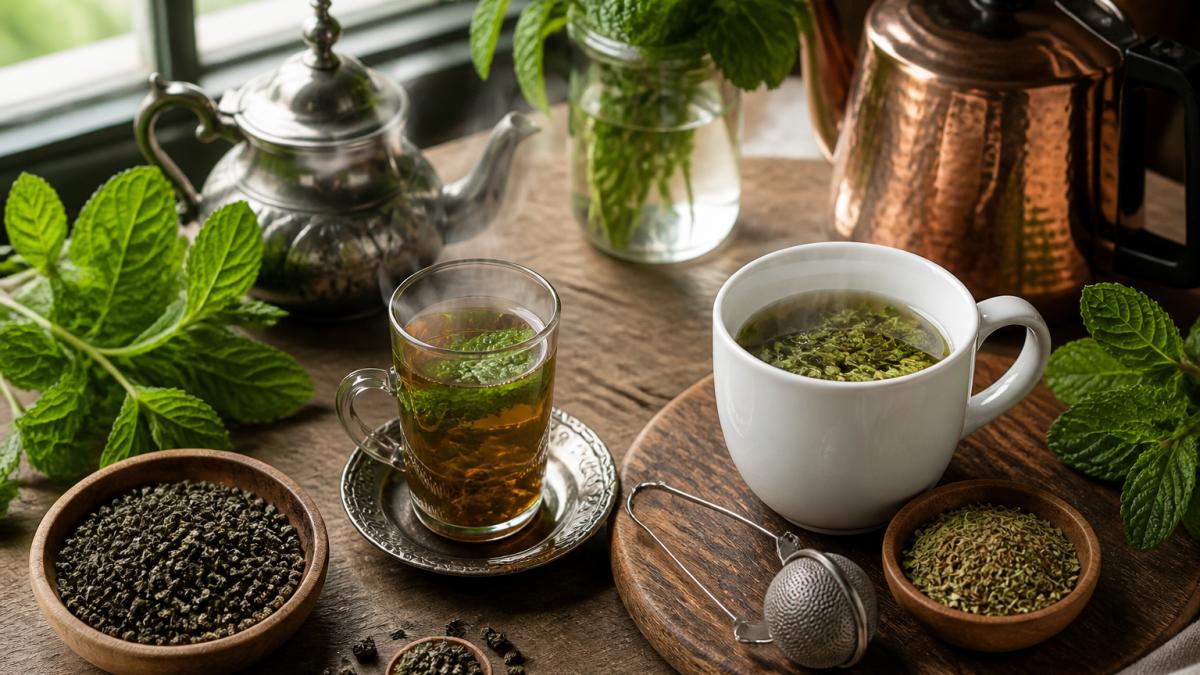
Moroccan mint tea follows a time-honored preparation method that’s as much about ritual as it is about flavor. The traditional approach uses loose gunpowder green tea leaves, fresh spearmint (often called Nana mint), boiling water, and sugar. Some preparations include a pinch of other herbs like wormwood or absinthe, though spearmint remains the dominant mint variety.
The brewing process is deliberate: tea leaves are rinsed briefly with hot water, then fresh hot water is added along with spearmint sprigs and sugar. The mixture steeps for several minutes, allowing the green tea’s grassy notes to meld with the spearmint’s cooling properties.
Traditional preparation emphasizes the social aspect, tea is often poured from a height into small glasses, creating a slight foam that enhances the aromatic experience. This method aerates the liquid and cools it slightly, making it more pleasant to drink immediately.
Understanding Peppermint Tea
Peppermint tea is a caffeine-free herbal infusion made exclusively from dried or fresh peppermint leaves, without any base tea. Unlike moroccan mint tea vs peppermint tea comparisons that highlight the green tea component, peppermint stands alone as a pure botanical beverage. Peppermint (mentha piperita) contains higher menthol concentrations than spearmint, which gives it a more pronounced cooling and pungent character.
This herbal tea has been used for centuries as a digestive aid and a refreshing beverage. The absence of caffeine makes it suitable for any time of day, including evenings when you want to wind down without stimulation. Peppermint’s bold flavor profile makes it distinctive, it’s instantly recognizable and leaves a lingering cooling sensation on your palate.
Flavor Profile and Brewing Basics
Peppermint tea delivers a sharp, clean flavor with significant cooling properties. The menthol content creates that distinctive mouthfeel, a refreshing sensation that builds as you drink and lingers in your aftertaste. The flavor is straightforward and direct, without the subtle complexity that comes from blending tea with mint.
Brewing peppermint tea is straightforward: steep dried or fresh peppermint leaves in hot water for 5-10 minutes. Unlike green tea blends, peppermint doesn’t require precise temperature control or careful steeping times. The longer you steep, the more pronounced the menthol flavor becomes. Many people prefer fresh peppermint leaves when available, as they offer a brighter, more vibrant taste compared to dried varieties.
The tea’s simplicity is its strength. You get pure peppermint flavor without competing botanical notes. This makes it ideal for those who want a straightforward herbal experience or who are seeking peppermint’s traditional digestive benefits.
Spearmint vs Peppermint: Key Differences
The distinction between spearmint and peppermint is fundamental to understanding moroccan mint tea vs peppermint tea. While both are mint varieties, they differ significantly in menthol content, flavor intensity, and botanical profile.
Spearmint (mentha spicata) contains roughly 0.5-1% menthol, creating a milder, sweeter cooling effect. The flavor is gentle and approachable, with a slight sweetness that doesn’t require added sugar to be pleasant. Spearmint’s essential oils produce a more delicate aromatic profile, the kind that enhances other flavors rather than dominating them.
Peppermint (mentha piperita) contains 40-50% menthol, delivering a sharp, intense cooling sensation. This higher menthol concentration creates a pungent character that’s immediately noticeable. Peppermint’s flavor is bolder, more assertive, and leaves a longer-lasting cooling aftertaste.
For those seeking a balanced, nuanced beverage that works well with green tea, spearmint is the traditional choice. For those wanting a powerful herbal infusion with pronounced cooling properties, peppermint delivers that experience more effectively.
Caffeine Content in Green Tea Blends
When you choose moroccan mint tea vs peppermint tea, you’re also making a decision about caffeine intake. This difference matters if you’re sensitive to caffeine or if you’re selecting tea for specific times of day.
Moroccan mint tea contains caffeine because it’s built on a base of gunpowder green tea. Green tea typically contains 25-50 mg of caffeine per 8-ounce cup, depending on steeping time and leaf quality.
Peppermint tea, being a pure herbal infusion, is completely caffeine-free. This makes it an excellent choice for evening consumption, for those avoiding caffeine, or for anyone who wants the ritual of tea without stimulation.
This caffeine distinction is practical: if you’re looking for afternoon refreshment with a mild energy boost, moroccan mint tea delivers both flavor and gentle stimulation. If you want a soothing evening beverage or need to avoid caffeine entirely, peppermint tea is the clear choice.
Benefits of Spearmint Tea and Health Comparison
Both spearmint and peppermint offer traditional wellness benefits, though their profiles differ slightly. Spearmint, as the base component of moroccan mint tea, is traditionally associated with digestive support and a calming effect. The combination of green tea’s antioxidants with spearmint’s gentle botanical properties creates a beverage many find soothing and restorative.
Peppermint tea is renowned for its digestive benefits, many people drink it specifically to support healthy digestion and reduce occasional discomfort. The menthol in peppermint may help relax digestive muscles and promote smooth digestive function (pubmed.ncbi.nlm.nih.gov). Additionally, peppermint’s cooling properties make it refreshing during warm weather or after meals.
Both teas contain beneficial compounds. Green tea provides catechins and other antioxidants (pubmed.ncbi.nlm.nih.gov). Spearmint and peppermint both contain essential oils and plant compounds traditionally valued for wellness. The choice between them often comes down to personal preference and whether you want the additional benefits of green tea’s antioxidants (moroccan mint tea) or the focused digestive support peppermint offers.
Brewing Guide: How to Prepare Each Type
Proper brewing technique ensures you get the best flavor and experience from either tea. The methods differ because of their different base ingredients and optimal steeping requirements.
Step-by-Step Moroccan Mint Tea Brewing
Total Time: 10 minutes
-
Measure your tea (Time: 1 minute): Use approximately 1 teaspoon of gunpowder green tea per 8 ounces of water. Add 3-4 fresh spearmint leaves or 1 teaspoon of dried spearmint.
-
Heat water to 160-180°F (Time: 3-5 minutes): Boiling water can make green tea bitter. If you don’t have a thermometer, let boiled water cool for about 3 minutes before pouring.
-
Rinse the tea leaves (Time: 30 seconds): Pour a small amount of hot water over the gunpowder tea and immediately drain. This removes dust and prepares the leaves for steeping.
-
Add fresh water and spearmint (Time: 1 minute): Pour the measured hot water over the rinsed tea and spearmint leaves. Add 1-2 teaspoons of sugar if desired, though spearmint provides natural sweetness.
-
Steep for 3-5 minutes (Time: 5 minutes): Cover the cup or teapot to retain heat and aromatic oils. Longer steeping increases the green tea’s tannins, which can add slight bitterness.
-
Strain and serve (Time: 1 minute): Pour into glasses, leaving the leaves behind. Traditionally served in small glasses without milk or additional sweeteners beyond the initial sugar.
Expected result: A golden-hued tea with balanced green tea grassiness, spearmint’s gentle aromatic quality, and a refreshing finish.
Preparing Peppermint Tea at Home
Total Time: 8 minutes
-
Measure peppermint (Time: 1 minute): Use 1 tablespoon of fresh peppermint leaves or 1 teaspoon of dried peppermint per 8 ounces of water.
-
Heat water to 200-212°F (Time: 3-5 minutes): Unlike green tea, peppermint benefits from fully boiling water. The higher temperature helps extract menthol and essential oils more effectively.
-
Add peppermint to water (Time: 1 minute): Place peppermint leaves directly in your cup or teapot, then pour the hot water over them.
-
Steep for 5-10 minutes (Time: 5-10 minutes): Longer steeping intensifies the cooling sensation and menthol flavor. Start at 5 minutes and adjust based on preference.
-
Strain and serve (Time: 1 minute): Remove the leaves and serve immediately. Peppermint tea can be enjoyed hot or chilled over ice.
Expected result: A clear, bright beverage with pronounced cooling properties, clean peppermint flavor, and a lingering menthol aftertaste.
Which One Should You Choose?
The choice between moroccan mint tea vs peppermint tea depends on what you’re seeking from your tea experience.
Choose moroccan mint tea if: You want a balanced beverage that combines the benefits of green tea with mint’s cooling properties. This option works well for daytime drinking when you appreciate a gentle caffeine boost.
Choose peppermint tea if: You want a straightforward, powerful herbal experience without caffeine. This is ideal for evening consumption, post-meal digestive support, or anytime you want pure peppermint flavor.
Consider your daily rhythm: moroccan mint tea fits naturally into morning or afternoon routines when you want both flavor and gentle stimulation.
At Promise Roast Co., we recognize that both teas deserve a place in your daily ritual.
Both teas offer distinct experiences worth exploring. Moroccan mint tea brings together centuries of tradition with the balanced flavor of green tea and spearmint. Peppermint tea delivers bold, straightforward herbal satisfaction without caffeine.
Frequently Asked Questions
Is Moroccan mint tea the same as peppermint tea?
No. Moroccan mint tea traditionally combines gunpowder green tea with spearmint leaves, while peppermint tea is typically just dried peppermint leaves or peppermint blended with other herbs. The main difference: Moroccan mint includes green tea’s caffeine and antioxidants, while peppermint tea is often caffeine-free. Moroccan mint has a lighter, sweeter flavor profile, while peppermint delivers a more pungent, cooling sensation.
Does Moroccan mint tea contain caffeine?
Yes. Because Moroccan mint tea includes gunpowder green tea as its base, it contains caffeine, typically 25-50 mg per 8-ounce cup, depending on steeping time and tea quality. Peppermint tea, by contrast, is naturally caffeine-free. If you’re sensitive to caffeine or prefer an evening beverage, peppermint tea is the better choice. For a gentle morning or afternoon energy boost, Moroccan mint works well.
What are the primary flavor differences between spearmint and peppermint?
Spearmint, used in traditional Moroccan mint tea, has a mild, sweet, and slightly fruity aroma with less intensity. Peppermint is more pungent, sharper, and delivers a stronger cooling sensation due to higher menthol content. In Moroccan mint tea, spearmint’s gentler profile blends harmoniously with the earthy, slightly smoky notes of gunpowder green tea. Peppermint tea’s bold character stands alone or pairs with other herbs.
Which mint tea is better for digestion?
Both offer digestive support, but differently. Peppermint tea’s high menthol content makes it particularly effective for soothing digestive discomfort and reducing bloating. Spearmint in Moroccan mint tea, combined with green tea’s antioxidants, supports overall digestive wellness. Peppermint delivers faster, more noticeable relief for stomach upset, while Moroccan mint provides gentler, sustained digestive benefits alongside its energizing caffeine.
How do you traditionally prepare Moroccan mint tea?
Traditional preparation involves heating water to 160-180°F, adding gunpowder green tea and fresh or dried spearmint leaves to a teapot, and steeping for 3-5 minutes. Sugar is often added during brewing, a key part of the ritual. Pour into small glasses, traditionally from a height to create a frothy top layer. For peppermint tea, use boiling water (212°F) and steep 5-10 minutes. Both methods highlight each tea’s unique characteristics.